See on Scoop.it – Korean Wave

What would be interesting is if the fandoms of both intersect in some way, given the differences and similariteis bewteen the two.
See on www.kpopstarz.com

See on Scoop.it – Korean Wave
What would be interesting is if the fandoms of both intersect in some way, given the differences and similariteis bewteen the two.
See on www.kpopstarz.com
See on Scoop.it – Korean Wave
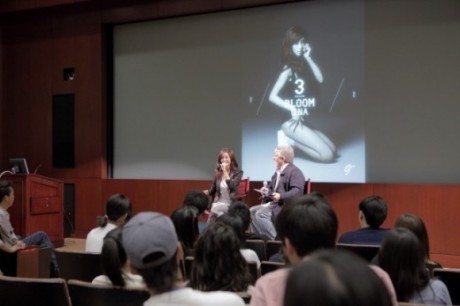
G.NA’s appearance at Pepperdine University shows the increasing interest in K-pop, and it is good to hear from artists themselves about their perceptions about their experience as K-pop artists. I would like to see a transcript of the lecture, however, before I think about whether G.NA can talk about the implications of K-pop in society.
See on www.allkpop.com
My piece on interrogating the common critiques of Kpop.
Crystal S. Anderson, PhD
Elon University
Kpop is subject to a lot of criticism. A LOT. The most repeated charge against Kpop is that it is manufactured. But is that really true? Usually when critics level this charge, they make sweeping generalizations about the whole landscape of pop. In doing so, they perpetuate stereotypes about the lack of originality in Asian popular culture.
View original post 2,046 more words

Crystal Anderson appeared on a brief segment on Talk Asia on CNN International on October 6.. She spoke about the reasons for the popularity of Psy, a Korean rapper who has gained international success with his video for “Gangnam Style.” She also discussed the future of K-pop in the United States.
My first digital essay for Hallyu Harmony: A Cultural History of K-pop.
Seo Taiji: President of Culture is the first digital essay for Hallyu Harmony: A Cultural History of K-pop.
Pioneering a hybrid Korean popular music with global aspirations, Seo Taiji set the tone for contemporary K-pop through his fusion of multiple music genres with a Korean sensibility, global fan activity, and groundbreaking industry practices. These activities continue to be staples of K-pop today.
Read the entire digital essay at Hallyu Harmony.
Image: “Seo Taiji, Gaon Chart,” Hallyu Harmony, accessed October 9, 2012, http://kpop.omeka.net/items/show/48.
My research on reasons why adults like K-pop.
Crystal S. Anderson, PhD
Elon University
Academic research suggests adults like K-pop for a variety of reasons, the chief of which is music. These findings complicate assumptions about the identity of international K-pop fans and their preferences. According to 638 responses among 18- to 30-year-olds from around the world, other top reasons include choreography and idols.
Youth is a major lens through which many view K-pop. Not only do commentators focus on the age of the performers, they also assume that all fans of K-pop are teenagers. The Wikipedia entry states that K-pop “has grown into a popular subculture among teenagers and young adults around the world.” Commentators like Kim Ji-myung often begin media stories about K-pop with an observation about the age of its fans: “I find it surprising and also fun to see so many European and American youngsters dance and sing in unison with Korean tunes (in Korean!)…
View original post 2,259 more words
See on Scoop.it – Korean Wave
When Alexander Abad-Santos asks, “Why Do You Like K-pop,” he is clearly asking for a mainstream opinion. He surveys three stories on Psy’s reception with little commentary.
See on www.theatlanticwire.com
See on Scoop.it – Korean Wave
Jonathan Hicap covers a paper given by Prof. Ma. Crisanta Flores of the University of the Philippines.
This story articulates why, despite several stories fortelling the demise of Hallyu, the cultural movement continues to grow. As it travels around the globe, it is engaged by different cultures for different reasons.
See on www.mb.com.ph
See on Scoop.it – Korean Wave
This is an interesting list of Kdramas to avoid, many of which are key to their genres, especially fusion sageuk fusion and melodrama. In fact, it is fairly atypical of individuals who write about Kdrama on the Internet. Personal preferences aside, most sites supplement personal opinion with a review that is based on evidence from the Kdrama.
See on ethlenn.blogspot.fr
See on Scoop.it – Korean Wave
Amy writes about Tiger JK’s response to hecklers at a recent performance when asked to do the Psy dance. She does a good job of unpacking Tiger JK’s response.
The very incident that sparked Tiger JK’s response is evidence of how the way Asian masculinity factors into Psy’s response in the United States. To ask Tiger JK, of all people, to do the Psy dance, suggests that the hecklers do not see significant distinctions among Asian men. Tiger JK’s response suggests that, as an Asian man, he’s been subject to this kind of generalization far too many times.
Additionally, Tiger JK’s apology is equally significant, because he walks back his own generalization, without letting those who actually think Asian men are interchangeable off the hook.
See on seoulbeats.com
See on Scoop.it – Korean Wave
This is probably one of the best overviews of the appeal of Korean popular culture to Americans who are, as @BlackNerdJade puts it, those “in the know.”
This shows that the Kpop subculture in the United States is fairly diverse, and the article identifes some of the things that American fans of Kpop and Kdrama find appealing.
There is the perennial question of “Will K-pop Crossover in the United States,” and I agree that YG may have greater appeal for mainstream America because it is so much like mainstream American music. However, many fans of K-pop like it precisely because it is not like contemporary American music, and as a result, may not be thrilled with only being offered more of what they already get on the American music scene.
See on drhiphop85.com
See on Scoop.it – Korean Wave
This article takes some liberties with the history of Hallyu, conflating its East Asian and global spread and contributing to the narrative that Psy’s international fame is completely unrelated to the Korean agencies that produce such idol groups as Super Junior and solo artists like Rain.
This article does not make distinctions between Hallyu’s engagement in East Asian countries like Japan, which is several years old, and its engagement with Europe, Central and South America, and the United States.
Psy strikes many who are unfamiliar with K-pop as different, but what happens at a Psy concert isn’t that much different than what happens at a Super Junior concert. Even more amazingly, the article contends that “Though he is managed by YG Entertainment, the fact that he was managed by them did not contribute to his success.” That is hard to believe, as Psy is a member of the label, has toured with the YG Family (other artists on the label) and features some of those artists in his video for Gangnam Style.
Psy’s experience is very different from Jang Geun Suk, who has practically taken up residence in Japan, but remains virtually unknown beyond East Asia.
See on www.kpopstarz.com
This post by Ade reveals how Kdrama impacts international viewers’ interest in Korea.
Ade is a 19-year-old muslim young woman who studies Pharmacy at Islamic University in Indonesia.
Ade states that one of the things she wants to do in Korea is see the Gyeokbokgung and Deoksugung palaces, and that she loves sageuk dramas.
Often, people think that it is the modern Kdramas that draw viewers interest in Korea, but the historical dramas are also appealing, as people are drawn to Korean historical figures and places.
See on viprimadoona.wordpress.com
See on Scoop.it – Korean Wave
Sam Lansky’s account of his interaction with K-pop reads like bad fan fiction, and perpetuates the idea that K-pop fans are lunatics who over-react when it comes to their favorite groups.
One of the biggest misrepresentations found in the piece is his assertion that that K-pop fans in the United States are made up “mostly the ken of geeky music journalists, Asian Americans, and gays weary of Lady Gaga’s art-pop pretensions but thirsty for a similar spectacle.” K-pop draws one of the most diverse fanbases of a musical genre, and many K-pop fans were fans before Psy’s Gangnam Style.
As one of the comments suggests, Lansky creates this story in part by egging on K-pop fans on social media. While many of the younger fans of K-pop frequent Twitter, there are many who do not. Moreover, Lansky is fascinated by what he calls the “spectacle” of K-pop; he’s an outsider looking in and participating without making an effort to understand the fandom or represent a reasonably accurate picture of it.
See on www.grantland.com







 High Yellow - Asian Popular Culture