Hear those rap interludes, ultra-catchy choruses, and dance breaks? MisterPopoTV is here to show you that African Americans can be into Korean pop music.
It’s nice when major news outlets recognize that black K-pop fans are part of the general K-pop fandom. However, this piece trades in overused tropes about race and K-pop. Many of the black K-pop fans I know would not recognize themselves in this piece. However, they would recognize the repeated assumptions made about African Americans and K-pop.
The tantalizing goodness of Korean dramas don’t just come from romantic angst, historical intrigue and heart-stopping action. The emotional highs and lows would not mean as much without an Original Sound Track, also known as the Official Sound Track, or OST.
OSTs can come from any genre, and often features artists performing in styles that differ from their usual ones. OSTs can feature collaborations as well as solo performances by individuals in groups. They may feature vocals or exist solely as instrumentals.Everyone has their favorites, but here are a few examples to show how K-dramas make effective use of music in different ways.
Like many K-pop fans, many of my favorite groups are male (shout out to SS501, Shinhwa, Super Junior and SHINee!). Part of this may be because there are more male groups to choose from, but I have to admit that initially, the female groups like Girls’ Generation and Miss A didn’t do much for me. However, eventually I embraced the K-pop girl groups and here’s why.
If you are a frequent viewer of Kdramas, you may have heard a character accuse another of “trying to cover the sky with your hand.” The idea is that the person thinks s/he merely placing the hand in front of their face makes the sun go away. It may…from that person’s point of view, but the reality is that the sun remains. In the K-dramas Golden Cross and A New Leaf, such delusion is linked with corruption, and everybody suffers.
K-pop fans often engage in creative and productive fan activity, but sometimes they don’t and media is always there to capture it. Nothing stirs up the spectre of the “obsessed K-pop fan” like a “scandal.” As we know, K-pop fans are diverse, but the kind of recent “scandals” experienced by Park Bom (of 2NE1) and Sulli (of f(x)) shed some light on the role cultural context and media plays in global fans’ understanding of “scandal.” Unlike global fans, Korean K-pop fans experience K-pop within the context of Korean culture and their responses are captured by Korean media. Because of their proximity to the K-pop scene, the displeasure of Korean fans can affect change beyond the control of the Korean agencies.
I love a soundtrack, and OSTs for Kdramas are no exception. Lately, I’ve been listening to “Inoo” by Super Junior‘s Kyuhyun. Best known as one of the major vocalists for Super Junior and Super Junior K.R.Y, Kyuhyun lends his vocal talent to the soundtrack of the historical Kdrama, Soldier/God of War.
“Inoo” was frequently heard playing over the ending credits of episodes in roughly the first third of the Kdrama, and represents a departure from Kyuhyun’s usual style. “Inoo” sounds like standard soundtrack fare, quite different from Kyuhyun’s usual vocal talents on Super Junior’s R&B ballads like “Sorry Sorry The Answer” or Super Junior K.R.Y’s “Promise You.”
Image: “Kuhyun, Lotte Duty Free Magazine January 2014 (Super Junior ELF Forever),” Hallyu Harmony, accessed July 27, 2014, http://kpop.omeka.net/items/show/381.
Video: “[Official audio] 인우 Inoo – Kyuhyun OST for God of War (eng sub / 中字).” YouTube. 15 Mar 2012. Web. 27 Jul 2014.
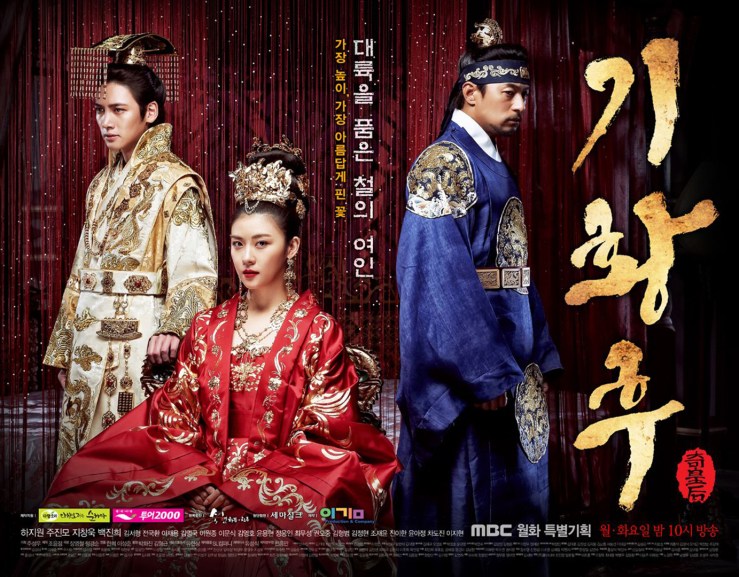
Many historical K-dramas (sageuk) revolve around royal figures involved in romantic quadrangles involving male and female leads. However, political realities complicate amorous entanglements, family relationships and general camaraderie in Empress Ki.
I know. Watchers of this K-drama were divided early on into Team Wang Yu (Wang Yoo, King of Goryeo, played by Joo Jin Mo) and Team Emperor (Emperor of Yuan, played by Ji Chang Wook). Wang Yu is in a tough position: king of a country under the thumb of an empire. He doesn’t have much power, and he can’t ally with another country. Most of all, he can’t stop the Yuan empire from taking the resources from Goryeo, including its women.Bbecause he’s frustrated, he has an unhappy smiley face though much of this K-drama.
Emperor-to-Be of Yuan doesn’t have it much better: pawn of the much more powerful and violent El Temur, the regent. He’s also the puppet of his overprotective mother/guardian Empress Dowager (played by Kim Seo Hyeong). In order to survive, he has to appear as naive as possible, lest he end up like every other powerful male in his family: dead!
These political realities complicate their romantic interest in the female lead, Empress Ki/Sungnyang (played by Ha Ji Won), who has to choose between the two. She’s not just some cute subject of the realm. Wang Yoo has to overcome the side-eye of liking one of his subjects and the fact that he has very little power to protect her when he sends her on missions impossible. The Emperor has to overcome criticisms by those who look down on his fraternization with the enemy aka “that Goryeo wench.” I found myself cheering Sungnyang on for her bravery (and the random decisions to have her shoot arrows in her royal finery!) and work on behalf of the Goryeo people. I admit, I was Team Wang Yoo all the way, so I like the few opportunities they had to have relationship. I was less impressed so when she looks like she is out for self, gets sucked into Yuan politics and looks like she has real feelings for that punk the Emperor, who never seems to grasp that he can’t have a love relationship when his world is collapsing around him.
Sungnyang isn’t the only one grappling with politics and relationships. One of my favorite characters is Tal Tal (played by Jin Lee Han), the ever-practical second-in-command to Baek An (played by Kim Young Ho). He is nothing if not consistent! Scarily good at strategy, he’s the one character who seems to always know all angles to a situation. Tal Tal is the moral pillar of the Yuan court. He’s cool with the Yuan empire, but he and his clan has suffered under the yoke of El Temur too, so they are keen to take him out. In the meantime, he’s working to get his clan some power by playing the political game, but he also has a love for the Yuan people, which Baek An and the Emperor do not. Tal Tal draws the line when Baek An goes supercray. When Baek An’s unscrupulous activities threaten the people, Tal Tal steps in and does the unthinkable.
No one escapes the impact of politics in Empress Ki, making it more than your standard historical Kdrama complicated by romance.
In a possible industry changing move, the MBC Show! Music Core chief executive producer (CP) Park Hyun-suk made a statement earlier this week pronouncing that the show is not going to allow singers or artists on stage that rely solely on MR (music recorded). According to him, about 10-20 percent of the singers who go …
Producers for MBC’s Show! Music Core may think that its decision to ban acts that use MR (music recorded) is a good one, but such a move makes assumptions about what viewers expect from such performances.
Expectation is key. While one may have an expectation of a live vocal performance by someone singing a national anthem at an event, one may not have the same expectation for a live vocal performance in a different setting. Producers may think lip-synced performances on Show! Music Core are misleading, but that assumes that viewers expect these performances to be live vocal performances. Do viewers expect such performances to be live vocal performances? Many viewers look forward to such performances for other reasons. These shows have a long tradition of being a showcase for a variety of performances, which represent a combination of vocals, styling and choreography. Many global viewers tune in for this combination, as many will never have the opportunity to see such acts perform live in their country.
In addition to vocal reality shows, there are other outlets to experience the vocal talents of idols. The format of Yoo Hee Yeol’s Sketchbook is specifically designed to allow artists groups to showcase their live vocals, and has hosted a variety of acts, from individuals known for their vocals such as Lyn, Park Hyo Shin and Hwanhee, to hip-hop acts such as Drunken Tiger and Dynamic Duo, to K-pop idols such as Girls’ Generation, Wonder Girls and 4Minute. Idols also have opportunities to sing live on radio shows such as ShimShimTapa, performances that are also video-recorded and accessible through YouTube.
As the article suggests, this may have an impact on choreography-heavy comebacks for groups if this is undertaken as an industry standard, which will not be good for global K-pop fans who routinely cite choreography as one of the appealing aspects of K-pop.
Ever so often, I like to share what’s on heavy rotation on my iPod. It isn’t always the newest thing, or the most popular thing, but for some reason this is the stuff that I’m grooving to. I make no distinction between idol and non-idol Kpop, popular and obscure, mainstream and indie. It’s just what I like, and some info about it. Maybe you might like it too.
What I’m Listening To
Who Does It
Super Junior is better known for dance tracks like “Sorry, Sorry,” but “Monster” is a little different. A non-promotional track, it is an electronic song with a slower tempo that has a heavy but slow bass-line that is lightened by the use of synthesizers on the choruses. The lyrics reveal a sense of anguish.
Why I Like It
This song reminds me of some of my favorite 80s fare mixed with K-pop. It’s a nice break from the heavy dance and R&B tracks that Super Junior is known for.
One of the most appealing things about K-pop is its variety. K-pop is not unique in producing different versions of the same song or having covers, but the differences in versions showcase the complexity of a music type often criticised for being cookie-cutter.
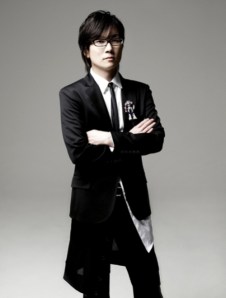
Seo Taiji, “로보트 (Robot)”
Seo Taiji
Seo Taiji is the godfather of K-pop, and so it should not be surprising that he takes the track “Robot” in two different directions. “Robot” originally appears on Seo Taiji’s 7th Issue (2004) album. This version’s thinly orchestrated intro begins with an odd guitar chord countered by mid-tempo drums. The song then transitions to a more regular rhythm and tonally resonate guitars, which complement Seo Taiji’s recognizeable vocals, all of which give the song a heavy feel. However, the guitars become less heavy in the first verse, complemented by a less vigorous rhythm section, where cymbals become more prominent. The song alternates between these two distinct sounds, always overlaid with Seo Taiji’s vocals.
However, when Seo Taiji performs the song live on [&] Seo Taiji 15th Anniversary (2007) album (originally appearing on the Seo Taiji Live Tour Zero ’04 album (2005), it has a completely different feel. Here, the intro features a softly strumming guitar barely audible over the hum of the crowd. After 30 seconds, a sole electric guitar comes in, along with Seo Taiji’s vocals, but these are not the vocals of the original song. Only after a full 40 seconds do guitars play the chords that signal the beginning of the original song. Even then, the song is significantly less heavy than the original.
Epik High, “Paris”
Epik High
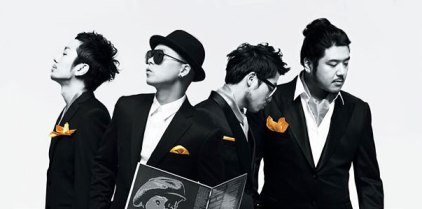
Veteran hip-hop group Epik High is known for its use of intrumentation in its music, and “Paris” is no exeception. “Paris,” featuring Jisun of Loveholic, originally appears on the group’s 2005 album, Swan Songs. The intro featuring female vocals and a single guitar hearkens back to the musical stylings of the 1960s, and then transitions into a light-hearted rap by the group. This rap is complemented by Jisun’s vocals throughout the song.
However, “Paris” on the Black Swan Songs (2006) repackage is radically different. Jisun’s pop intro is replaced by the more forceful vocals of Epik High, against a more brooding instrumental backdrop. This intro is followed by thinly orchestrated verses, featuring driving rhythms with prominent drums and bass, the solo rap vocals and strategically placed distortions. As the track continues, the piano from the vocal is introduced against Jisun’s vocals. Overall, this version is more sonically powerful.
Brown Eyed Soul, “Love Ballad”
Brown Eyed Soul
This kind of musical variety can also occur in other K-pop genres. Brown Eyed Soul‘s “Love Ballad” single hearkens back to vocally-driven American ’90s R&B with synthesized instruments along with a soft organ and finger snaps over which the group alternate parts of the verse. At the chorus, they harmonize their voices in Boyz II Men style.
The piano version of “Love Ballad” invests even more heavily in the black male vocal group tradition. The intro is thinly orchestrated, with only finger snaps that echo on the track, broken only with the introduction of the voices of the group singing in unison. This arrangement showcases the vocal abilities of the members, both in the intro and throughout the song. During the rest of the song, the vocals are accompanied only by the piano and fingersnaps.
Girls’ Generation/Lyn, “The Boys”
Girls’ Generation, The Boys Concept
Lyn
Shifts in musical style on a track does not only occur with remixes. Covers also allow an opportunity for alternative arrangements, some of which go far afield of the original. For example, Girls’ Generation, known for their catchy songs, released “The Boys,” the title track from their 2011 album. The song begins with the members’ vocals against synthesized sounds, and then explodes into its heavily produced glory, driven by heavy rhythms and synthesizers.
However, Lyn takes the song in an entirely different direction in her acoustic performance. Featuring her lead vocals and vocals from backup singers, Lyn’s version infuses a bluesy feel with the minimal instrumentation provided by piano, bongos and an acoustic guitar.
These alternative versions of songs show that music is central to K-pop.
K-pop is a business, through and through. No matter how original a concept is or how natural fan interactions may seem, the details even down to how much a performer weighs are all calculated.
Crystal “CeeFu” Anderson‘s insight:
This article begins by looking at K-pop through an economic lens, but falls into a familiar trend of boiling the success of K-pop down to profits and business models and echoing the much-repeated mantra about the manufactured nature of K-pop. At the same time, it leaves out the key to the global spread of K-pop, namely the fans, who have exerted tremendous influence on K-pop.
The entry of non-Koreans in to the Korean entertainment scene has gained a steady momentum in the past few years. These non-Koreans have mainly stuck to the idol industry — debuting with girl and guy groups too many to mention.
Crystal “CeeFu” Anderson‘s insight:
Just some questions: Why is Korean entertainment obligated to embrace non-Koreans in its industry? Are other national entertainment industries obligated to do the same? if so, how is the United States, home of Hollywood, one of the biggest entertainment industries on the planet, doing with embracing international stars into its entertainment industry?
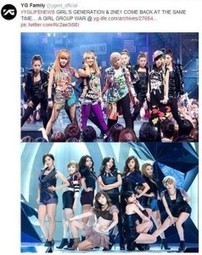
It’s been a while since we had such a matchup of industry titans going head to head.
Crystal “CeeFu” Anderson‘s insight:
This article features various opinions about the simultaneous comebacks of two of K-pop’s most successful and popular girl groups. Members refer to the "anti-aegyo" discourse often targeted to SNSD, as well as the continued use of the "fierce" concept for 2NE1. Described as a competition between the two girl groups, it overlooks the fact that some fans like both groups.
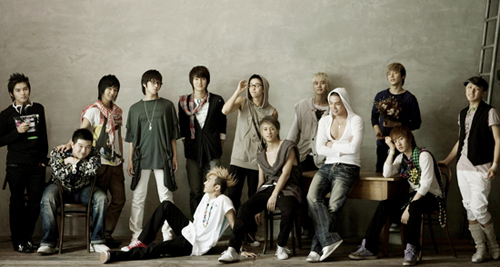
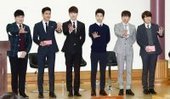
Super Junior, Left to Right : Choi Si-won, Eun-hyuk, Sin Dong-hee, Sungmin, Henry and Zhou Mi Members of the K-pop group Super Junior visited the National Assembly in Yeouido, western Seoul, yester
Crystal “CeeFu” Anderson‘s insight:
K-pop artists frequently represent not just sources of entertainment for fans, but also participate in government conversations related to Hallyu, the Korean wave.













 High Yellow - Asian Popular Culture