Kim Yoon-mi reveals the role that social media plays in the spread of K-pop, especially its use by Korean agencies, and fans.
This makes sense. Because international fans do not have access to Kpop directly from Korea, the internet fostered the kind of fan activity that increased the popularity of Kpop worldwide. Kim also points to how this translates into profits for the agencies and their artists, which counters the conventional wisdom that such activiites diminish profits.
This article not only shows the international spread of K-pop, but how it introduces fans to other elmeents of Korean culture. While some critics argue that the cultures in Hallyu wave culltural production are indistinct, many people are drawn to Hallyu precisely because of Korean culture.
For example, the fact that Kpop songs have both English and Korean lyrics drives many people to learn Korean. Watching a Kdrama may spark in interest in how Koreans live. Unlike other cultural movements, Hallyu enjoys support from the Korean government in teh form of the Korean Tourism Organization. At the same time, the supply is clearly impacted by demand by international audiences.
Kim Yoon-mi reveals the role that social media plays in the spread of K-pop, especially its use by Korean agencies, and fans.
This makes sense. Because international fans do not have access to Kpop directly from Korea, the internet fostered the kind of fan activity that increased the popularity of Kpop worldwide. Kim also points to how this translates into profits for the agencies and their artists, which counters the conventional wisdom that such activiites diminish profits.
Alex Billington serves up the second trailer for Stephen Fung’s ‘Tai Chi o’ film. While some comments predict this will be bad film, context is key. The film clearly takes the conventions of the martial arts film and intends to subvert them. By incorporating steampunk elements in to the film, Fung’s project takes the Chinese martial arts film out of the familar premodern era and incorporates modernity into the mix. Although a film like Let the Bullets Fly is not a martial arts film, it has the same kind of aesthetic one sees in the Fung trailer: an updating of familar film tropes.
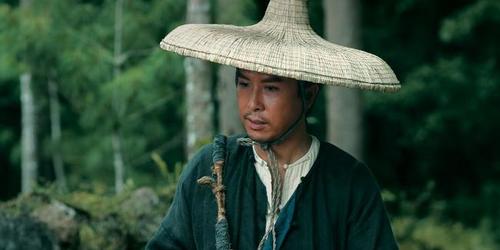
Todd Brown delivers a solid review of Dragon (Wu Xia), focusing on the beautiful visuals and Donnie Yen’s acting, but critiques the lack of martial arts sequences. However, for the seasoned wuxia watcher, the film delivers a breath of fresh air with unusual fight sequences and a return to staple wuxia themes of loyalty and justice. Instead of placing this film in a wuxia context that includes contemporary films like Crouching Tiger, Hidden Dragon and Hero, it may be more useful to remember earlier wuxia films, such as King Hu’s Come Drink With Me or Touch of Zen. Wu Xia reminds me of this kind of pacing, focus on character, and occaisional flourishes of humor.
Sukjong Hong provides an examination of the meaning of Gangnam style as a metaphor for wealth in Korea. Its meaning resonates within an American context when South Korean students from the neighborhood study in the United States. This is a more interesting take on Psy’s recent American popularity, but how does the average American read the satire, if at all?
Ever so often, I like to share what’s on heavy rotation on my iPod. It isn’t always the newest thing, or the most popular thing, but for some reason this is the stuff that I’m grooving to. I make no distinction between idol and non-idol Kpop, popular and obscure, mainstream and indie. It’s just what I like, and some info about it. Maybe you might like it too.
What I’m Listening To
Who Does It
This time, it’s Brown Eyed Soul‘s Can’t Stop Loving You, a single released in 2010. The group, made up of Na Ul, Jung Yup, Sung Hoon, and Young Jun, debut in 2003. They are primarily known for being a Korean R&B group, and their other albums, Soul Free (2003) and Brown Eyed Soul (2010) testify to this. Brown Eyed Soul are serious students of soul. In an interview, one of the members explained: “Basically, we pursue soul – a genre of African-American roots.” While the group is inactive, individual members have been pursuing solo projects.
Why I Like It
In this song, Brown Eyed Soul brings back the old, ’60stype soul: horns, melodies. It’s a refreshing change. Some people assume that if K-pop groups emulate American soul, it’s the 1980s/1990s variety, but Can’t Stop Loving You shows the range of the genre in Korean popular music.
Max Fisher approaches Psy’s “Gangnam Style” like so many other mainstream American writers who fail to research K-pop: using condescension in an attempt to be entertaining. What makes this story somewhat different is an attempt to explore the meaning of Psy’s satire in terms of Korean culture. However, the comments after the story reflect varying opinions on the success of the analysis.
Most of us who watch Kdramas are used to their titles, but sometimes the titles of Kdramas do not do them justice. That’s when I start making up new titles that I feel are far more descriptive of what is actually going on.
Here are some examples:
God of War, or Delusional Women of Goryeo (He Doesn’t Want You)
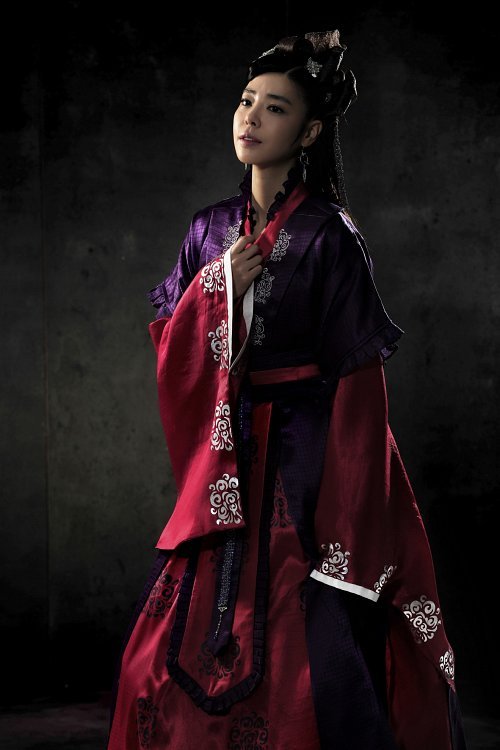
Song Yi
This is a gripping tale (so far). You have serious themes like slavery and corruption. You follow the story of a monk torn from his contemplative life and thrust into a politically-motivated world as a slave. However, sometimes I get distracted by the women. Song Yi is a love-interest (in her own mind). Few who are watching this Kdrama like her. One viewer says she “should be strung up,” and another hopes “that she gets killed off.” Chun Shim is her servant, and she’s no better, shamelessly chasing after a man who has made it clear he’s “just not that into her.”
While they are separated by class, they both share the annoying trait of chasing men who show absolutely no interest in them whatsoever. The less attention the men show them, the more determined these women get. Veteran Kdrama watchers are used to the shenanigans of female characters, but neither of these women are sympathetic. You’re actually glad when the men go to the frontier.
Chuno, or Chosun-Era Parkour
I get it: they are slave catchers. This involves chasing and running. But has anyone else noticed the parkour-like acrobatics the leads engage in? In slow motion? It’s like: gotta go to the market to get some supplies. Watch me jump off this wall! In slow motion. And do this flip. It’s an innovative way to show how even slave-catching is work and hard labor.
Kingdom of the Winds, or Jumong Jr.
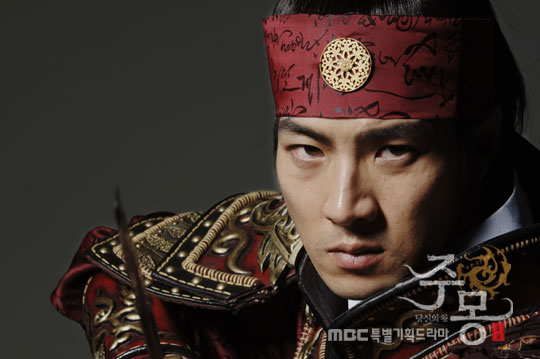
Song Il Gook, Jumong
I really think that the makers of Jumong just weren’t done, even with 81 episodes under their belt. Hey, I love a sequel too. For Kingdom of the Winds, they just picked up the members of the cast of Jumong and plopped them down a few decades later. Hey, who’d notice? These characters are apparently beloved by the audience.
Kingdom of the Winds
I haven’t seen the mother of all historical Kdramas yet, but how surprised was I to find that Song Il Gook, who portrays Jumong, also plays his grandson in Kingdom of the Winds? I was completely convinced he was Jumong’s grandson. He hasn’t aged a day!
Don’t worry, you get the same political and palace intrigue to boot! Plus, there are lots of references to good ol’ Jumong. Once I finish with Kingdom of the Winds, I suppose I’ll have to watch Jumong to see how this all got started. What’s really funny is, no one ever tells Muhyul that he looks exactly like his grandfather!
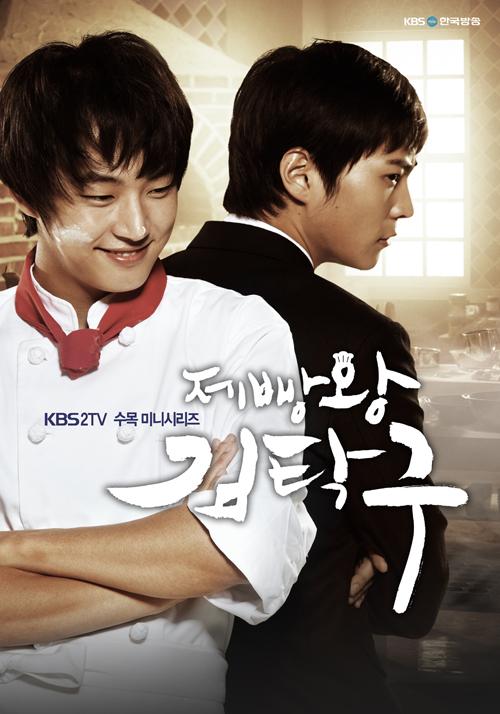
Baker King Kim Tak Goo, or Evil, Down to the Bitter End
Moon Joo Won as Ma Jun
You know, I have a really strong moral compass. I think that if you do good things, good things will happen to you. However, if you are evil, you will reap what you sow. This applies so much more in the world of Kdramas. I mean, why else would you endure episode after episode, if not to see the villain get his or her just due? There are times when Ma Jun has me completely fooled. I begin to think that he is a real human being, with feelings. But then he just returns to his evil ways, again and again and again.
Jun In Hwa as Seo In Sook
But he pales in comparison to his mother, Seo In Sook! She just can’t stop! She’s spend her life messing up the lives of others, all to assure her son a successful life. For a minute, I thought about calling this Kdrama No One is Interested in Your Flunky Son. She condones kidnapping, eviction, termination from employment, lying and I even think attempted murder at one point. Even when her relationships with her children and her husband are at stake, she just can’t help being evil!
Boys Over Flowers, or I Don’t Like That Chick
Jan Di
Oh Jan Di. She is the reason why this Kdrama is called Boys Over Flowers. She starts off very plucky. You like her. You even try to give her the benefit of the doubt when two really attractive guys begin to show interest in her. Oh the dilemma! She also seems to be a good influence on those bratty, rich boys. She stands her ground, defends her friends. And then something goes horribly, horribly wrong. She becomes as passive as a rock. She can’t make a decision to save her life. I find the dynamics among F4 far more compelling: they fight and make up and fight again. Jan Di just stands there and does nothing.
Ga Eul
All my good feelings get transferred to her friend, Ga Eul! She’s in a similar situation as Jan Di: they work in the same noodle shop. They are both outsiders to the swanky world of F4. She’s not content to just wait around for these boys to get it together. When she falls for one of F4, she’s on a mission to get him. Or at least show that he’s not nearly as much of a player as he thinks he is.
City Hunter, or No Socks, No Shoes, No Service
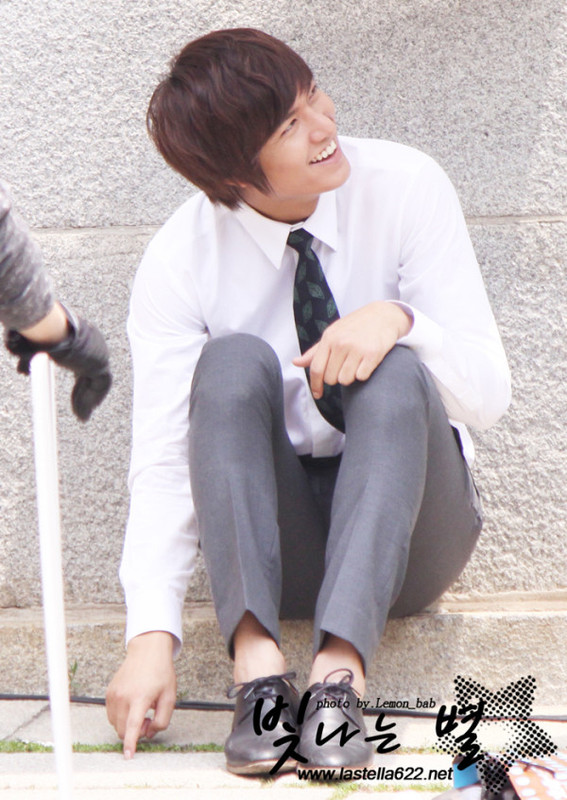
Look, if you are going to be a vigilante/security expert, you gotta play the role. That means being athletic, having the right hair, the right clothes, the right shoes, and, apparently, no socks. That’s what Lee Min Ho is teaching me. Cool heroes fight for justice with no socks on. I haven’t figured out exactly how this contributes to his hero status. It surely doesn’t do anything for his aerodynamics as he’s jumping off of buildings. Perhaps this mystery is solved in the final five episodes, which I refuse to watch until I get some new Lee Min Ho on tap in the upcoming Kdrama, Faith.
So, as long as they keep making Kdramas, I’ll keep making up alternative titles. In my head.
As a person who regularly writes about Hallyu, I’m always excited when others write about it as well. We need as many voices as we can get. So it is in the spirit of dialogue that I respond to Kim Ji-myung‘s piece on HanCinema, “Serious Turn for ‘Hallyu 3.0.” I’d like to see those who write about Hallyu move beyond superficial critiques to more complex analyses.
I think the discourse around Hallyu would be made more meaningful if we treated it as a serious movement and engaged how it is practiced its participants. Kim’s piece replicates some of the more common critiques about Hallyu in general, and Kpop in particular, critiques that I’ve written about here.
Kim assumes that Kpop only has relevance for the young. She attributes the spread of Kpop to “a few young Korean pop groups.” She finds it “surprising and also fun to see so many European and American youngsters dance and sing in unison with Korean tunes (in Korean!) on the streets and in parks.”
However, Seo Taiji and the Boys, often cited as the musical forerunner of Hallyu, debuted in 1992, 20 years ago. The members of Shinhwa (pictured above), the oldest active male Kpop group are all in their 30s, and have just completed a successful comeback with their 14th album. Yes, THAT is Kpop “old school.”
Kpop in its second decade. Its progenitors did not die out with the dinosaurs. Before Jae Chong was a producer for Aziatix, the group who won the 2011 MNET Asian Music Award (MAMA) for Best New Group, he was a member of Solid, one of the first Korean R&B groups that emerged in the early 90s. Just as there are younger groups, there are also older groups and older people in Kpop who play just as large a role. Kim and others need to see Hallyu as more than just a youth movement.
Kim also assumes that international audiences of Hallyu do not care about the Korean culture. She writes: “Young fans of K-pop may be enjoying themselves without even knowing or caring much about the country of origin of the music.” Here where it would be useful to actually talk to someone outside of Korea who listens to Kpop. I’ve also written about this here. Or, perhaps, look at the fan activity on the Internet. Kpop fans like learning the snippets of Korean they get in Kpop songs. Why else would lyric sites list the romanization of Korean lyrics? How else can you sing along in the car?
And when you extend your consideration to Kdrama and Korean film, it’s hard to appreciate these cultural forms without caring about the country of origin. In order to understand a sageuk (historical Kdrama) like Queen Seondeok or Jumong, you need to know about the geopolitics of the time. A film like Shiri requires an understanding of the tensions between North Korea and South Korea. 2009: Lost Memories revolves around the colonial history between Korean and Japan.
Kim abhors the term Hallyu because “it connotes unilateral cultural dissemination” and ” does not carry the depth, subtlety and complexity involved in communicating and understanding cultures among people.” However, her piece replicates that lack of complexity by not recognizing the inherent hybridity of Hallyu. She is right when she says it is not unilateral, but she fails to elaborate. Hallyu itself is a hybrid of Korean and other global cultures, even before it gets redeployed out on the global stage. Shouldn’t we recognize these elements when we talk about it?
Articles like Kim’s continue to reduce Hallyu to a passing phase and a blip on the cultural radar:
A survey shows six out of 10 foreigners believe the popularity of Korean culture will cool down in the next few years. Sixty percent of 3,600 people in nine countries, including China, Japan, Thailand, the United States and France, were doubtful that hallyu will see lasting international success. Some 20 percent said they are becoming ‘tired of standardized content.’
Who are these “foreigners?” Do all “foreigners” see Hallyu in the same way? Fans of Kpop in Malaysia may have different attitudes toward Kpop than fans in the Philippines. And more importantly, are these survey participants people who actually engage in this cultural movement or random people off the street?
Here is my last point: it is virtually impossible to talk about Hallyu 3.0 without understanding how we got from Hally 1.0. Her piece suggests that we either ignore Hallyu’s spread up until now, or embrace the more mature, “serious” version of the movement: “If ‘hallyu 1.0’ was unintentionally initiated by TV producers and a few singers, version 2.0 in the era of social media has been skillfully presented by a more sophisticated entertainment industry of Korea. Now we talk about hallyu 3.0, which may last in a wide spectrum of areas.”
You cannot talk about the history of a thing without talking about the thing itself. This means that even if Hallyu 1.0 was only initiated by TV producers and singers, you have to engage the televisions shows they produced and the songs they sang (I actually think more was involved here). You know the old adage: those who ignore history…
So let’s all continue the dialogue about Hallyu, but let’s also move that dialogue along so that we aren’t talking about the same old thing all the time. Reboot!
Source:
Kim Ki-myung. “Serious Turn for ‘Hallyu 3.0.” HanCinema.
More often than not, a sageuk (historical Kdrama) will center on the shenanigans of royalty. And what is royalty without a king? Kdrama not only offers a wide array of historical kings, but also imbues them with personalities that enthrall modern audiences.
Ever so often, I like to share what’s on heavy rotation on my iPod. It isn’t always the newest thing, or the most popular thing, but for some reason this is the stuff that I’m grooving to. I make no distinction between idol and non-idol Kpop, popular and obscure, mainstream and indie. It’s just what I like, and some info about it. Maybe you might like it too.
What I’m Listening To
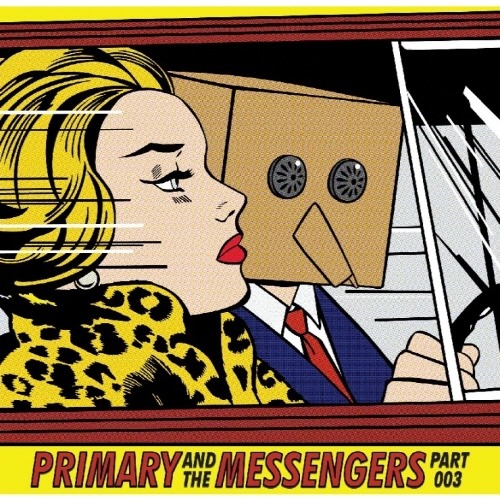
This time around, it’s 씨스루 (See Through) by Primary, featuring Gaeko and Zion T, from Primary and the Messengers Part 3. I was at the end of my monthly allotment on Soribada, and decided to take a chance on Primary. I was especially excited when I saw that Gaeko from Dynamic Duo was featured on the track.
Who Does It
So, who is Primary and where has he been hiding? According to Leesa86, “Primary is a talented producer who has the ability to collaborate with many talented and unique artists to create fresh sounds of music, drawing new talents out of the artists that have never been seen before.” Paloma gushes, “the production in all of [the songs on the album] is flawless, and the instrumentation fantastic.”
I wish I could show you who Primary is, but my intrepid research skills have yielded little beyond the box on his head. Despite this, and other groovy tunes, Primary remains much of an enigma.
Why I Like It
While Paloma calls the song funky, the bass-line strikes me as more smooth and groovy. Verses strewn with lounge-like vocals are broken up by a variety of breaks. Mid-tempo raps punctuate the song in ways that do not disrupt the flow of the single. It’s one of those songs that I instantly liked after hearing the 30-second preview.
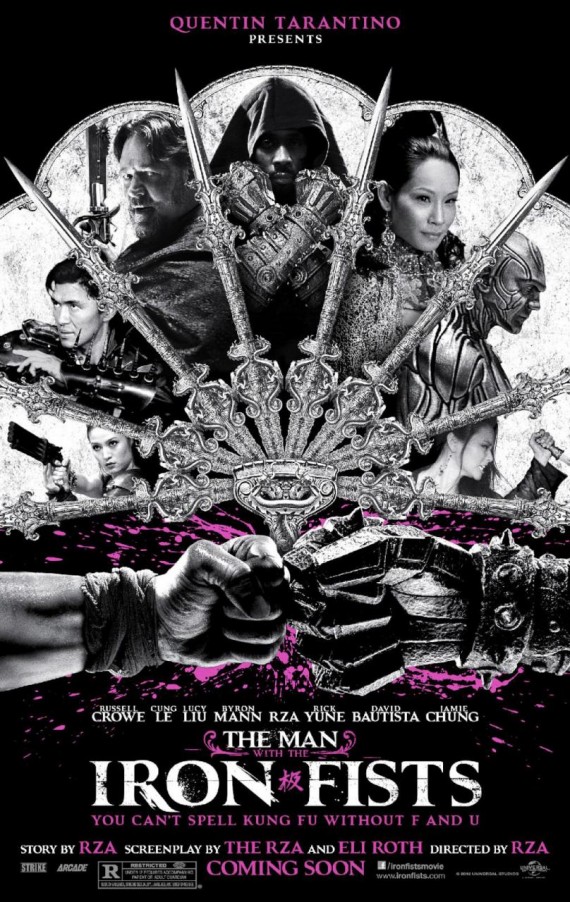
This week saw the release of first images and the official trailer of RZA’s long-awaited homage to kung-fu film, Man With the Iron Fists. Not only does the film represent a new chapter in the long love-affair between African Americans and Asian culture, it reminds us how long that love affair has been.
I think some people are anticipating this more than others. In one online community, reaction was distinctly muted. Some predict that this is going to be a crappy movie. We all know that if we could really determine if a film was crappy just from an image or a trailer, most of us would have fuller wallets. Bad films can have talented people attached to them; good films can get marred by the skewed vision of a few.
I’m dismayed by such a reaction, given the trajectory of the Hong Kong film industry, a film industry that owes quite a lot to kung fu films and wuxia, two genres that are routinely characterized as “low culture.” However, the elite directors over which critics fawn routinely cite their work in and the influence of those two genres. Poshek Fu notes: “As Ang Lee recently revealed, the shaping influences of Crouching Tiger, Hidden Dragon were the numerous Shaw Brothers costume dramas and musicals he watched as he was growing up in Taiwan in the 1950s and 1960s” (1). Let’s not forget where those Hong Kong Bruce Lee films came from.
Not only did some of the most significant Hong Kong film directors get their start in kung fu films at the studios of Golden Harvest and the Shaw Brothers, they did so in films most of us have never seen. Let’s face it: many of these films are nowhere near Crouching Tiger, Hidden Dragon material. But the allowed today’s talent to hone their craft, and created significant followings around the world.
One of the most significant followings is among African Americans in the United States. Sundiata Keita Cha-Jua notes that in contrast to the American audience for action film, presumed to be “young, white, working-class males,” “the black martial arts audience. . . complicates, if not transcends, the class, gender and generational limitations of action films’ traditional spectators. A broader cross-section of the black community is attracted to this film genre” (200).
Cha-Jua refers to film scholar David Desser’s explanation for the appeal: “He advances two interconnected arguments: First, besides blaxploitation, kung fu films were the only films with nonwhite heroes and heroines; second, they concerned an ‘underdog of color, often fighting against the colonialist enemies, white culture, or the Japanese'” (200).
So we can’t be surprised at the Afro-Asian connection in kung fu films. What may be surprising is what RZA has done with Man with the Iron Fists. I remember reading when he went to China to film. Not the place you expect to see a black man. Filming a movie. A kung fu movie. If you look at the cast, you see all kinds of folk involved; Russell Crowe, Lucy Liu, and Quentin Tarantino. If nothing else, this is a new chapter in that it represents, to a certain degree, African Americans articulating their own response to Asian popular culture in film.
Will this film be just another example of what some see as the rampant commercialization and low quality of contemporary Hong Kong film? Maybe. Or maybe it will take all the stuff you love about Saturday afternoon kung fu and raise to a new, ridiculously crazy level. Is it going to push some buttons about race, gender, violence and appropriation? Sure will! Have you seen the trailer?
The poster and trailer invite commentary, but let’s not pretend that any of this is new and, more importantly, not part of the legacy of kung fu films. C’mon, we all know what we are here for.
Sources:
Fu, Poshek. “Introduction: The Shaw Brothers Diasporic Cinema,” China Forever: The Shaw Brothers and Diasporic Cinema (Urbana: University of Illinois Press, 2008). 1-26.
Cha-Jua, Sundiata Keita. “Black Audiences, Blaxploitation and Kung Fu Films, and challenges to White Celluloid Masculinity,” China Forever: The Shaw Brothers and Diasporic Cinema (Urbana: University of Illinois Press, 2008). 199-223.
KARA, Promotional Activities for Go Go Summer in Japan
Guess what? It’s summer! You know what that means? It’s time for THAT song, the song you’ll play over and over again because it’s like having sunshine on your iPod. It’s your summer jam!
But what is a summer jam? Urban Dictionary defines a summer jam as “a song that represents the spirit of summer, and all of the heat and activities that happen during the summer. A song that makes you sit up and say, ‘Man-that is my JAM!'” It doesn’t even have to be released during the summer to have that summer vibe. So, here are a few of my favorite summer jams!
JJ Project, Bounce
I am sure if people knew what made a song instantaneously likeable, they would bottle it. This song dares you not to like it. Released on May 19, 2012, Bounce reintroduced us to ridiculously supercute JB and Jr., who most recently starred in the Kdrama Dream High 2.
The song, like the video, is upbeat and fun. I may or may not have blasted it while driving my car completely within the speed limit down the highway. It has a good mix of pop, hip hop and rock that just says “good times” and summer. Apparently, I’m not the only one who thinks so. To date, it has garnered over 3 million views on YouTube.
MBLAQ, I Don’t Know
When I think of MBLAQ, I think of their sultry ballads like Cry. Ashley recognizes its use of “emotional distraught dancing in the rain.” Or, I think of ninja choreography for songs like Run, which some netizens, according to Emily Wu, see as “dangerous”: “Even though netizens found the performance to be amazing, which saw the boys clad in black and had a dance break of Lee Joon dancing with two katanas, they still thought the ninja concept was a bit overboard.” But neither of these prepares you for the ultra-peppy I Don’t Know.
From the Mona Lisa album, I Don’t Know has that summer vibe, not to mention the silly factor injected by the boys of MBLAQ, especially with the wacky styling choices, goofy stage presence and short exchange between Mir and Cheondung at the end.
SNSD, Utja (Be Happy)
It’s not just the guys who bring the summer. SNSD, known for their upbeat songs, do not disappoint with this release. In some ways, this is not a surprise. From the 2010 album Oh!, it reinforces their happy-happy image.
Not only is the song’s message positive, the use of the girls’ high voices and electronic background makes this a great dance song.
Wheesung, Love is Delicious
As I said, songs do not have to be released during the summer. They don’t even have to be relentlessly uptempo to be a summer jam. A friend of mine made me a Kpop CD and this song was on it. Like many good summer jams, it instantly screams beach, rainbows and unicorns (ok, maybe not unicorns).
What I really like about the video for the song, from the 2010 release Eternal Essence of Music, is that it appeals to both guys and gals. Not super sweet, the strategic use of strings along with a light beat makes the song very summer.
Of course there are tons more….but what are you some of your favorite Kpop summer jams?













 High Yellow - Asian Popular Culture