Ever so often, I like to share what’s on heavy rotation on my iPod. It isn’t always the newest thing, or the most popular thing, but for some reason this is the stuff that I’m grooving to.
What I’m Listening To
Hit Song by old skool Kpop group N.R.G.
How I Came to Listen to It
I can’t even remember. I think I was stalking around on YouTube looking for some old skool Kpop and found it.
Why I Like It
Um, ’cause it’s great! It’s got that disco vibe that I like so much. Really, it reminds you of when pop music was fun and upbeat. This is on HEAVY rotation on the iPod, as is its cousin, the “remix” on the album.
Kpop is subject to a lot of criticism. A LOT. The most repeated charge against Kpop is that it is manufactured. But is that really true? Usually when critics level this charge, they make sweeping generalizations about the whole landscape of pop. In doing so, they perpetuate stereotypes about the lack of originality in Asian popular culture.
It seems almost obligatory for anyone writing about Kpop to describe it as manufactured. Critics frequently focus on Kpop idol artists, who, in addition to making music, participate in other forms of entertainment, including variety shows and Kdramas, fashion shoots, endorsements and commercial films. In some ways it make sense. Idol artists dominate Hallyu, and tend to be the most visible to audiences outside of Korea.
But critics tend to describe all Kpop artists as manufactured. In defining Kpop on About.com, Bill Lamb writes, “As Western influences grew in Korean pop, the concept of the manufactured pop band took root as well.” Renie of Seoulbeats, in pondering whether or not K-pop is too perfect, writes: “Of course this all goes back to how idols are trained and manufactured.” Lucy Williamson of BBC News states: “K-Pop is expensive to produce. The groups are highly manufactured, and can require a team of managers, choreographers and wardrobe assistants, as well as years of singing lessons, dance training, accommodation and living expenses.”
These writers are not wholly wrong. Let’s be real. Given the number of Kpop groups in circulation and the kind of profits that can be made from even a moderately successful group, it is naive to believe their promotion is not deliberate. However, instead of qualifying their statements, critics suggest that it applies to every idol and all members of an idol group. Critics rarely name the artists against whom they level the charge, thereby qualifying their statements. As a result, calling all Kpop artists manufactured has resulted in negative connotations. At the heart of Kpop beats an artificial heart. Because the description is repeated so often without any challenge, it has become accepted as fact.The widespread idea that all Kpop is manufactured is surely a case of wikiality, coined by Stephen Colbert as truth by consensus, where “all we need to do is convince a majority of people that some factoid is true.”
Just because everyone says that Kpop is manufactured does not make it true. In fact, there is a strong case to be made that all Kpop is not manufactured. What does “manufactured” mean, and what do people really mean when they say that Kpop is manufactured? The Oxford English Dictionary, the grandaddy of dictionaries of the English language, defines it this way:
1. a. Of an article, goods, etc.: produced from raw material, esp. for sale or trade; b. Chiefly depreciative. Of a literary work, a speech, etc.: produced in a mechanical or formulaic way, with little or no creativity, imagination, or originality.
2. Of a story, statement, etc.: fraudulently invented or produced; deliberately fabricated, false.
When writers routinely describe Kpop as “manufactured,” they mean primarily two things: that Kpop idols lack talent, and that the process that creates Kpop is artificial and fake.
Wikiality “Fact” #1: Kpop idols lack talent.
To say that Kpop artists are manufactured suggests that the artists themselves lack talent, and in this way are “fraudulently invented or produced.” Renie suggests this when generalizing about idol trainees: “Trainees go in as a blank slate but come out as a product that can sing, dance, and sometimes act.” Similarly, Jangta makes a distinction between singers and entertainers using this spectre of fakeness: “Many mainstream K-pop groups today are actually strong at only three things. . . Unfortunately, singing isn’t one of them.” (Full disclosure: I am an assistant chief editor and editorial writer for hellokpop. Hey Jangta! :))
But is this true? Most people would agree that you cannot fake good singing. There is more than enough evidence to prove that many idols can, in fact, sing well. Because Korea still has a live radio culture, idols regularly sing on the radio, a place where they cannot rely on autotune or slick production tricks. I would imagine folk would regularly call in to complain about an idol’s inability to sing on the radio.
These aren’t even the hardcore idols singers, like Junsu of JYJ (formerly of TVXQ!), Yesung of Super Junior and Heo Young Saeng of SS501, individuals known for their voices. But wait, you may say, “Every group can luck up and have one person who can sing, but the others are just filler.” Are they? What do we make of groups that can harmonize, which suggests that all of them can sing?
The point here is that the sweeping generalization that all Kpop idols lack talent is contradicted by the actual landscape of Kpop.
Wikiality “Fact” #2: The training and production process of Kpop creates fake music.
To say that Kpop is manufactured also suggests that the music and the process that creates it lack “creativity, imagination or originality” and is therefore “artificial.” Such music is created through a process that is “mechanical or formulaic” because it is “produced. . . for sale or trade.” Renie writes, “It irks me that the industry thinks idols can be formulated as if they are some sort of math problem.” In a review of a review of an article, IATFB suggests that the basis of the comparison of Kpop groups and American pop groups like *NSYNC and Backstreet Boys rests on, “a corporate-vetted, manufactured sound.” These statements suggest that the people who are involved in the production of Kpop are also talentless hacks who produce sucky music and janky dance routines.
But does a deliberate process of training individuals to sing and dance equal artificiality? Let’s explore one of the first “manufactured” groups on the planet: The Monkees. In 1965, two producers wanted to capitalize on the popularity of The Beatles by creating a television series about a rock and roll group. When they couldn’t find a group to star in the series, they made one. They cast four guys: two musicians (Michael Nesmith and Peter Tork), a singer (Davy Jones) and a guitarist (Micky Dolenz). However, in need a drummer, they trained Dolenz to play drums. While they played their instruments on tour, they did not play on the albums.
Sound familiar? Here’s the thing: these guys were not just picked for their good looks or their charisma. They had talent, but more importantly, the artistic team behind them, the writers and composers of their songs, also had talent. Some of their biggest hits were written by people whose talent credentials were hard to question. For example, Neil Diamond, inducted into the Rock and Roll Hall of Fame in 2011, wrote I’m A Believer. The people who played the instruments on their albums were veteran musicians. Just because the process by which a group is created is deliberately designed to be commercial does not mean that the actual music and those who create it are fake.
Similarly, the creative people behind Kpop idols are talented, even as they produce music made for commercial consumption (which is no different from any other pop music artist, I might add). While we were mesmerized by the members of Super Junior in the intro to the Mr. Simple video, has anyone wondered who sings that jazzy intro? Because it’s not anyone in Super Junior:
That is Yoo Young Jin. Most people don’t know who he is, but he is the man responsible in some way for nearly every hit by artists of SM Entertainment, and, a talented singer in his own right. Have you heard Young Jin sing? Would a person who can sing himself produce lots of people who can’t sing? Would he deliberately make his own albums suck? No, because that does not make sense.
What about the choreographers? Jangta refers to the “easy-to-do” dance moves of Kpop artists. This is not easy:
I can’t do this, and I’m willing to bet most of you can’t either. Ask a dance cover team if these are easy moves. These moves do not make themselves. They are the product of trained choreographers, and one of the best known is Rino Nakasone. Nakasone, along with Sim Jaewon, are responsible for the choreography of both of these routines. Before choreographing for SME, Nakasone was a principal dancer working with Janet Jackson and Gwen Stefani and a choreographer for Britney Spears.
Impact on Asian Popular Culture
So what? Stating that Kpop is manufactured takes away agency from those who produce it (most of whom are Asian) and contributes to the larger misconception that Asian culture is mere an imitation of other (read Western) cultures.
Most people would have you believe that idols have no agency. Renie seems to believe they are automatons who just do what they are told. But let me get a little philosophical on you. Antonio Gramsci, an Italian philosopher, talks about hegemony, where dominance occurs as the result of consent, meaning that those who have less power are not just forced or coerced into their positions. Just because you may not have a lot of power does not mean you don’t have any power. Your consent is needed by those who have more power than you.
In relation to Kpop idols, they give their consent by participating in the Kpop business, but they also get something out of it. They are not mindless automatons. For every story you hear about an idol suing their company, there are untold stories of idols traveling around the world, learning new languages, learning to write and produce music, receiving royalties from the songs they write and generally having experiences they would not otherwise have. It is too simplistic to say that Kpop idols just do what they are told.
To repeatedly say that Kpop idols do not have agency participates in a long-standing discourse that says Asians do not have agency. Any Chinese, Japanese or Korean history course can tell you about the repeated incursions by Western powers as well as other Asian powers, but I’ve found no better illustration of this than Bruce Lee‘s iconic scene in Fist of Fury, where he insists that China is not “the sick man of Asia.”
To repeatedly say that Kpop is mere imitation perpetuates the idea that any form of Asian popular culture, particularly those that are very successful, is merely imitative. Richard Delgado and Jean Stefancic write that success among Asian cultures has been explained in negative terms before. Asians are described as “chameleons who, with no culture of their own, take on the cultural coloration of the society around them. . . . The negative aspect of this stereotype is not the purported adaptability, which could be considered a positive trait. Rather, it is the specific form of that adaptation, which is described as purely imitative with no creative component. . . . Asians. . . have similarly been described as imitative and without a culture of their own” (581-581). When Nakasone is a principal dancer with Janet Jackson or Gwen Stefani, or choreographing for Britney Spears, it’s all cool, but when she choreographs Lucifer for SHINee or Keep Your Head Down for TVXQ!, her moves suddenly become robotic. Why? Because the dancers are Asian?
Kpop needs as much critical attention as it can get. But, it’s problematic when it comes in the form of generalized statements that perpetuate erroneous notions about Kpop in particular, and Asian popular culture in general. More nuanced critiques supported by concrete examples would go a long way to making the discussion more fruitful and enlarging the conversation on the impact of the success of Kpop on its quality.
Ever so often, I like to share what’s on heavy rotation on my iPod. It isn’t always the newest thing, or the most popular thing, but for some reason this is the stuff that I’m grooving to.
What I’m Listening To
Yanoe, BMK (Big Mama King)
Yanoe, Park Eun Tae (Acoustic)
Goyeo, Shin Sung Woo
How I Came to Listen to It
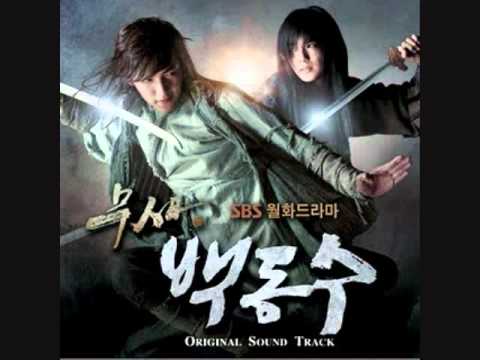
These three songs were prominently featured in the Kdrama, Warrior Baek Dong Soo.
Why I Like It
Yeah, I know I’m supposed to like that Kim Tae Woo ballad, but I like these songs from the OST. I love BMK’s voice on Yanoe, and it’s not often that you get a woman singing a powerful song, as opposed to the slow, ballad number or peppy, poppy song on a Kdrama OST. It really was used well in the Kdrama also, and really supplemented key scenes. The acoustic version by Park Eun Tae, is really nice too because it gives a completely different vibe from BMK’s version. Finally, Goyeo was another song that I really liked too. I told you, I’m contrary, I like what I like! 😀
Ever so often, I like to share what’s on heavy rotation on my iPod. It isn’t always the newest thing, or the most popular thing, but for some reason this is the stuff that I’m grooving to.
What I’m Listening To
Eoneusae Urin (Good Friends), ACHA, Super Junior (2011)
How I Came to Listen to It
I found Eoneusae Urin (Good Friends) while playing Super Junior songs on shuffle in my iTunes.
Why I Like It
It’s so happy, and I think that people forget that when they are talking smack about Super Junior. It definitely has a 1970s variety show vibe, and that’s why I like it! I think I remember reading somewhere online that it is part of the setlist for Super Show 4, so whenever SuJu decides to grace the United States, I’ll be looking forward to seeing it live. 😀
–KPK’s Reimagining of Eric’s intro to Shinhwa’s Crazy
“You cannot understand Kpop unless you are Korean.”
Recently, I heard this statement, in more than one place, uttered by more than one person. Not only is this perception narrow-minded and old-fashioned, it does not reflect the international reality of Kpop.
Originally published on July 30, 2011 on KPK: Kpop Kollective by CeeFu
Hey shorty…It’s me (Kpop)
I gotta tell you something
It’s about us
I’ve been seeing other people
Millions of other people, around the world
I really think this is gonna work out baby
I’m not sorry
–KPK’s Reimagining of Eric’s intro to Shinhwa’s Crazy
“You cannot understand Kpop unless you are Korean.”
Recently, I heard this statement, in more than one place, uttered by more than one person. Not only is this perception narrow-minded and old-fashioned, it does not reflect the international reality of Kpop.
Let me start by saying one thing: this is not personal. This is not about Koreans. This is about this STATEMENT and IDEA about Korean popular culture. The love is overflowing here at KPK for Koreans, all things Korean and fans of all things Korean. So it’s only out of love that I say this: when people say that you have to be Korean to understand Kpop, my darlings, you are wrong. In the spirit of full disclosure, I should say that I am not Korean (I know, shocking!).
I have heard that you have to be Korean in order to understand Kpop from people who should know better: Korean academics. So part of this post has some big words and stuff, but don’t worry: I’m going to break it down!
When Korean academics says you have to be Korean to understand Kpop, it does not mean that you need to know the Korean language to understand Korean lyrics in Korean popular music. It means that there is something basically Korean about Kpop that you cannot understand because you are not Korean. They are saying that it (Kpop) is a Korean thing, and you wouldn’t understand. This is troubling coming from academics because it is essentialist. What is essentialism? According to the Sage Dictionary of Cultural Studies, essentialism:
Refers to the argument that there are fixed truths to be found about identity categories so that there exists an essence of, for example, women, Australians, the working class and Asians. Here words refer to fixed essences and thus identities are regarded as being stable entities. (61)
What this basically means is that when people say that all Asians are this way, or all women are that way, they are thinking that there is something basic about women or Asians that every woman or Asian has that makes them a woman or Asian. You can only be Asian or a woman if you have these traits, and only these traits. But what if the traits are something that all members of the group do not have? Are they still part of the group? If you don’t have dark hair, does not exclude you from being Asian? (we know Asians have many different hair colors). If you don’t have children, does this exclude you from being a woman? (we know lots of women who don’t have children). You see how this could become problematic, because essentialism basically lumps everyone together in ways that do not match the reality we see.
Ok, so why is essentialism bad? Christopher Warley answers this question this way:
Essentialism is bad because it is socially oppressive. It blindly stresses one side of a binary opposition (high not low; inside not outside; left not right); it naturalizes and universalizes the interests of a particular group (capitalists, men, The West, whatever) in order to dominate another group (workers, women, The East, whatever).
Ok, so let’s apply this to Kpop. When people say that you have to be Korean to understand Kpop, they are an example of “inside not outside.” Koreans, because of their “Koreanness”, understand Kpop. If you are not Korean, you do not have this “Koreanness”, so sucks to be you. But remember that people are different, cultures are diverse, so how can there be this universal “Koreanness”? So what about Koreans who don’t know Kpop, or don’t like Kpop, or (gasp) don’t understand Kpop? That undermines the whole “all Koreans have this “Koreanness”/you have to be Korean to understand Kpop” argument. Do you have to be Chinese to understand kung fu? Black to understand hip hop? Irish to understand Riverdance? You see how silly this gets, right?
So we know that there are millions of fans of Kpop around the world, who don’t speak Korean, who are not Korean, who understand Kpop. Because I think EVERYONE understands THIS:
You do not have to be Korean or know Korean to understand what Junsu is putting down in this video. Everyone understands the body roll.
Even more ironic is that so much of what makes up Hallyu Kpop comes from other cultures, especially American culture, ESPECIALLY African American culture. For example, let’s look at TVXQ’s Keep Your Head Down (yeah, that’s right, ANOTHER TVXQ video, just sit down and watch):
And this, a marching band sequence from the 2002 movie Drumline (sorry about the sound, but this was the best video I could find):
See anything similar? Hear anything similar? I’m not one of those people who are saying that Kpop is imitating African American culture. What I am saying is that a good deal of Hallyu Kpop is a mixture of Korean and African American popular culture. I NOT mad at that. So it would follow that in order to understand Kpop, you really need to understand Korean and African American culture. From what I’ve read from some of my Korean academic counterparts, this is not always the case. I’m not saying that they couldn’t form arguments based on some knowledge of African American culture. I’m saying that they tend not to.
Need more evidence? Who is Yunho’s favorite singer? Michael Jackson. Who does Onew count as one of his favorite singers? Stevie Wonder. Who does Eunhyuk, Shindong and Donghae imitate in the Super Show? Beyonce.
And what about Big Mama?
Yes people, that’s some straight up GOSPEL they are putting down for you. My point is, that really to understand Kpop, it seems to me that you need to understand the things that go into Kpop.
I really thought that in this day and age, we all understood that no one owns cultures, that cultures travel, intermingle, make friends. Once your culture decides to go global, you can’t control that. It’s going to do what it do. And, people who are not OF that culture can STUDY that culture. I really thought that what matters is what you KNOW when it comes to talking about a subject, not who you are. But in the two times I’ve heard the statement, there was no mention made of what others may know, just the assumption that if you are not Korean, you can’t know anything worth knowing. At least call non-Koreans out on whether or not they know all the members of Super Junior, know that Jay Park used to be in 2PM, know that Cheongdung of MBLAQ and Dara of 2NE1 are related, know the debut date of SS501. I don’t care about who you are, I care about what. you. know. And if you can take the time to learn about Kpop, then why can’t you speak about Kpop?
I am not Korean. I know as long as I live I will not know everything there is to know about Kpop. I will never be able to tell you what Koreans think about Kpop like someone who has spent a large chunk of time in the culture or studying the culture (my research tends to focus on what international audiences think about Kpop). But what should matter is that whatever I say about Kpop has an argument that makes sense and that is well-supported by evidence. I know I know a little something something, and when I speak about my little something something, I’m fairly confident that I know what I’m talking about. We can discuss it until the cows come home; reasonable people can reasonably disagree. But you just cannot dismiss out of hand people who aren’t Korean, who know their Kpop and like it. Last time I checked, Kpop was equal opportunity.
And this is not to say that ALL Koreans hold this opinion. I know there are lots of Koreans who throw their arms wide open for anyone who is down for Kpop.
So, if you think that only Koreans can “understand” Kpop, then YOU don’t understand Kpop.
Sources:
Chris Barker, The Sage Dictionary of Cultural Studies.Thousand Oaks: Sage Publications, 2004.
Christopher Warley, Patience: Still A Virtue, Arcade
People, you have been fooled! SM Entertainment has distracted you with multi-year contracts, lawsuits and tales of exploitation, but I know what the REAL conspiracy is.
Are you ready?
SM is CLONING idols!!! YES! I am 84.7 % positive that SM has a team of scientists whose sole job is to clone idols. You haven’t noticed a slew of attractive Korean men who have cheeky cheeks and sing really well? Look!
Exhibit 1: Hye Sung of Shinhwa
Cheeky cheeks? Check! Pouty lips? Check! I suspect that Hye Sung is really the original, from which SM is taking genetic material for other idols. He is quiet and seems fairly sweet, and some have referred to him as a prince. These are things we will encounter with the clones. Oh, and let’s not forget about his singing ability!
Exhibit 2: Young Saeng of SS501
Wait, you may say. SS501 is not an SM group; they were with DSP and are now in separate agencies. Oh, but don’t you remember that back in the day, Young Saeng was an SM trainee?! Note the similar cheeky cheeks and pouty lips. Young Saeng is the quietest member of SS501. And what do they call him? The Otter PRINCE! SHY PRINCE! Oh, and don’t forget HIS ability to sing!
Exhibit 3: Yesung of Super Junior
C’mon, do I have to say it? Cheeks. Lips. LOOK AT HIM!!! Oh, and what do they call him? THE CLOUD PRINCE OF SUPER JUNIOR! But the cloning wouldn’t be successful if he couldn’t sing:
SM isn’t even trying to hide it! They barely bother to change names from one clone to the next: Hye Sung, Young Saeng, Yesung! C’mon people! Wake up and smell the conspiracy! They make little changes so you don’t notice. They put them in groups so that you can’t focus on them. I’ve been taking one for the team, scrutinizing these guys to bring you this breaking news! And SM is smart. These aren’t exact duplicates. They make a little alteration here, a little change there, so the general public will not notice. I’m not saying that they are the SAME; I’m pretty sure that I’ve seen Young Saeng and Yesung in the same room. People can independently vouch that Hye Sung and Young Saeng are NOT the same person. But, I am 84.7% positive that we are working with the same basic genetic stock here.
However, I must say, I don’t mind this conspiracy. I can accept as many cheeky cheeked, pouty-lipped idols who can sing as SM can produce. You don’t think this is merely my imagination, do you? This isn’t at all like that other thing about Taeyang and Jay Park being the same person. I think we’ve all accepted that’s a fact.
Originally published on KPK: Kpop Kollective on June 22, 2011 by CeeFu
Yeah, I know all the cool kids are into SNSD and Super Junior and BigBang and SHINee. I like them too. You get to see them doing stuff nearly every day. But it takes commitment to be a Changjo, a fan of Shinhwa, an Orange Princess.
Cassies always keep the faith and all, but try being an Orange Princess. It is no secret that I LOVE Shinhwa. How do I love thee? Let me count the ways: Andy, Eric, Dongwan, Minwoo, Hyesung, Jun Jin:
While I love the individual members of Shinhwa, you know there is always your bias. You hear that, Andy? It’s you and me, baby, YOU and ME! It’s true, I have a thing for the maknaes:
Because Shinhwa is “inactive” and scattered across the Kpop universe, it takes a certain amount of determination to keep the love alive. Ok, not really, because there are so many reasons to love Shinhwa that are not affected by space and time. One of the reasons why I hold Shinhwa so dear (you know, other than the fact they are very attractive and talented men in THE legendary Kpop group) is the sheer diversity of musical styles they attempt. Like most people, I have playlists on my IPod, and one of my playlists is Kpop, of course. It’s huge, but it never fails that when some song comes on I can’t place, the answer is ALWAYS Shinhwa.
Who is that with the gospel-esque track laced with some rap? Shinhwa! They get all revival-y with this one. My Everything is a song that always throws me, especially when I forget which playlist I’m on. Fo’ real? You go!
Who is that with the classical intro that turns into heavy metal that turns into a rap? Shinhwa! All Your Dreams is the kind of song you want to blast on your boomin’ system in the car, just to see people’s faces when they pull up next to you at the light. Is that guitar AND Korean rap? The only thing better than this is the remix, which is heavier in all the best ways.
Who is that with the groovy dance track? Shinhwa! Oh. this applies to so many songs, but one of my favorites is Thanks! I do wish there was some video for this, but it is one of my favorite songs by them, so enjoy!
Who is that with the dance-y dance track? Shinhwa! I’m still trying to convince the rest of KPK to start a dance cover group so that we can get our own chair dance on like Shinhwa does in Wild Eyes! Why are you looking at me like that? Look, I got a chair right over here…..Why do they think it’s such a weird idea?
Who is that just having a little chit-chat in Korean? Shinhwa! Who else would think they could get away with some conversation in Korean like the one on Tansaeng? Dudes, I don’t even KNOW Korean!!!! What are you talking about? Whatever it is, it seems awfully funny, and I’m steadily listening to whatever Shinhwa is putting down on that track!
This small sampling of Shinhwa offerings is not just representative of the wacky stuff on my IPod. It shows the sheer diversity of stuff Shinhwa did in their 13 (and counting) years. They literally hit every musical genre on the planet, except maybe for monk chants, and I’m not sure, there may be one tucked away on some Shinhwa album not in my heavy rotation. In a day and age where some groups are so careful to try to meet the expectations of listeners, Shinhwa reminds me of what it was like to set the expectation.
Oh yeah, and I’m waiting for my comeback, patiently waiting, but waiting nonetheless. My tiara is all ready.
Originally published on KPK: Kpop Kollective on June 15, 2011 by CeeFu
Everyone knows that noonas the world over have a special relationship with SHINee, and particularly Taemin. I’m not talking about THAT kind of relationship! All noonas are not pedi noonas! As the maknae of SHINee, Taemin is the adorable center of the confection that is SHINee (yeah, Minho, I know you are in charge of aegyo, whatever).
Look, even Key mommy looks after Taemin. So easily does Taemin capture anyone’s heart, that we here at KPK we have dubbed him THE EVERYBOO, because he’s everybody’s boo!
So, I call on noonas from around the world to start a quasi-secret organization, and it will be called NFT, Noonas For Taemin! We would be like the Justice League, and when Taemin needed us, our sign would appear in the sky like the spotlight for Batman. Ok, I know don’t what our logo would look like, somebody would have to come up with one. Ooh ooh, and we could have t-shirts and a secret gang sign! And we’d roll like the Jedi, because “always there are two, a master and an apprentice.” Also, rolling in twos would be good for the noonas. Ok, here’s how it breaks down with Taeminnie. We all adore this Taemin:
Yeah…..so in order for noonas to do their job properly, we need to roll in sets of two or more. Let’s face it, Taemin is a good-looking guy. At any age. But noonas only appreciate the pretty that is Taemin, at least until when the international countdown clock on Taemin’s age ticks down to legal……Ok, FOCUS! NOONAS LOOK OUT FOR TAEMIN! We do not take advantage of him like OTHER women will surely try to!
But you may ask, what does Taemin need to be protected from? And why are noonas the best people for the job?
Taemin needs to be protected from the crazy and evil of the world. He is such a sweet soul, going about his business, thinking about candy and puppies and rainbows, and then something like THIS busts out on the internet: SHINee’s Little Taemin Gaining Weight?” See, no. Do not try to give this boy a complex about his weight. He’s still growing, of course his appearance is going to change. He is perfectly fine any way that he is. THIS is why noonas need to protect Taemin. Only a noona would get all up in some stranger’s face over somebody she doesn’t even know. Remember, candy? That’s right. Noonas have a bond with Taemin and are tailor-made to be his protectors!
And, we could have adventures with our sidekick, Key mommy! Ok, let’s be real, we’d all be the sidekick to Key mommy. But still! Imagine us all united in purpose to protect Taemin! Now, all somebody has to do is tell Taemin and we can get this party started.
Originally published on KPK: Kpop Kollective on June 10, 2011 by CeeFu
We have a theory here at KPK, and I think the world should know. We believe that Taeyang IS Jay Park. Have you ever seen them together? Yeah, think about it. Hmmm, Taeyang is a Korean artist who raps and works out a lot (we can tell, look at this picture! you don’t get abs like that unless you got a lot of time on your hands and you are on a mission)
Stay with me…..soooo Jay Park is a Korean artist who raps and works out a lot (that’s a “I’ve been working out in the prison yard” physique. C’mon, where else can you get your tats and abs on?)
See! You can’t even tell that’s Jay Park (because, you know, it’s Taeyang, BECAUSE THEY ARE THE SAME PERSON!!!).
Really, I tease with love. But Jay Park’s album cover for “Take a Deeper Look” does bring up some interesting issues. Not only can you not tell it’s Jay Park/Taeyang, but you can’t even tell that this person is Korean. He’s definitely working a 50 cent kinda thing here. This could be my cousin. He could be anybody’s cousin. I guess that’s why he wants us to take a deeper look!
But is it intentional, to gain more support for Jay Park for people who may think they may not be into an Asian rapper? Just sayin’. Something to think about.
Meanwhile I just wonder how Jay Park and his other personality Taeyang split their profits! 🙂
Originally published on KPK: Kpop Kollective on June 4, 2011 by CeeFu
So, this week I ran across a brief story by Esther Oh on the “failure” of Kpop. While I’m always open to hearing what others have to say about Kpop, good or bad, I disagreed with several points that she made. Ok, it’s not just I don’t agree with what she says. What she says is not the Kpop world I know.
First of all, her story had “tone.” It just didn’t take a position on Kpop, it set out from the get-go hatin’ on Kpop. It’s clear she has no love for Kpop. She says she “cringe[s]” when she hears about the Wonder Girls or Rain. Personally, I have a different reaction when I hear about Rain, but that’s just ME, and I’m not even the biggest Rain fan in the world.
Rain; Credit: Esquire
That attitude runs throughout the story. She doesn’t think Kpop is all that, and look, according to her, “the world’s biggest music markets simply don’t care” either. As evidence, she takes shots at BoA, who “bombed” despite working with famous music industry types, and Se7en, who produced “complete flops.” She says that both BoA and Se7en’s forays into the American music scene were “disastrous.” In other words, if a Korean artist fails to break into the American mainstream music scene, this translates into “failure.” By that standard, there are a whole lot of American music artists who are “failing” as we speak, because they are not super popular according to some secret measure. Hey wait, she never says what she means by “failure.” Are we talking record sales? concert attendance? popularity? There are many ways to measure success, none of which she clarifies. I think the popularity of Kpop sites, online fan clubs, twitter accounts and Facebook pages attest that SOMETHING is going on.
What I find very interesting is who she uses as examples of Kpop’s “failure.” She points to BoA and Se7en’s efforts from YEARS ago and ignores one of the most significant examples of Kpop’s attempts to interact with the pop scene in the United States just in December of last year: JYJ, who by measures of even mainstream success did respectable. And what about SM Town Live LA in 2010 that brought the biggest names in SM’s stable to a pretty large American audience?
Also, the United States does not equal the world. Um, the U.S. is part of the world, not the entire world. I looked on a map and checked. Plus, I live here. At the beginning of the article, she claims to talk about the failure of Kpop’s “global domination,” but only gives examples of artists and their experiences in the United States. Given that Hallyu is a global phenomenon, and not one solely directed at the United States, I find her conclusions to be, less than convincing. Especially given the love that other countries have for Kpop: Peru’s love affair with Changmin of TVXQ, ELFs (fans of Super Junior) in Saudi Arabia, and Paris’ demands for an additional SMTown show.
Finally, there is a slippery slope when she talks about the use of American producers in Kpop. She asks the question: “BoA and Se7en have sung songs in English that were produced by Americans, and were transformed and marketed (albeit, unsuccessfully) in a way to suit the American public. Is there, therefore, anything that is so specifically and exclusively “Korean” about their U.S. debuts or their music?” Now, given that she chose two examples of artists who are consciously looking to break into the U.S. market casts some doubt on her conclusions. But once again she completely ignores international fans who like their Kpop straight outta Korea with no changes, complete with actual Korean. It doesn’t bother us. She implies that Americans want American things, and won’t accept things that aren’t “American.” AND, that any kind of collaboration between US and Korean artists and producers must produce something palatable to the American mainstream. Psst, here’s a not-so-secret secret: Hallyu Kpop has always mixed Korean and Western influences (that’s a WHOLE OTHER POST). She seems to be completely ignorant of how often American producers are involved in Kpop albums and the great collaborations that result. For example, Sean Alexander and Steven Lee, producers both based in Los Angeles, worked on Heo Young Saeng’s (of SS501) album, Let It Go. Yes, that album is SLAMMIN’ and YES, I am biased, but I also know what I like. That’s some groovy stuff, and it is Kpop.
Esther Oh seems to assume that Americans don’t want Kpop and rumors of its success have been greatly exaggerated. Yeah, I’m taking this article with LARGE grain of salt. In the end, it just seems to be just a very narrow take on Kpop, especially its international effects. So rarely do you see someone hate the playa AND hate the game.
How are you? I hope you are well, but I have some concerns about our relationship.
First, you know that all lovers of Kpop are not in Korea, or even Asia, right? You do realize you got people who speak from Spanish and Arabic loving you, right? We are like the people of Whoville in Dr. Seuss’ “Horton Hears a Who.” “WE’RE HERE!!” We may not have superlarge numbers, but we are here. And we know our SS501, Super Junior, TVXQ, SNSD, 2NE1, etc. WE KNOW YOU!! We love you, you need to love us back!!! Come say hi sometime!
Second, you know we love you just the way you are, right? From the aegyo to the sexy, we got your back. So when I actually heard Ayy Girl by JYJ, I was afraid that you were changing, and not in a good way. I’m not going to jump on the bandwagon of Kanye West-haters, but that song should be credited this way: Ayy Girl by Kanye West, featuring JYJ. That ain’t Kpop! Just because you have Korean boys singing doesn’t make it Kpop!!!! Where is my Korean? I know this is a CONSTANT gripe, but I can’t let it go. If you aren’t careful, American producers will take the K out of Kpop, and then where will we be?
I know there is a certain kind of value attached to an English language album, but really, English isn’t all it’s cracked up to be. 🙂
Oh and no, I’m not even getting into the Crips-Bloods feud between TVXQ and JYJ. I will tell you this: GET OVER IT!!! You are going to look back and think, “I said WHAT!” Give TVXQ their credit: Keep Your Head Down is slammin’, especially since they are down THREE sexy men. JYJ: do your thing, there is enough adoration to go around.
So, Kpop, you just keep being you! We’ll always be here! Don’t be like Netflix (we are TOTALLY seeing other people!!!)
“In my eyes,” SS501 is the brightest star in the kpop universe. I’m not hatin’ on anybody else, but I am a SS501 girl. I like them so much that I will occasionally tease them also. It’s all peace and love. Just think of me as that cool noona always cheering them on. Yeah, I’m working on research that is all intellectual, how they represent a transnational masculinity that negotiates between two ethnic cultures (having a degree means you can work the academese!) and what not, but this post is about the fangirl/boy in all of us.
Why do I like SS501? What’s not to like? Really, if you are going to like to SS501, you have to embrace ALL of SS501, from the sexy manly of “U R Man” and “Love Ya” as well as that cracktastic choreography of “A Song Calling for You.” They are the wonderful embodiment of what I like in a kpop band: pretty and silly. That’s not easy to pull off. Yeah, Kim Hyung Joon, we all know that you like to flaunt that tattoo in the “U R Man” video, but I’ve seen footage of you screaming in a Japanese cemetery. Yeah, Kim Hyun Joong, you are all pimptastic cool in “Love Ya,” but I’ve seen footage of you when you first wake up in the morning. It certainly goes against the complete pretty boy image that could be defining feature of a kpop boy band (oops, I mean idol band, because they are “men” now, y’all).
Contrary to popular belief, it is not all about how they look. According to the count on my iTunes, my most played SS501 song is “U R Man,” with “Deja Vu” close behind (what is even more curious is that Nicholas Tse’s “Huang Zhong Ren” outpaces them both–what’s up with that? clearly, another post). I really can’t say which member is my favorite. Heo Young Saeng has a beautiful voice, and Kim Kyu Jong is a really strong dancer. And Park Jung Min will tell you about all of his fantastic qualities! I like them each for different reasons; they each have different talents and personalities, which would warrant successful careers on their on, but you put that together, and it’s something special. And I would venture to say that the reason why fans like SS501 is that they genuinely seem to like one another. How else are they going to be five united as one forever?
It’s an interesting time to like SS501, with all the emotional appeals and outbursts on the net about whether they are together (or not), will put out a new album (or not), etc. Leader Joong has to be one of the hardest working idols out there; it seems it’s everyday I hear something about him. Baby Joon is in a musical and Jung Min is about to drop his album in the new year (you know, if North Korea doesn’t act up). KyuSaeng showed up for a fan meeting recently. BIG SHOUT OUT to all the Green Peas and Triple Ss running blogs, sites, Facebook groups and pages, because there is no way this SS501 train keeps moving without people who speak and read Korean translating for those of us who don’t. How else can we sing along IN KOREAN! What people should really pay attention to is the truly international appeal of SS501. Sisters are holding it down from the Philippines to the Middle East. I just found a student here in NC that shares my adoration of the band (hey, Michelle!). SS501 fans are everywhere. That, my friends, is deep.
So as we wait for the next SS501 “thing,” I have one thing to say:
You know I love my kpop, and should have been absolutely giddy with JYJ’s entre into the US (that means that other kpop bands may make the journey too–SS501, are you listening?!!?). However, I heard a rumor that they are singing in English for their first US album. And that rumor turned out to be true.
I live in the US and I have to say this to my fellow Americans: YOU NEED TO STOP BEING LAZY AND GET YOUR KOREAN ON!!!!! Not you, average American, I mean YOU, corporate executive who thinks you know what we want!
It is a myth that Asian entertainers need to translate their stuff to make Americans feel “comfortable.” The rest of the worldwide Kpop nation gets on the internet and gets their korean lyrics. How else are you supposed to sing the songs in the car? For real, that’s what you sign up for when you listen to Kpop. It’s not ALL about the pretty boys….
It’s the same mentality that keeps crazy good Asian movies from being release in the US. Who in the world is afraid of subtitles? Read people, READ!!!! I should have been able to see Takeshi Kaneshiro in all his Zhuge Liang glory on the big screen! But noooooo, somebody made an executive decision that that can’t happen.
Let’s all take a collective deep breath, and step out of our comfort zones, shall we?


 It seems almost obligatory for anyone writing about Kpop to describe it as manufactured. Critics frequently focus on Kpop idol artists, who, in addition to making music, participate in other forms of entertainment, including variety shows and Kdramas, fashion shoots, endorsements and commercial films. In some ways it make sense. Idol artists dominate Hallyu, and tend to be the most visible to audiences outside of Korea.


 High Yellow - Asian Popular Culture