
Originally published on KPK: Kpop Kollective by CeeFu
Many know that K-pop fans play an active role in K-pop, but few may know just how complex K-pop fandoms are.
Click here to read the rest!

Originally published on KPK: Kpop Kollective by CeeFu
Many know that K-pop fans play an active role in K-pop, but few may know just how complex K-pop fandoms are.
Click here to read the rest!

Originally published on KPK: Kpop Kollective by CeeFu
Some people think that male K-pop groups are all the same. However, research suggests that fans differ in their attitudes towards individual male K-pop groups. Responses collected from fans of Super Junior and BigBang reveal that they also hold different opinions on their music and group dynamic. Such responses suggest that while some do not distinguish between male K-pop groups, fans do.
Click here to read the rest!
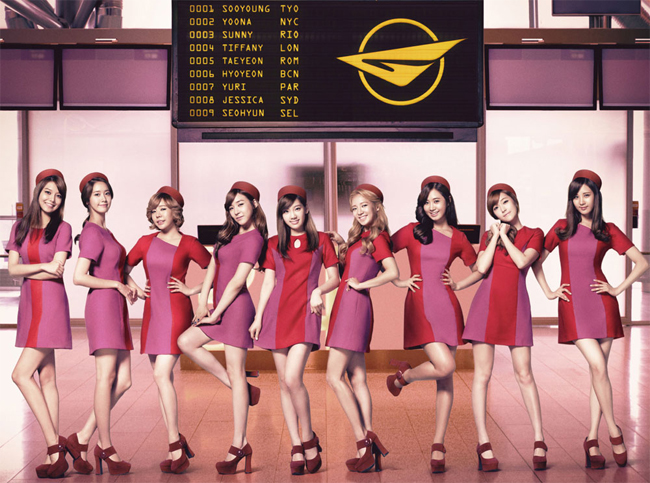
All charges of racism in K-pop are not equal. The reaction to the Girls’ Generation (SNSD) win at the YouTube Music Awards is pretty blatantly racist, while the reaction to the news of an American remake of Boys Over Flowers is not easily characterized as racism.
First, let’s get our terms straight. Just talking about race does not constitute racism. Ashley Doane writes that racial discourse is “the collective text and talk of society with respect to issues of race,” where individuals can “reinforce or transform ideologies” (257). In other words, racial talk does not equal racism. Racism emerges when individuals express or infer racial superiority or inferiority, or reinforce negative stereotypes.
Reactions to K-pop supergroup SNSD’s win at the YouTube Music Awards are racist because these statements imply inferiority based on ethnicity. Popdust reports that “the losing fandoms didn’t take too kindly to seeing their faves being beaten by an Asian act, and took to Twitter to vent their frustrations with a string of disgusting racist tweets.” Many Tweets express the kind of superiority inherent in racist statements. For example, @lloydvatoo tweeted: “why is girls generation in america if they cant speak a word of English lolllooololl” @TwerksOnJustin tweeted: “How did Justin lose over some Japenese (sic) chick no one knows.” In addition to nationalistic sentiments, these tweets also imply that SNSD should not have won because they do not speak English or are Asian. Other tweets posted on the Tumblr Sanctuary are also sexist because they reflect negativity based on gender. @NotAndrewDavis referred to Tiffany as “This lil Asian girl.” @babymermaids tweeted: “How did those irrelevant Asian girls win?” @slothmantha and @smilingkidrauhl both brought out the B-word to express their displeasure at the SNSD win. These comments suggest that individuals are not happy with the SNSD win because they are Asian and female, and they view both as negative.
However, they also reflect an ignorance of the place of SNSD globally. The group is well-known in East Asia, so comments about not knowing about them only reflects one’s lack of engagement with the rest of the world. Moreover, K-pop fans know about “the power of Nine.” SONES, fans of SNSD, are one of the largest and most well-organized K-pop fandoms. As Jeff Yang explains: “Nominees for the YTMAs were selected solely by algorithm, based on likes, shares, views and other metrics of ‘fan engagement,’ and, according to YouTube, winners were chosen based on how many fresh shares the nominated videos got in the month-long runup to the actual event.” SONES did what they, and other fandoms, always do: mobilize the base. Because K-pop fans are also quite savvy in using the Internet, it should surprise no one that they put those skills to work.
On the other hand, the charge of racism thrown at individuals who did not want to see an American remake of Hana Yori Dango (Boys Over Flowers) is misplaced. In the face of a negative response, producers of the venture described their critics as, among other things, racist. According to a post on the producers’ Tumblr: “The amount of racist comments, venom, and negativity aimed at our cast, crew and production staff has been harmful and hurtful for no reason and most of it has no basis that was grounded in fact.” Without seeing the kinds of comments the producers received, it’s hard to determine their tone. However, the producers’ statement lumps all forms of critique together with racism and hateful comments. All critique is not racist.
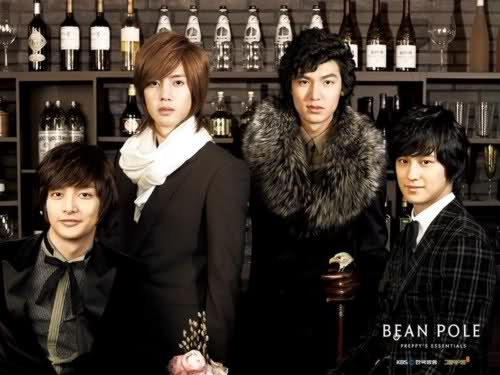
Many fans objected to changing these fundamental elements of the story. All three television versions of the Japanese manga (Japanese, Taiwanese, Korean) take place within Asia, and the dynamics of the plot depend on Asian cultural values, including the dynamics within Asian families, the dynamics between classes in countries in Asia and the centrality of education and school in some Asian countries.
Moreover, the original Asian cast was changed. American fans of Asian popular culture have seen many Asian productions “whitewashed” and stripped of their original Asian context. Such changes replicate business-as-usual for American adaptations of Asian popular culture that erase the Asian context to cater to American sensibilities. In relation to the remake of the anime classic Akira, Angry Asian Man notes, “Warner Brothers still seems hell-bent on making this live-action Akira adaptation thing happen, despite the fact that every fan of the original manga and movie seems to think it’s an awful idea. . . . [Juame] Collet-Serra was going full-steam ahead with his whitewashed adaptation of the beloved Japanese classic, before production was stalled in early 2012. This version was going to star a mostly-white cast and transplanted the story’s post-apocalyptic Japanese setting to “New Manhattan.” Angry Asian Man says similar things about the trailer for the remake of Oldboy: “I’ve read interviews claiming that this draws more heavily from the manga source material than Park’s films, but based on this trailer, it looks like they’ve straight-up remade the movie minus the Asians.”
When fans critique the American remake of Boys Over Flowers, they do so with this tendency in mind and draw attention to the erroneous logic that Americans will only accept entertainment devoid of Asians and Asian culture. In the comments section of “21 Questions About the American Boys Over Flowers Remake Answered,” love4hope4evar wrote: “The K-drama is so beautiful that it makes people interested, then the asian CULTURE is what permanently hooks people into it.” To favor the Asian original context over a watered-down remake is not racist because it does not imply racial superiority or reinforce negative stereotypes. If anything, calls to retain the original context of the drama opens up opportunities for more cultural exchange.
Let’s reserve racism for incidents where it truly appropriate. Because if everything is racist, then nothing is racist.
Images: Girls’ Generation (1), Boys Over Flowers (2)
Sources
Acton, Dan. “American Boys Over Flowers Adaptation Changes Title and Responds to ‘Racist Comments.'” DramaFever. 1 Oct 2013. Web. 5 Nov. 2013.
Angry Asian Man. “Dammit. The Whitewashed Akira Remake Is Back On.” Angry Asian Man. 5 Aug 2013. Web. 5 Nov. 2013.
—–. “The New Oldboy Looks Like the Old Oldboy..With Fewer Asians.” Angry Asian Man. 10 July 2013. Web. 5 Nov. 2013.
Doane, Ashley. “What Is Racism? Racial Discourse and Racial Politics.” Critical Sociology 32.2-3 (2006): 255-274.
Patterson, Jacques.”Girls’ Generation Wins Big At YouTube Music Awards, Racist Tweets From Losing Fandoms Follow.” PopDust. 3 Nov 2013. Web. 5 Nov. 2013.
Yang, Jeff. “Why Girls’ Generation and K-pop Won Big at the YouTube Music Awards.” The Wall Street Journal. 4 Nov. 2013. Web. 5 Nov. 2013.
While K-pop appeals to a variety to people, often those who are called to speak about it in English are white. The absence of the diversity of voices that make up the fandom and commentators presents a distorted view of K-pop culture, and can limit the kinds of stories we hear about K-pop’s spread around the world.
Because fandom does not exist outside of societies and cultures, the dynamics of race and ethnicity often follow individuals into fan circles. One need only look at the fan reaction to the way the film The Hunger Games dealt with the representation of characters.
This is pertinent for K-pop because as visual evidence and Internet activity shows, K-pop draws many different kinds of people. I have discussed the diversity of K-pop fandom, as has others. In 2011, XXXtine explained why we should not be surprised at the diversity that K-pop attracts: “International fans, regardless of ethnicity, tend to reason why they like it so much is because US mainstream music is boring, and that a certain kind of entertainment is missing. ” Ethel Navales made the same observation about attendees at KCON 2013: “The stage was covered with Caucasians, Latinos, African Americans, and various other non-Asian folk. Not only did East Asians show their presence, but Southeast Asians and South Asians did as well.”
However, media tends to gravitate towards fans that do not reflect this diversity. Kyung Lah opens her piece for CNN with footage of Eli Alexander, whom she describes as “a white kid from Utah.” In addition, she seems taken aback when she encounters a group of black K-pop fans at 2012’s KCON convention, stating that “you’re not really the demographic I think of when I think of K-pop.”
When Time ran a feature on K-pop fandom, Lily Rothman focused on one of the smallest demographics in K-pop fandom: the over-40 white male: “Uncle fans—also called by the Korean word for “uncle,” commonly written in English as “ahjussi” or “ahjusshi”—are defined as male K-pop fans who are 30 or older. One of those fans is Stephen Knight, a 47-year-old Nashville lawyer who runs the website kpopularity.com and was recently chosen to participate in a show about the wide array of K-pop fans out there.”
Of course there are white K-pop fans, but these two stories single out white fans, thereby downplaying other kinds of fans. In doing so, they perpetuate the notion that other people of color are not expected to be K-pop fans. Not only are there plenty of K-pop fans of color, they are vocal. Fans of many ethnicities are making reaction videos on YouTube. One thing that you get from non-white K-pop fans often is some attention to the intersection between ethnicity and K-pop. This video by saraseoul alludes to the implications of the non-Asian K-pop fan:
Paying attention to ethnicity also reveals the way K-pop fans experience K-pop culture, which is not always welcoming. Sometimes fans of color feel K-pop culture sidesteps issues certain important issues related to ethnicity, gender, and Western cultural dominance. For example, todiedreaming draws attention to the way Simon and Martina of Eat Your Kimchi fame do not talk about the impact of ethnicity or nationality on what they do:
Simon and Martina always talk or “joke” about how people will point at them in the street and yell “foreigner” or how rude ajummas can be; and for two people who have lived in Korea for a considerable amount of time they don’t know Korean, and they always dismiss it because people adjust to them not knowing conversational Korean. So, I finally figured out what bothered me and seemed off to me about Simon and Martina: They are giving their account of living in a foreign country from a white, privileged stand-point, and tend to over-amplify and sometimes over-simplify a lot about life in South Korea.
Simon and Martina are K-pop celebrities in their own right. They are often invited to participate in K-pop events and are frequently interviewed for their insights on and knowledge about K-pop. James Little of Groove Korea stated: “Eat Your Kimchi is now the top source of information on K-pop in English.” As purveyors and beneficiaries of Korean popular culture, todiedreaming points out that they do not address certain subjects. Given their high profile, one could argue that such a failure may skew the perception of Korean popular culture. It’s not that white commentators like Simon and Martina are inherently problematic. However, they are frequently the voices most listened to and those voices obscure other perspectives in K-pop.
When you look to a variety of people to provide information or insight, you get a more comprehensive view of K-pop. A cursory look at YouTube will reveal a large number of people of color from multiple countries offering responses to K-pop, ranging from humorous observations to critical commentary. Moreover, there are K-pop media outlets that depend on a variety of perspectives. Green Tea Graffitti features staff from around the world who address many aspects of Asian popular culture, including K-pop. seoulbeats describes itself as “a collection of many authors with many different opinions, united by a love of taking apart and facilitating discussion on a deeper level of everything associated with K-pop.” It feature a diverse rosters of writers who provide a wide variety of commentary on K-pop. This has a direct relationship to the kinds of commentary they feature. Seoulbeats writers have tackled representations of femininity, the use of English in K-pop, and race.
Having a diversity of perspectives provides richer commentary and wider coverage of K-pop. These rich sources need to be called upon more often to avoid the perception that the only people who can speak about K-pop are white.
Sources
“K-pop Goes Global.” CNN. YouTube. 5 Feb 2013. Web. 14 Oct. 2013.
“My Opinion of Simon and Martina.” Malisma, coño. nd. Web. 25 Oct 2013.
Navales, Ethel. “Proof that Kpop Is Not Just For Koreans.” Audrey Magazine. 27 Aug 2013. Web. 14 Oct. 2013.
Rothman, Lily. “K-pop’s Unlikeliest Fans: Middle-Age Males.” Time. 2 Sept. 2013. Web. 14 Oct. 2013.
saraseoul. “For Those Weird Non-Korean Fans of K-pop.” YouTube. 4 Aug 2013. Web. 27 Oct 2013.
XXXtine, “Non-Asians Listen to K-pop (And This Is Not News).” 8Asians. 12 Apr 2011. Web. 14 Oct. 2013.
See on Scoop.it – K-pop Fandoms
Original article from May 15th, 2013:
On May 3rd, Hyoyeon opened an Instagram account and began posting pictures on the popular photo-sharing service.
Yes, it’s still news when a K-pop artist opens a social network account. The Internet is key to the way a lot of fans engage in fan activity.
See on www.soshified.com
See on Scoop.it – K-pop Fandoms
Girls’ Generation has been nominated for four categories for the “2013 Mnet Asian Music Awards”: “Best Female Group”, “Best Dance Performance – Female Group”, “Artist of the Year”, and “BC – UnionPay Song of the Year”.
It’s award season, and that means mustering up the fan troops to vote. Many fandoms, like SONEs, are encouraging members to vote for Girls’ Generation and support their nomination.
See on www.soshified.com
See on Scoop.it – Korean Wave
Once a musician, always a musician. October 23 marked Epik High’s 10 year anniversary. On October 22, Epik High’s official Youtube channel posted a short video with the message “Thank you for the memories” to celebrate the 10-year anniversary of…
The fan dynamic from Epik High can be described as low-key in relation to idol groups and artists. Yet the fan message is a tried and true strategy. Epik High’s message is less a direct message to the fans and more of a peek into their creative world.
See on www.soompi.com
See on Scoop.it – Korean Wave
It’s official! Gummy will be joining JYJ at C-JeS Entertainment.
K-Pop officials confirmed on October 24 Gummy has signed an exclusive contract with C-JeS Entertainment.
This particular move is interesting. YG has reuptation for giving its artist more creative freedom, yet Gummy did not renew her contract. Instead, Gummy becomes the second musical act represented by C-JeS. One can only speculate as to what motivated her decision, but this challenges the notion that artists never have the freedom to make such decisions.
See on www.soompi.com
See on Scoop.it – Korean Wave
Who knows? It’s especially worse in Korea, as we’ve seen with banned costumes, music videos, dances, ect. Especially with Hyuna.
There are people who like K-pop precisely because it is devoid of the focus on the body that some see in music in the United States. While the United States may not be directly to blame, it does have a large influence in global culture.
See on black-kpop-fans.tumblr.com
See on Scoop.it – K-pop Fandoms
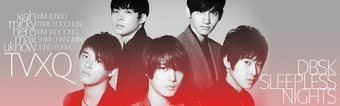
DBSKnights’ 5TH ANNIVERSARY
It’s that time of the year again! Five years ago, on September 29, 2008, our founder Portia created DBSK Sleepless Nights as a haven for new and old DBSK fans.
While some people argue that K-pop fandom is short-lived, several fandoms have long histories. Here, DBSKnights, fans of TVXQ celebrates the fanclub’s five-year anniversary.
See on www.dbsknights.net
See on Scoop.it – K-pop Fandoms
To. Cassiopeia~^^*
wow~ The meeting with the fans after a long time!…
Fans help other fans by translating messages. Here, Cassies have translated handwritten messages from Yunho and Changmin from TVXQ.
See on www.dbsknights.net
In 1903, W.E.B. Du Bois posed the question, “How does it feel to be a problem?” in his influential book, The Souls of Black Folk. I’m experiencing a 21st century version of this, “How does it feel to be a question?” As a black woman who writes about K-pop, it’s one I’ve been getting more and more. That question has different implications.
When people ask, “Why are you into K-pop?,” they want to know why I’m interested in music from halfway around the world made by people who don’t look like me. These people genuinely want to know, in part because K-pop is a subculture outside of Korea and seems so different from what people are used to. However, I find that this becomes less of a concern once people TALK to me about K-pop. By the time I finish telling you about my favorite groups (SS501 and Shinhwa, baby!), my favorite videos (OMO! did you see the camera work on Shinhwa’s “Brand New?”), my favorite choreography (I still can’t get over Yunho’s dancing in “Keep Your Head Down“), favorite songs (the Planet Shiver Mix of Brown Eyed Soul’s “Can’t Stop Loving You” is awesome!), and most interesting obscure K-pop tidbits (Big Mama and Solid both did versions of “Kkum”), it’s pretty clear that I have a genuine passion for K-pop.
But that passion is demonstrated by knowledge. People are more convinced by the fact that I took the time to know what I’m talking about. Knowledge is a often-used barometer of fan status, and as anyone who knows their K-pop knows, that knowledge is flung wide across the Internet. People respect the fact that I work to get that knowledge. This is something that anyone can do, regardless of ethnicity. This is why K-pop has such a diverse following despite the language barrier. At the same time, I cannot escape the lens through which I see K-pop. Quiet as its kept, I’m not Korean or Asian, and as a result, some cultural nuances are lost on me. But they are also lost on others who do not have first-hand knowledge of those cultures, including later-generation Asian Americans. What I can do is be aware of that lens, recognize the limits of my perceptions, respect the culture and always try to do better.
Because of this, I am welcomed into like-minded K-pop communities, both popular and academic. The initial trepidation of the question disappears the minute I start talking about K-pop. I am happy that a small but solid community of people who write and do work on K-pop provide such a diverse, entertaining and welcoming community. We can all act the fool together! These people just accept that I’m a black girl into K-pop, an incredibly knowledgeable black girl into K-pop. And it’s all good.
Then, there are people who ask: “Why are you into K-pop?” Sometimes they mean: “K-pop (and other forms of Asian popular culture) is only for Koreans (or Asians).” Before we talk about why black people like K-pop, let’s talk about why Koreans like black music. It’s the reason why anybody likes black music: they like the music and it speaks to them. For people who say that Koreans can’t understand the struggle and pain that underlies black music, I suggest they investigate the state of Korea just after the Korean war, a war in their own country that killed a significant portion of the population, and tell them they don’t understand pain. At the same time, black music is about much more than that, and K-pop shows that Koreans can understand that too. It would be helpful for interviewers to ask K-pop artists who they listen to rather than who they are dating, because then more people would know what K-pop fans already know: the black music tradition resonates with Koreans. It’s not just about the now and the popular. K-pop artists will tell you their favorite artists include Aretha Franklin, Earth Wind and Fire, and Stevie Wonder. They overcame a linguistic barrier because the music has a language all its own.
Other times, people mean: “Black people should stick with black stuff; stay in your lane.” This is my lane! My interest in Asian cultures is not new: watching Saturday morning kung-fu theatre, running home to watch Star Blazers, taking four years of Japanese in college, being ecstatic that we finally got a Three Kingdoms movie in John Woo’s Red Cliff, and now, writing on K-pop. K-pop has particular resonance for blacks because it’s a hybrid style of music, combining black music and Korean elements. I wonder why more black people aren’t into K-pop. Even my mama likes K-pop! I recognize black elements in K-pop, but also like Korean culture.
To suggest that black people should only engage in black culture runs counter to the history of cultural production of black people. I follow a long line of African Americans who also pursued a passion for Asian cultures, including Du Bois, Richard Wright, Langston Hughes, iona rozeal brown and the Wu-Tang Clan. Black culture has ALWAYS been hybrid. Blackness has always been multidimensional. Black people have always been cosmopolitan. I feel that in making an argument for the legitimacy of black culture, some people have taken the extreme view that the “real” black experience is a narrow one, often associated with urban life, grounded in an unrelenting daily struggle against the forces of racism and discrimination. While these are aspects of the lived experience of my blacks, they are not the ONLY barometer of black experience. I think that we forget that there is black joy; that our music and art and film and literature is about a larger experience. The tom-tom laughs AND cries, y’all.
So, I doubt I’ll stop getting asked this question, and I’m happy to explain as well as remind people that it is ridiculous to put artificial barriers on who can like what based on who they are.
See on Scoop.it – Korean Wave
After a four-year hiatus and hot on the heels of Tiger JK’s departure from Jungle Entertainment, Drunken Tiger returns with The Cure, the “group”’s ninth release.
While we can all disagree on the technical or aesthetic aspects of music and have different opinions on what is good or bad, this article reflects the tendency to reduce hip hop to just one mode. Even as it identifies Tiger JK’s personal travails as inspiration for the release, it blasts the The Cure because of its lack of "acid flows, endless cool, and sick production." Erika explains that "the emotional sentiments are as hackneyed as the beats, not because Tiger JK comes from a place of insincerity, but because the audience has been there, done that, and come home with the t-shirt." Overall, Erika says that this album is not up to Tiger JK’s previous work because its too mello and not "bombastic" enough.
Such opinions represent a refusal to allow hip-hop to grow and change. It keeps hip-hop on one setting, and discourages innovation, or even anything that deviates from a norm that defines hip-hop as hard. We’ve seen this before, when the norm became gangster rap, and other modes fell to the wayside, and many regret that turn. As Mark Anthony Neal once said, hip-hop has a mortgage. If it is truly a mode for personal expression, then it follows that personal circumstances change, and it may not be as important to talk about what’s going on in the club anymore. In addition, the relentless quest for "something new" from artists is just unrealistic to maintain, and at some point, artists of a certain level cease to have to prove themselves.
If we are going to talk about Tiger JK’s dialogue with various musical traditions, I would expect the musical knowledge of writers to be wide and varied enough to bring a critical eye to the musical traditions at play, musical references that go beyond the 1980s.
See on seoulbeats.com
See on Scoop.it – Korean Wave
Rookie vocal group What Women Want has made their debut with their first single, “Curious.” The music video was shared with English subtitles through the official Loen Entertainment YouTube channel.
One thing missing from the K-pop scene right now is a female vocal group. What Women Want diversifies the landscape by centralizing their voices.
See on www.soompi.com
See on Scoop.it – Korean Wave
K-hip-hop came to forefront of the news when Swings pushed the first domino by releasing “King Swings,” a track intending to have a similar effect as that of Kendrick Lamar‘s feature in Big Sean‘s “Control” in the US.
Underneath the conversation about the diss tracks is some discourse about how, as one participant puts it, "With K-pop, we are able to enjoy everything even without knowing what they are singing about due to the visual aspect of their performances. But that is not present in K-hip-hop where their artistry relies on understanding of their songs in their full context with their slang, metaphors, puns and every other wordplay that is out there." While lyrics are significant, they are not the only component of hip hop music. Some would argue that the beat is equally important, and that musical aspect is something that transcends spoken language. Others would point to a general spirit of individualism in hip hop that speaks to people around the world. People who don’t listen to KHip-Hop because of the language probably aren’t listening to much music in any language beyond their own. Lots of insight about the global spread of hip-hop can be found in Global Noise: Rap and Hip-Hop Outside the USA, edited by Tony Mitchell.
See on seoulbeats.com





 High Yellow - Asian Popular Culture