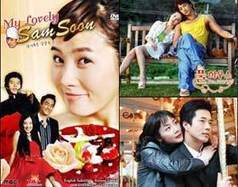
People Over Money: Merchant Kim Man Deok (2010)

Merchant Kim Man Deok is an interesting blend of finance and romance. In both, it’s best to be on the up and up. The Kdrama gives a peek into Joseon-era business practices: the buying, the selling and the deals under the table.  Corruption is rampant, and the most successful merchants are those who pay government officials to keep the competition down.  On top of that, women are not viewed as savvy businesspeople, so they have an even harder time.

Man Deok isn’t a queen or an outlaw, but she is awesome in her own way.  At first, you just think she’s a bratty urchin willing to pimp her fellow orphan-siblings just to make a buck, but gladly, she quickly realizes that being a merchant isn’t about the money: it’s about the people.  Man Deok’s way of being a merchant is really different from the ways that other men make money in the series.  One could say that it’s because Man Deok is a woman, who learns her craft from  a woman, that makes this story unique.  Man Deok’s adoptive grandmother, a successful merchant herself, teaches Man Deok to value people over money, to build relationships with her customers to ensure not just return business, but a sense of loyalty.

This way of doing business is very different from Kang Kye Man, a former protegé of Man Deok’s mentor and current troublemaker in the market.  Kye Man is not above using extortion and violence to get his way.  He doesn’t care about loyalty; he wants his benjamins now. While Man Deok learns her business acumen from a principled woman, Moon Seon, Deok Man’s childhood friend, learns her business sense from Kye Man.  And enter the villaness!  She’s mean, from a young age.  Although she and Man Deok are both orphans, Moon Seon is driven by a sense of jealousy and uses survival as an excuse to get rid of anyone who gets in her way.  She intends to get as much money as possible in order to be secure, but her pursuit of wealthy only makes her position more precarious.

The romantic entanglements revolve around the merchant world as well.  Kang Yoo Ji, Kye Man’s son, is the spoiled merchant that’s been banished to Jeju Island to look after his family’s interests there, and because of his connections, is the Big Man on the Island.  He is an instant mismatch for Man Deok’s righteous ways: the more he tries to force her to “be his woman,” the more she resists.  It takes a traumatic event to make Yoo Ji change his ways. Adding spice to the pot is the conflict between shady Yoo Ji and upstanding Hong Soo, Man Deok’s love interest and son of one of the biggest and most corrupt government officials.  Hong Soo is a law man whose pursuit of justice puts him at odds with his father.

The drama has some interesting twists and turns, along with the familiar “I can’t believe that happened” melodrama.  It shows how life on Jeju island is different from life on the mainland. It pays a lot of attention to the local people who make their living off of selling things on Jeju.  Everything from pearls to hats gets sold in this Kdrama.
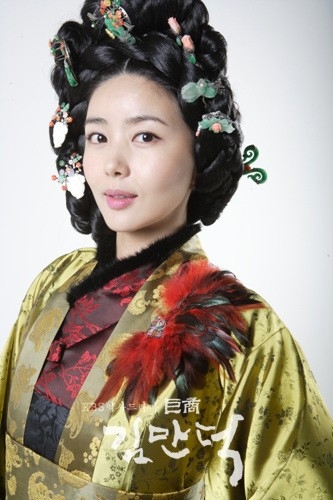
The most compelling conflict is between Man Deok and Moon Seon.  Moon Seon is  gangster, let’s just be frank.  She condones murder, extortion, and torture. She lies, cheats and steals.  And while her shenanigans don’t rise to the level of Queen Seondeok’s Mishil (she is my gold standard for female villainy), she does make a strong showing. If she can’t have Hong Soo (and that ship sails WAY early, because what upstanding yangban would want Moon Seon after she’s manipulated Kye Man into making her his wife AND having his child), no one can. If she can’t sell the tribute to the court, no one will. If she can’t have a ship, no one can.  Even when she’s a mother, she’s a nasty piece of work.

Man Deok, on the other hand, is a saint. When she’s down, she always finds a way to pick herself up.  Although it gets a little annoying when she refuses to accept help from others, she always helps others, even when she ends up with nothing. And when she strikes it rich, she shares it with everyone.  For instance, when she takes advantage of a tip about the king’s health, she pays her craft workers before doing the work AND after getting the work done.

It’s great to see Man Deok, though, get a little spunky when she realizes that Moon Seon is not her friend.  Moon Seon’s comes off as pathetic when she insists on making decisions just to get back at Man Deok.  Man Deok wins because she never gives into the desire to retaliate (although sometimes the viewer would want her to).  Everyone who ever does Man Deok wrong, reaps what they sow.

Another great aspect of this Kdrama is the relationship between Man Deok and Hong Soo.  Separated by class, their relationship ends up the way so many do in the historical Kdrama, but before that, they do actually agree to have a relationship, and nothing that anyone does damages their feelings for each other.  It’s sweet!  As children, Man Deok is the more outgoing one, while Hong Soo is the reserved, sheltered noble who becomes enchanted by her courage and outspokenness.  Of course, Hong Soo’s father will not be having any of this, and constantly calls Man Deok names and accuses her of seducing his son.  What surprises me is that Hong Soo’s parents do not take the drastic step of forcing him to marry into some well-placed family, although Moon Seon has a little bit to do with that.
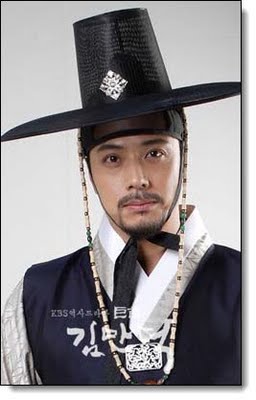
There are also several other narratives that go on: Japanese merchants and their illegal trade, government gisaengs, famine, loan sharks, quarantine, and lots of contract hits for hire.  I mean, you expect this type of thing in historical Kdramas that involve palace intrigue. But we are talking merchants, people!

Also, I have to say that there are some people who don’t get their due, and chief among them is MOON SEON! Why does she get to have self-reflection time? Not so much as a cut or scratch on her!  While her uncle gets his comeuppance, what about her other henchman?

Sources: Kim Man Deok 1, 2, 3, 4, 5

Creative Commons License
This work is licensed under a Creative Commons Attribution-NonCommercial-ShareAlike 3.0 Unported License

Donghae is Not My Oppa, And I Like Super Junior

Leeteuk,Super Junior

For Leeteuk, on the eve of his enlistment…..

I like Super Junior. A lot of people find it difficult to say that, for a variety of reasons. Some think that Super Junior doesn’t have any talent and represents everything that is “wrong” with K-pop.  Others are lukewarm about them, saying, “Oh, I kinda like them. They are ok.”

Others like to talk smack about E.L.Fs, fans of Super Junior.   They say Super Junior fans overreact when people talk about their “oppas.”

For example, E.L.Fs descended en masse in the comment section of Justin Hayes‘ “story” on Mokpo.  After calling Donghae a “chap,” he describes Super Junior this way:

The “band” was formed in 2005 by Korean impresario Lee Soo-man. Obviously not a man to do things by half he decided that if the traditional boyband comprises four or five pretty but ultimately talentless stooges then to guarantee massive success the best thing to do would be to double or even triple the number of talentless stooges on stage at one time.

Some commenters saw comments criticizing Hayes as a knee-jerk reaction by E.L.Fs.  Oh My wrote:  “I see you managed to upset the rabid K-Pop fans and are being inundated by their rebuffs about how amazing their Super Junior oppas are….my condolences.”   But if you look closely, E.L.Fs also corrected Hayes’ factual error.  Hayes writes that Super Junior has, at its peak 13 members, but that is not true (as any halfway decent research would have revealed).  So E.L.Fs point that out. Lots of E.L.Fs, from around the world, point that out. Go E.L.Fs!

Contrary to Oh My’s comment, I’m not a rabid K-pop fan because I disagree with Hayes.  Members of Super Junior are not my oppas.  And I like them anyway.  You know what happens when you make assumptions…….

I didn’t always like Super Junior, and before I listened to them, I didn’t understand what all the buzz was about. But I listened to their music, a lot of their music, and watched their videos.   I got over the fact there are lots of them and learned their names.  That’s right, I like Super Junior.  So what?  Just because I like Super Junior doesn’t mean you have to like Super Junior. But even I’m not going to let you talk smack about me because I like Super Junior.

Even though E.L.Fs sometimes get overexcited (I mean, Hayes is writing for Redbull.com; it’s not exactly a respected publication), I admire their passion for their group. And the truth is, fans of other K-pop groups have the same kind of passion.  And at the end of the day, it doesn’t matter what you say about E.L.Fs and Super Junior: people who like Super Junior will still like Super Junior.

So, rock on, E.L.Fs!!!!

Image  allkpoplovers

Justin Hayes, Korean Grand Prix Six of the Best: Things You Never Knew About Mokpo, Redbull

In Defense of the Diverse K-pop Fan

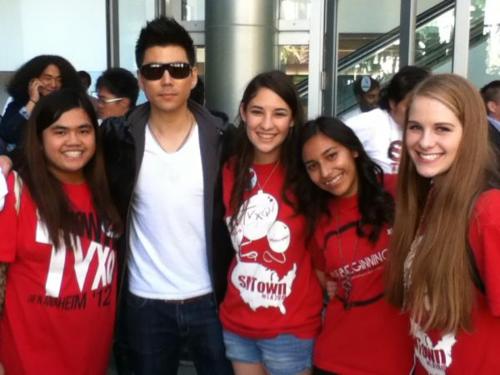
Shane Yoon, With TVXQ fans

As K-pop becomes more popular around the world, its fans also receive more attention, both positive and negative. However, some of the negative characterizations repeated by writers who act as authorities and in professional capacities have racial and gendered ramifications.

In “Hallyu Tsunami: The Unstoppable (and Terrifying) Rise of K-pop Fandom,” Sam Lansky describes K-pop fans as “mostly the ken of geeky music journalists, Asian Americans, and gays weary of Lady Gaga’s art-pop pretensions but thirsty for a similar spectacle.”  After a “trolling high” that resulted in fans responding to his tweets about TVXQ, Lanksy proceeds to rile up fans about Jae Joong, former member of TVXQ and current member of JYJ. This prompts what Lansky describes as “a deluge of death threats from crazed fans who, whether they perceived me as an actual threat to the imagined romance between Yunho and Jae Joong or merely an annoyance who should to be silenced, gave me pause in an online game that had become addictively pleasurable.”   Lansky goes on to link K-pop fandom to  deadly behavior:  “The Mark David Chapmans of the American pop universe tend to be anomalous. With K-pop, stan behavior carries over into the real world with frequent, alarming consequences.”

Such generalizations come from those familiar with K-pop as well.   Simon (of Eat Your Kimchi fame) gave this comment as part of  this discussion on Al Jazeera‘s The Stream: K-pop Diplomacy in response to the ability of K-pop idols to relate to fans (@20:02): [Disclaimer: I was initially approached to do the show, and my video comment was chosen for inclusion during the show–Yay!]

One of the things I’m really interested in when it comes to the marketing of K-pop idols. . . I find the way that K-pop idols are described by fans..it’s a little bit disturbing to me. It’s really in terms of religious terms. These are K-pop idols. They’re described as gods and goddesses and kings and queens. I lot of people look up to these idols and they shake and they quiver and that element of K-pop idols trying to relate to fans it’s difficult for fans sometimes to understand because it’s like, “Oh my God, this is my hero, this is my god speaking to me.” So I find it very interesting.

Such characterizations gendered and racial implications.  K-pop is made up of a variety of individuals, including Black Kpop fansadult K-pop fans and Arabian K-pop fans. K-pop fans come from all over the world, as numerous Facebook pages and comments, websites and YouTube video subbed in various languages reveal.  Unlike other large scale fandoms like science fiction, whose fan communities that tend to be overwhelmingly white and male, K-pop fandom is made up of mostly women.  When men, sometimes white, characterize this fandom made up of females and people of color as hysterical, homicidal, dangerous, and cult-like, it plays into historic unfounded negative characterizations of ladies and people of color. It is using a broad brush to describe a few, and that broad brush erroneously paints people of color and women as disruptive to the social fabric.

There are plenty of people who consistently criticize K–pop fan behavior, but outlets like Anti Kpop Fangirl and Asian Junkie both note they are expressing their personal opinions.  Lansky and Simon express such opinions in a professional capacity and as a result, their negative and erroneous characterizations carry more weight.  Lansky has written for such auspicious outlets as The Atlantic, New York Magazine and Billboard.  As a result of  Eat Your Kimchi, Simon is regarded as an authority on K-pop. Groove Korea describes Eat Your Kimchi as “the top source of information on K-pop in English.”

Their tendency to generalize about the diverse fandom that is K-pop also does some damage to the credibility of both Lansky and Simon.   Lansky glosses over the fact that he instigates the “terrifying” behavior that he then points to it as “normal.”  This is akin to having a Packers fan walk into the Bears locker room and start talking smack about the team’s quarterback (thanks Heidi!). While violence is never the right response, it is natural that Bears fans would respond because they had been provoked.  Lansky sought to get the very reaction he received, then proceeded to write about it to show how “crazy” K-pop fans are.  Stan behavior is sensational, and gets people to read your story.

Even more egregious is the way Lansky equates K-pop stan behavior to Mark David Chapman, the man responsible for the murder of John Lennon.  No K-pop fan has ever killed anyone, and to suggest such is at best poor writing, and at worst, deception.  That’s a sketchy and manipulative thing to do as a writer. It adds insult to injury to be a professional male writer and characterize a largely female and young adult fandom in this way. It smacks of paternalism.

Simon fails to qualify his comments. He does not describe some fans as engaged in literal idol worship, but ascribes that behavior to all fans.  It just doesn’t apply to all fans.  For every story you hear about a stan or a fan war on a forum, there are loads more of unreported stories about fans cooperating at a fan meet or patiently waiting for somebody to be released from MMA.  This failure to be careful with language, as a figure of authority on a subject, can have a negative effect on Simon’s credibility. Once again, to be a white man who describes a largely female fandom in this way has implications for Simon’s credibility.

The problem is not talking about the extreme behavior of fans. It happens. The problem is when males,  some white, acting in professional capacities talk about it as the only fan behavior among a largely female and very diverse fan community.

Image: Shane Yoon

SourcesL

Al Jazeera English.  “The Stream: K-pop Diplomacy.” 3 Sept 2012. Al Jazeera English. 20 Oct 2012. <http://youtu.be/rYt813fDWTw>

Lansky, Sam.  “Hallyu Tsunami: The Unstoppable (and Terryfing) Rise of K-pop Fandom.” 10 Sept 2012. Grantland. 18 Sept 2012. <http://www.grantland.com/blog/hollywood-prospectus/post/_/id/57109/k-pop>

Will the open nature of K-Pop construction hold up on the UK music scene? | UnitedKpop

See on Scoop.itKorean Wave

Holly Smith makes some good points about the significance of the Korean casting system to the success of K-pop,


However, some context is needed.  Boy groups and girl groups were not the invention of 1990s culture.  Often, individuals forget the large number of girl and boy groups of the 1960s, plucked from the “streets” and trained to be on television (when it was still fairly new).  There are parallels to be found between the Korean agency strategies and the strategies of a Berry Gordy at Motown. Deliberately crafting these public images occurs over the vast majority of popular music. 

See on unitedkpop.com

New York Comic Con Embraces K-Pop?

See on Scoop.itKorean Wave

What would be interesting is if the fandoms of both intersect in some way, given the differences and similariteis bewteen the two.

See on www.kpopstarz.com

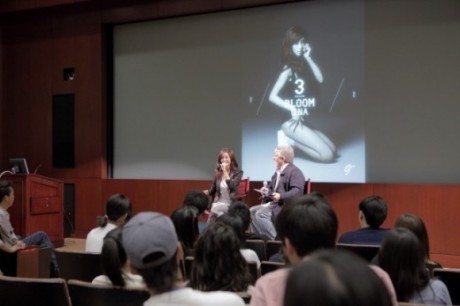
G.NA gives a K-pop lecture at Pepperdine University

See on Scoop.itKorean Wave

G.NA’s appearance at Pepperdine University shows the increasing interest in K-pop, and it is good to hear from artists themselves about their perceptions about their experience as K-pop artists. I would like to see a transcript of the lecture, however, before I think about whether G.NA can talk about the implications of K-pop in society. 

See on www.allkpop.com

My piece on interrogating the common critiques of Kpop.

CeeFu's avatarKPK: Kpop Kollective

Crystal S. Anderson, PhD

Elon University

Kpop is subject to a lot of criticism.  A LOT. The most repeated charge against Kpop is that it is manufactured.  But is that really true?  Usually when critics level this charge, they make sweeping generalizations about the whole landscape of pop.  In doing so, they perpetuate stereotypes about the lack of originality in Asian popular culture.

View original post 2,046 more words

CeeFu's avatarKPK: Kpop Kollective

Crystal Anderson appeared on a brief segment on Talk Asia on CNN International on October 6.. She spoke about the reasons for the popularity of Psy, a Korean rapper who has gained international success with his video for “Gangnam Style.” She also discussed the future of K-pop in the United States.

View original post

CeeFu's avatarKPK: Kpop Kollective

Crystal Anderson spoke about Afro-Asian culture, K-pop and K-drama with Michelle Clark-McCrary, host of the podcast ITYCRadio, which can be found via ITYC (Is That Your Child).  The podcast covers issues related to race and social justice.  Listen to the entire podcast here.

View original post

My first digital essay for Hallyu Harmony: A Cultural History of K-pop.

CeeFu's avatarKPK: Kpop Kollective

Seo Taiji: President of Culture is the first digital essay for Hallyu Harmony: A Cultural History of K-pop.

Pioneering a hybrid Korean popular music with global aspirations, Seo Taiji set the tone for contemporary K-pop through his fusion of multiple music genres with a Korean sensibility, global fan activity, and groundbreaking industry practices.  These activities continue to be staples of K-pop today.

Read the entire digital essay at Hallyu Harmony.

Image: “Seo Taiji, Gaon Chart,” Hallyu Harmony, accessed October 9, 2012, http://kpop.omeka.net/items/show/48.

View original post

My research on reasons why adults like K-pop.

Crystal S. Anderson's avatarKPK: Kpop Kollective

Crystal S. Anderson, PhD

Elon University

Academic research suggests adults like K-pop for a variety of reasons, the chief of which is music.  These findings complicate assumptions about the identity of international K-pop fans and their preferences.  According to 638 responses among 18- to 30-year-olds from around the world, other top reasons include choreography and idols.

Youth is a major lens through which many view K-pop. Not only do commentators  focus on the age of the performers, they also assume that all fans of K-pop are teenagers.   The Wikipedia entry states that K-pop “has grown into a popular subculture among teenagers and young adults around the world.” Commentators like Kim Ji-myung often begin media stories about K-pop with an observation about the age of its fans:  “I find it surprising and also fun to see so many European and American youngsters dance and sing in unison with Korean tunes (in Korean!)…

View original post 2,259 more words

Why Do You Like K-Pop?

See on Scoop.itKorean Wave

When Alexander Abad-Santos asks, “Why Do You Like K-pop,” he is clearly asking for a mainstream opinion. He surveys three stories on Psy’s reception with little commentary.  

See on www.theatlanticwire.com

Korean Dramas, K-pop Helped Reshape Philippine TV, Music | The Manila Bulletin Newspaper Online

See on Scoop.itKorean Wave

Jonathan Hicap covers a paper given by Prof. Ma. Crisanta Flores of the University of the Philippines.


This story articulates why, despite several stories fortelling the demise of Hallyu, the cultural movement continues to grow. As it travels around the globe, it is engaged by different cultures for different reasons. 

See on www.mb.com.ph

Asadal: 10 dramas to avoid (if you don’t want to hate Kdramaland for …

See on Scoop.itKorean Wave

This is an interesting list of Kdramas to avoid, many of which are key to their genres, especially fusion sageuk fusion and melodrama.  In fact, it is fairly atypical of individuals who write about Kdrama on the Internet. Personal preferences aside, most sites supplement personal opinion with a review that is based on evidence from the Kdrama.

See on ethlenn.blogspot.fr

Why Tiger JK Isn’t Racist, Shouldn’t Have Apologized, and How Psy Factors In | seoulbeats

See on Scoop.itKorean Wave

Amy writes about Tiger JK’s response to hecklers at a recent performance when asked to do the Psy dance. She does a good job of unpacking Tiger JK’s response.


The very incident that sparked Tiger JK’s response is evidence of how the way Asian masculinity factors into Psy’s response in the United States.  To ask Tiger JK, of all people, to do the Psy dance, suggests that the hecklers do not see significant distinctions among Asian men.  Tiger JK’s response suggests that, as an Asian man, he’s been subject to this kind of generalization far too many times.


Additionally, Tiger JK’s apology is equally significant, because he walks back his own generalization, without letting those who actually think Asian men are interchangeable off the hook. 

See on seoulbeats.com