What I’m Listening To: “Kkum (Dream),” Big Mama

BIGMAMA_bigmamakr

Ever so often, I like to share what’s on heavy rotation on my iPod. It isn’t always the newest thing, or the most popular thing, but for some reason this is the stuff that I’m grooving to.  I make no distinction between idol and non-idol Kpop, popular and obscure, mainstream and indie. It’s just what I like, and some info about it. Maybe you might like it too.

What I’m Listening To

Recently, Big Mama released their final single, “Cleaning Drawers,” but I’ve been listening to their debut album, Like the Bible, and “Kkum (Dream)” in particular.

Who Does It

Big Mama consisted of Shin Yeon Ah, Lee Young Hyun, Lee Ji Young and Park Min Hye.  So named because they were curvier than other singers, Big Mama gained and maintained a reputation for being stellar and consistent R&B vocalists from 2003 to 2012.  Most people remember their hit, “Breakaway,” with the slick video that places critiques about appearance in the forefront.

The female group consistently delivered powerful performances on the album with “Breakaway” and their cover of “His Eye Is On the Sparrow,” but my favorite is “Kkum (Dream).”  All of the members of Big Mama are great singers in their own right, but they give you goosebumps when they join their voices together.  This song gets even better when they perform it live here:

Why I Like It

I think I like “Kkum” because it is a song that really showcases their strong vocals. This live performances is especially great when they break it down at the end.  It reminds me of old school R&B.  It’s no wonder.  Jangta reminds us:  “Instead of finding inspiration from American pop stars – such as Britney Spears and Christina Aguilera – they’d rather pattern their music to Soul/R&B legends Ella Fitzgerald, Stevie Wonder, and Whitney Houston.”

BONUS: Did you know that Solid does an acapella version of the same song on their album Solid? Go listen!

Image: BigMamaKr

Sources:

Big Mama, “Dream.” Uploaded by cho3515. YouTube. 2 Jun 2007. Web. 1 Mar 2013.

Jangta. “Seoul Singers.” Green Tea Graffiti. 9 Feb 2010. Web. 1 Mar 2013.

The Revolution Will Be Televised: God of War/Soldier/무신 (2012)

godofwarmainposter

God of War (also known as Soldier) may put itself out there as a military drama, but like many a sageuk, it’s really about unbridled ambition, obsession and uncontrolled fear and the impact they have on personal and national relationships. Continue reading “The Revolution Will Be Televised: God of War/Soldier/무신 (2012)”

K-pop and Hip Hop

While we can all agree that hip-hop has had an impact on K-pop, we don’t all agree on what that impact is.  Some writers tend to define hip-hop solely in terms of oppression and discrimination experienced by African Americans. This reduces the complexity of the experiences of African Americans, distorts the genre of hip-hop,  and potentially simplifies any analysis of K-pop and hip-hop.

Continue reading “K-pop and Hip Hop”

Sexy Girl Groups in K-Pop Won’t Work Any More, YG Entertainment to Create the … – KpopStarz

See on Scoop.itKorean Wave

KpopStarz
Sexy Girl Groups in K-Pop Won’t Work Any More, YG Entertainment to Create the …
KpopStarz
Yang Hyun Suk stated that many people believe that K-Pop is the popular trend right now, however, that is untrue.

Crystal “CeeFu” Anderson‘s insight:

This article reveals more about Yang Hyun Suk’s perspective on artists in his own company than insights that apply to K-pop as a whole.  The prominence of merchandise and endorsements as well as commerical collaoborations are things that many K-pop and even K-drama stars benefit from.  

See on www.kpopstarz.com

The faulty sound system at ‘2012 KBS Music Festival’ reveals the …

See on Scoop.itKorean Wave

The ‘2012 KBS Music Festival’ suffered from numerous audio problems to the frustration of many viewers. However, one positive from the audio issues was that it managed to separate the actual kings and queens of live K-pop …

Crystal “CeeFu” Anderson‘s insight:

K-pop artists are often criticized for being fake and having no talent, but incidents like this show that they are often multitalented, executing choreography while maintaining the quality of their voices.

See on www.allkpop.com

Top 10 Female K-Pop Dances 2012 | UnitedKpop

See on Scoop.itKorean Wave

Top 10 Female K-Pop Dances 2012! So you’ve seen the Top 10 Male K-Pop Dances of 2012 and now here come the girls! From the fun and playful to the down-right.

Crystal “CeeFu” Anderson‘s insight:

This article highlights one of the central elements of contemporary K-pop: choreography. From solo performers to group dances, it showcases the differences in choreography.

See on unitedkpop.com

K-Pop Stars to Continue Hallyu Wave Due to Psy’s ‘Gangnam Style’ Syndrome – KpopStarz

See on Scoop.itKorean Wave

KpopStarz
K-Pop Stars to Continue Hallyu Wave Due to Psy’s ‘Gangnam Style’ Syndrome
KpopStarz
With the Psy syndrome that passed last year, many other K-Pop artists are making their comebacks this year.

Crystal “CeeFu” Anderson‘s insight:

This article is great for the rundown of tours and comebacks of major K-pop acts for 2013. However, it is a bit misleading to suggest that these events are evidence that these acts are trying to emulate Psy or "become the next Psy." Comebacks and tours are a standard in K-pop. In holding a concert in California, Psy follows in the footsteps of Rain, JYJ, BigBang and 2NE1 i holding major concerts in the United States. 

See on www.kpopstarz.com

[SERIES REVIEW] Way Back In The Day: Faith/The Great Doctor/신의

SBS Official Poster, Faith/The Great Doctor

While the name of this Kdrama suggests that you follow the exploits of a 21st century woman who gets transported back to the Goryeo era, I found myself distracted by other, more compelling characters and narratives, not the least of which was Lee Min Ho as Choi Young, the love interest.

Continue reading “[SERIES REVIEW] Way Back In The Day: Faith/The Great Doctor/신의”

Of Misconceptions About Cultural Appropriation in K-pop

While it is great to see so many people writing about K-pop and its cultural implications around the world, what’s not cool is generalizing about cultural appropriation in K-pop.

Continue reading “Of Misconceptions About Cultural Appropriation in K-pop”

Warrior Hair in Kdrama

kingdomofthewind

Historical Kdramas are known for the palace intrigue, political drama and tensions between the ruler and the ruled. But if you are a frequent viewer, you also wait with anticipation for the other hallmark of the period Kdrama: warrior hair!

What is warrior hair? Warrior hair is an aesthetic common to the historical Kdrama, when heroes (and villains) tie their hair up on their heads or back in a ponytail,  presumably to keep it out of their eyes and they embark on the multiple episodes that make up these kdramas, all the while allowing it to cascade down in all kinds of ways.  Headbands are optional.

You know what I’m talking about. Exhibit A: Ji Chang Wook as Baek Dong Soo in Warrior Baek Dong Soo:

warriorbaekdongsoo

Before he decides to stop being a boob and devote himself to martial arts, that hair is just, well, there. You know he’s serious when he ties it back.

Exhibit B: Lee Min Ho as Choi Young in Faith:

faith

Do I even have to say anything about this? This is great because from episode one, he’s a warrior, so the warrior hair is always on display.

Exhibit C: Jang Hyuk as Lee Dae Gil and Oh Ji Ho as Song Tae Ha in Chuno:

chuno

Here we have two for the price of one!  While Tae Ha is technically the only warrior, you get the picture.

Most viewers of Kdrama I know agree: everyone looks good in warrior hair. But it also serves a couple of  important purposes. First, warrior hair marks the transition in the development of a character. Sometimes, it appears after the requisite “child phase” with the first appearance of the adult versions of characters.

Second, warrior hair denotes class distinctions. Most of the time, if you are sporting warrior hair, you are not inclined to follow the rules. You aren’t part of the royal family, and you are definitely not part of the noble class. You are drifting on the outskirts of society, like one of my favorites, Kim Nam Gil as Bidam in Queen Seondeok:

seondeokbidam

But even military officials and members of the court may fall out of favor with respectable society. How do you know? LOOK AT THAT HAIR! That’s precisely what happens with Lee Seung Hyo as Alcheon in Queen Seondeok. For much of the Kdrama, Alcheon is prim and proper with his hair tied up in a respectable way, nary a strand of out place and a key member of the Hwarang. However, once stuff goes down in the palace, and Seondeok and her loyal followers are hiding out in the forest, no one has time for that. It’s warrior hair time!

Finally, facial hair is the sidekick to warrior hair. And like warrior hair, it means something. Sometimes, it’s used to tell the viewer that a character has gotten older (you know how much time a Kdrama can cover). However, it can also be used to suggest a change in character and nowhere is this more apparent than with Ju Jin Mo as Jin Ha in Bichunmoo. He starts out as a nice, considerate guy, but once a whole bunch of tragedy befalls him, not the least of which is when someone tries to kill him, he becomes a lot less nice and forgiving.  And in case you missed the personality change, warrior hair is there to help!

Source:  http://www.soompi.com/forums/topic/176217-drama-2008-bichunmoo/page__st__40

Source:  http://www.soompi.com/forums/topic/176217-drama-2008-bichunmoo/page__st__100

So the next time you watch a sageuk, take some time to appreciate the warrior hair!

2012 in review

The WordPress.com stats helper monkeys prepared a 2012 annual report for this blog.

Here’s an excerpt:

4,329 films were submitted to the 2012 Cannes Film Festival. This blog had 18,000 views in 2012. If each view were a film, this blog would power 4 Film Festivals

Click here to see the complete report.

Why Psy May Not Be Good for K-pop

psy

As we begin to close out the year, Psy‘s Gangnam Style appears on many top-ten lists and retrospectives. However, what has Psy’s popularity, or more specifically, media coverage of his viral hit, done for K-pop? While a global hit, Gangnam Style may not be good for K-pop.

This post does not ignore the measurable ways that Gangnam Style‘s popularity can be measured. It continues to garner views on YouTube.  Psy horsey-danced his way all the way to the White House in the United States. SPIN lists Gangnam Style as one of the top songs of the year: “”K-pop gets its first ‘U Can’t Touch This’-caliber wedding song; a billion unimaginative bros get an easy Halloween costume; YouTube gets its blessedly Bieber-free new pinnacle, our nation’s various comedians (be they sketching, improvising, monologuing) get a cheap laugh; horses get, y’know, publicity.”  Psy’s success provided the opportunity for  mainstream American music critics to engage K-pop, and in doing so, they describe a form a K-pop that may not be recognizable to the average K-pop fan.  At Billboard,  Jeff Benjamin and Jessica Oak listed the best K-pop Songs of 2012.  The story included Psy and tried to provide some context for Psy within K-pop.  At least they acknowledged that there is more to K-pop than Psy.

However, such assessments continue to misrepresent Psy because it does not take into account the perspective of the established global K-pop fandom. He’s not new to everybody. David Bevan points to how Psy differs from other K-pop groups: “But the premium placed on pretty faces during the ‘idol’ recruiting process and chiseled bodies in the highly streamlined, military-like training systems of most major entertainment companies hasn’t yet translated to mainstream success in the United States as many hoped and forecasted.”  He drives home his point by referring to the promotions of Girls’ Generation (also known as SNSD), a group from rival SM Entertainment:  “Despite sold-out performances on both coasts, a Snoop Dogg cosign, and appearances on both Letterman and LIVE! with Kelly Ripa S.M. Entertainment’s marquee, high-gloss, nine-member girl group, Girls’ Generation, didn’t make any major commercial or cultural inroads.”

Not only is the distinction a misleading one (YG Entertainment, which represents Psy, also uses the training system to produce idols), defining success solely in terms of Psy’s impact on mainstream America overlooks what Psy means for community from which he rose: K-pop fandom. Many K-pop fans see Psy as a representative of YGE.  The omission of other YG artists in Psy’s narrative always struck me as odd. In the K-pop world, many fans gravitate toward artists as well as the agencies that represent them. Seoulbeats notes:  “Recently, major companies in Kpop have been following the footsteps of SM by launching their own family brand, nicknamed JYP Nation and United Cube.  This is the chance for these big names to trot out their entire stable of artists for show, showing a united front for fans and the media.”

However, the coverage of Psy in the United States focused squarely on Psy, even as his younger siblings BigBang and 2NE1 were touring in the United States.   In this way, artists also act as ambassadors for their labels.However, most people who were grooving to Gangnam Style did not know that Psy was “related” to Big Bang. Even Bevan acknowledges, “Both veteran boyband Bigbang (featuring G-Dragon, whose fabulous single “Crayon” never caught on here) and the will.i.am-assisted 2NE1 drew equally impressive crowds at arena shows in Southern California and the Tri-State area, but have yet to enter the mainstream vernacular in the same way as their doughier labelmate.”

In fact, many K-pop fans wearied quickly with Gangnam StylePromi Ferdousi writes: “For those who have followed the rise of K-pop, from when it began in the early Nineties to its peak commercial success now, ‘Gangnam Style’ seems boring by comparison. . . .We all know succeeding in America for Koreans is a mark of achievement, but because Psy is not a characteristically K-pop star, fans humour his accomplishment while preferring other, more authentic K-pop artists. ‘Gangnam Style’ was supposed to be joke and that is how majority of real K-pop fans (including me) view it.”

Others worry that Psy misrepresents the K-pop they know and love. In an allkpop forum, one person stated:  “I don’t bash him, but i am afraid all people will think that kpop is about talking about hot girls in (insert city here), and then doing ridiculous dances. People don’t like Gangnam style because they think it is a good song, they like it because it is funny/entertaining. I can also see people saying that kpop should start being like Gangnam style, and then kpop will get so much unnecessary hate.” In a different forum, another person said: “Personally, I’m indifferent toward him and his success. I’ve been a fan of K-pop nearly 5 years now and truthfully, I’ve never really recognized Psy or his music and even now, he doesn’t seem to make an impression on me.”

Another thing that may make K-pop fans cringe about Psy’s fame is the threat of English encroaching on contemporary K-pop.  K-pop fans like Korean in their K-pop songs, but Psy’s success brings up American mainstream pop’s resistance to foreign language.  Sam Lansky writes:  “Americans who have grown tired of singing along to PSY‘s “Gangnam Style” in gibberish imitation Korean are in luck: The K-pop crossover sensation says he plans to release his next single in English as early as November.”  If mainstreaming K-pop means groups singing in English all the time, K-pop fans may not be happy. When SNSD released The Boys in English, more than a few K-pop fans expressed disappointment, and some, like  Mithun Divakaran , end up listening to the Korean version:  “As for how it sounds in English — I’m indifferent. . . .  I didn’t understand some of the words at first listen but you can still get the gist of what they are saying. But even as I write this, I’m still listening to the Korean version more.”

If other niche music markets are any indication, K-pop fans have reason to worry.  Jennifer Lena, author of Banding Together: How Communities Create Genres in Popular Music, describes how niche fans react when their music goes mainstream:

After the initial thrill of attention, their original fan base tends to become disenchanted, and instead of engaging with the new music, they’re apt to spend their time celebrating and preserving older music — the stuff made before the corrupting influences of the music industry arrived. That disenchanted group — whom I call “traditionalists” in the book — invest a lot of significance in being and remaining a small group. They’re historians, and what prestige they have flows from the fact that they were “there,” back “then.” They position themselves as the true fans, the core fans, and the authentic fans. And to speak to one of your other questions, they join the chorus of voices criticizing the artistic qualities of popular music.

In the end, the brightness of Psy’s star in 2012 depends on where you are standing.

Image

“Anti-American Gangnam Style Star Also Rapped About Murdering US Soldiers and Their Families.” 7 Dec 2012. PJ Media. 22 Dec 2012.

Sources

Divakaran, Mithun. “SNSD – ‘The Boys’ album review… and about Girls Generation succeeding in America.” 20 Oct 2011. Mithun on the Net. 22 Dec 2012.

Bevan, David. “K-pop Fizz Fizz: Live After Psy.” 12 Dec 2012. SPIN. 22 Dec 2012.

Lansky, Sam.  “Psy Plans English-Language Single, Stresses About Topping ‘Gangnam Style.'” 8 Oct 2012. Idolator. 22 Dec 2012.

“SPIN’s 40 Best Songs of 2012 – #8 Psy – ‘Gangnam Style.’ 9 Dec 2012. SPIN. 22 Dec 2012.

Venkatesh, Sudhir. “Adventures in Ideas: How Music Gets Popular, Q&A with Jennifer Lena.” 17 Dec 2012. Freakonomics. 23 Dec 2012.

“Who Really Benefits from K-pop Family Concerts?” 1 Sept 2011. Seoulbeats. 22 Dec 2012.

“Why Does It Seem That Psy Is Getting Dissed More Than He Is Praised?” 12 Jul 2012. allkpop forums. 22 Dec 2012.

“Why Does Kpop Fans Are Bashing PSY?” 15 Dec 2011. allkpop forums. 22 Dec 2012.

Creative Commons License
This work is licensed under a Creative Commons Attribution-NonCommercial-ShareAlike 3.0 Unported License

K-Pop Girls’ Generation: Ready for Worldwide Recognition after Psy’s Hit … – International Business Times AU

See on Scoop.itKorean Wave

This article contains the tension involved in the global spread of K-pop. On one hand, it praises the move to record an album in English. At the same time, it highlights the loyalty of existing SNSD fans, who, by the way, became loyal SNSD fans through songs sung in Korean. Many veteran Kpop fans like their K-pop in Korean, so altering this key aspect of the music may not be the way to maintain the existing fanbase. Such a move seems to cater to garnering new fans.

See on au.ibtimes.com

Psy and Hammer

Psy and MC Hammer, American Music Awards

So, what does Psy‘s appearance with MC Hammer and the 2012 American Music Awards mean?

On one hand, it signifies a different kind of engagement than we have seen between Psy and African Americans in the United States.  While cameras have captured Psy with any and everyone, including Madonna, Justin Beiber and Jon Bon Jovi, sites like Black Kpop Fans have chronicled his appearances with African Americans, such as Kanye West, Kevin Hart and will.i.am, providing somewhat of a gauge for  his engagement with black America.

This is to be expected, given the impact that African American R&B/soul and hip hop have on Hallyu (Korean wave).  Psy echoed this point in a recent interview about how the MC Hammer/Psy collaboration took place:  “Psy admits that he’s been a lifelong fan of Hammer so it wasn’t hard for him to go Hammer-time at the AMAs. He tells CNN, ‘Honestly, I practiced his move[s] 20 years ago, so I’ve done that for 20 years.’  So, his appearance with MC Hammer at the AMAs functioned as a moment where nostalgia meets the present, both for the audience and for Psy himself.

The joint appearance also strikes me as a profoundly mainstream American cultural moment.  Psy has been popping up all over the place, as has the dance for Gangnam Style. Some may take issue with MC Hammer’s assertions about the ultimate impact of Psy:   “He’s shifted the planet. He’s got the whole world dancing. And it’s a rarity in this world. Only four people made that happen in history — James Brown, Michael Jackson, yours truly and Psy.”  However, he has achieved a certain level of global recognition. Whether this paves the way for other K-pop acts remains to be seen.  My point, though, is that Psy is resonating with a mainstream sensibility.  This collaboration was something that many could identify with. Who doesn’t remember Hammer pants?

At the same time, however, some may be wondering where are Psy’s appearances in venues where he would engage less high-profile black celebrities and have more conversations about the impact of black culture on K-pop.  Maybe that’s asking too much, which is why I may have to be content with seeing Psy’s journey in America as the mainstream cultural moment that it is, as opposed to the cross-cultural moment it could be.

By now, your long-suffering K-pop fan in the United States may be fervently wishing for this moment to pass, but is grateful for the exposure of K-pop to a larger audience.  But with that exposure comes a different kind of response, one less positive and more revealing of the multiple cultural forces at play in Psy’s popularity.    While the audience reveled in this Afro-Asian moment at the AMAs, others were sending racist tweets, insisting that the American Music Awards had no place for a Korean pop star. None. Not at all. I can’t even quote them because they are so heinous, but you can see them at Public Shaming (scroll down).   What is interesting about the tweets is that they focus on Psy’s “foreigness,” even as he is performing with one of the most recognizable icons of American pop music.

As I suggested with my previous piece on Psy, his engagement with American culture is with ALL of American culture:  that part that has its arms wide open because it has a cosmopolitan sensibility, and that part that don’t want any part of anything it deems “foreign.”    As Psy continues his journey, I would like to see him step outside of the mainstream and talk to some other kinds of folk.  Seeing him with MC Hammer may give others the idea that Psy represents much more than the latest trend.

Image: Medley Mag

Sources

AMusicAwards. “Psy (With Special Guest MC Hammer) – Gangnam Style (Live 2012 American Music Awards), YouTube

Terri Schwartz, “Psy and M.C. Hammer: The Story Behind the Epic American Music Awards Mash-up,” Zap2it

Creative Commons License
This work is licensed under a Creative Commons Attribution-NonCommercial-ShareAlike 3.0 Unported License

The Good, The Bad and The Crazy: Chuno (2010)

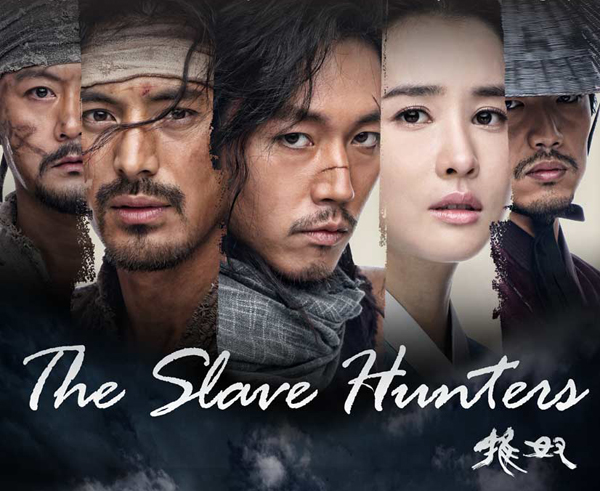
It took me a minute to get around to Chuno. I thought, “How are we going to make slave catchers sympathetic?”  Kdrama does it again! Chuno manages to blend action, zaniness and social commentary.

Continue reading “The Good, The Bad and The Crazy: Chuno (2010)”