So, Nabi has given you a pretty good overview of the book and our general observations of it. Chapter 2 includes Sun Jung’s reading of the masculinity represented by Bae Yong Joon. We here at KPK have pretty strong opinions because most of the time, we are fairly confident in what we’re talking about. This is the reason why I’m not going to talk about Sun Jung’s analysis of Bae Yong Joon. I haven’t seenWinter Sonata, so I can’t tell say anything about her reading of the way “middle-aged Japanese women” (her phrase) read Bae Yong Joon’s masculinity.
But that’s doesn’t mean I don’t have things to say about this chapter, because she talks about more than Bae Yong Joon. I was really struck by the way she framed her discussion of Bae Yong Joon by talking about “pretty boys” in Korean popular culture in general.
–KPK’s Reimagining of Eric’s intro to Shinhwa’s Crazy
“You cannot understand Kpop unless you are Korean.”
Recently, I heard this statement, in more than one place, uttered by more than one person. Not only is this perception narrow-minded and old-fashioned, it does not reflect the international reality of Kpop.
So now I’m going to tackle Sun Jung’s analysis of fan reaction to Chan-wook Park’s film, Oldboy. Basically, Sun Jung argues that, well, I’ll let her explain it:
Chapter 4 focuses on Western cult fandom of the Korean genre film, Oldboy, and discusses how postmodern South Korean masculinitiy is reconstructed through the ambivalent desires of Western spectators based on the mixed practice ofmugukjeok, and neo-Orientalism. This chapter explains how the Western desire for the Other is expressed, transformed, and redefined by consuming hybrid South Korean masculinity, as exemplified by the “savage but cool” Dae-Soo, and how this transformed desire, “with a distinctly postmodern slant,” is different from earlier Orientalist desires towards the primitive Other. . . . Hence, Western audiences of Oldboy experience hybrid “time between dog and wolf,” which refers to the time when they cannot identify whether Dae-Soo is a “cool” friend or a savage stranger. (31-2)
When a Kdrama starts, I’m sure the writers have a clear idea of who the lead character is. Sometimes, that plan goes awry, as other characters become so compelling that they come in and steal the show.
If you are an avid fan of Kpop, you most likely listen to a wide variety of artists. This means that you are downloading music regularly, and in order to do that, you need a steady supplier. If you are an international fan of Kpop, however. this is getting increasingly more difficult to find…..
Read more at hellokpop.com (published July 24, 2011)
On June 24, 2011 several high-profile idols, including Kim Hyun Joong, Super Junior, TVXQ and 2PM gathered to help launchUnited Asia Management, an agency that represents a collaboration among the top Korean agencies, including SM Entertainment, YG Entertainment and JYP Entertainment. While this may be a great way to pool resources to extend the global reach of Kpop, the collaboration could also worsen some of more suspect elements of Korean idol system…..
Read more at hellokpop.com (published July 14, 2011)
That’s what a lot of netizens say when offering an opinion on new or returning idol groups with extremely large numbers. They may have a point, but I also think that there is something to be gained from mega Kpop group…….
What, again? Yes, but it will make High Yellow even BETTER, or at least with more frequent new stuff. I’m just migrating stuff from one of my many OTHER blogs here. So you’ll see more stuff, and still the same wacky wuxia, Asian film and popular culture stuff that you have come to love. This is absolutely not a cheap attempt for me to try yet another new WordPress theme either.
When a Kdrama starts, I’m sure the writers have a clear idea of who the lead character is. Sometimes, that plan goes awry, as other characters become so compelling that they come in and steal the show.
In watching Warrior Baek Dong Soo, you expect the title character to be compelling enough to hold your attention. You see how he has such a hard time coming into the world. His father is executed as a traitor, and his mother dies soon after birth. To add to his problems, he is born with birth defects that require that he wear bamboo braces. Kinda hard to be cool in those. Nevertheless, he comes off as a plucky, determined hero.
However, Yeo Woon has an equally sad backstory. The son of a righteous hero-turned-alcoholic who kills Woon’s mother, he grows up to be a sullen young man, mostly due to his father’s assumptions about his “killer” nature. When he finds out the truth about his other, he becomes an angry young man, and is mentored by the WRONG person, Chun. As the final test of his training as a ninja (um, were there Chinese ninjas?), he is supposed to kill the closest person to him. Despite his father’s opinions, Woon is reluctant to kill his father (patricide is a no-no), and it is unclear whether he actually does the deed, or Chun does, or Woon’s father saves from having to do the deed. As a result, Woon becomes a melancholy spy for the ninjas.
So, while I know I’m supposed to be intent on Dong Soo, I find myself more drawn to Yeo Woon. Even though he doesn’t say much, he is more compelling than Dong Soo, who, after episode 10, has yet to make that turn from goofy to great hero. He also at this stage is not much of a fighter. He can hold his own, but he has yet to win in a fight against Woon, who is the better fighter. Woon’s character is deeper: not only may he be working for the man who killed his father, he is also friends with the guy he’s sent to spy on and, one would expect, will be ordered to assassinate at the right moment. His ambivalence is palpable, and while he starts off as arrogant, he comes around to be a sympathetic character. Oddly enough, I was not all that thrilled with Yoo Seung Ho, who plays Yeo Woon, as Chunchu in Queen Seondeok. Dude is a great actor!
I’ve seen this kind of thing before in Queen Seondeok. It’s called Queen Seondeok, so you do find yourself drawn to Deokman, her sad backstory of being hustled out of the palace, raised in the desert, only to return to the capital and join the elite young warriors, the Hwarang. One thing that is great about her is that she’s clever, uses her mind to get out of situations, although most people don’t know it because she’s passing as a man. She undergoes all of this, only to discover that she is not only royalty but daughter to a king. Of course, by this time, everyone knows she’s a girl, and, apparently, is the one who will be able to regain the throne. And yes, it does matter that she’s a girl, because she has to fight that fight to be the first female ruler of Silla.
What she doesn’t count on is having to tangle with Mishil, the royal consort. That doesn’t even come close to describing how Mishil uses her feminine wiles to manipulate the men around her. And rather than being a damsel in distress, she’s often the one dishing it out. I think the writers thought Mishil would be a minor character, but she practically takes over the Kdrama. She’s a villain, and she’s good. Like eerily good. She knows her opponent’s plans because she has spies everywhere (they, on the other hand, seem to try really hard and get lucky with their plans). She’s not afraid to back down, threatening everyone with that Mishil smile. At the same time, you find out that she has motives that are kinda honorable? She’s complex, in a way that Seondeok fails to be. Come for the Seondeok, stay for the Mishil.
I’m not mad at these developments. I just think that it’s interesting how these things turn out.
In order to satisfy me, I knew the movie had to credibly enhance the story of Chen Zhen. What happened after that hail of bullets at the end of Bruce Lee’s Fist of Fury? Well, I don’t know, but Andrew Lau’s movie drops you in the middle of France, and you don’t have time to wonder how Chen Zhen got there. I have to say, I never expected that opening sequence. I thought it was GREAT! I mean, I knew Chen Zhen was BAD, but DANG! Let’s just say I never knew he was part-SUPERHERO! However, aside from that, I thought the decision to open the film mid-battle in France set a very cosmopolitan tone for the film, one that would be repeated once the setting shifts to Shanghai.
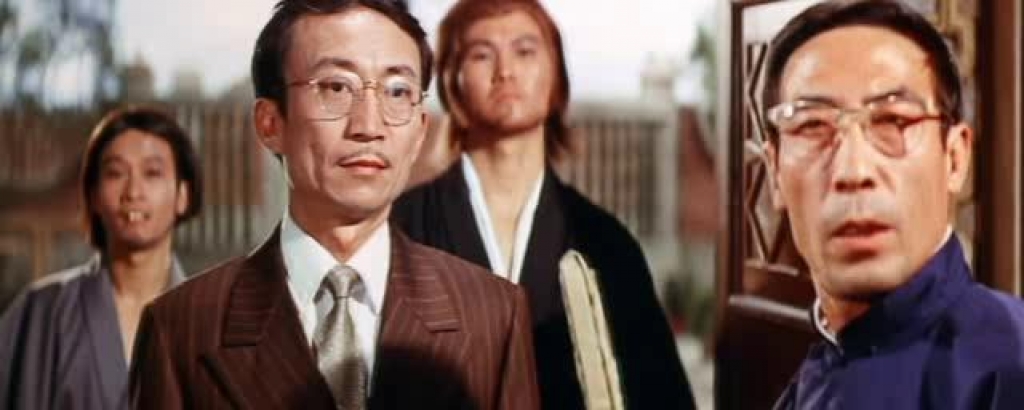
One of the critiques one can make of Lee’s Fist of Fury is that, in the process of making Chen Zhen the ultimate Angry Young Man, other aspects of 1908 Shanghai get flattened. But we have to remember, the 1970s was a very different time (that’s what I heard), especially for representations of Asian men, particularly Chinese men, in particular. Prior to Lee’s Chen Zhen, Asian men were getting the short end of the stick in terms of representations in roles where they had agency and were seen as men. So when Lee’s Chen Zhen goes to regain the honor of Chinese men at the Japanese dojo, it means something. Unfortunately, in the process, the Japanese come off as arrogant, evil, sadistic and mean, often through the use of stereotypes. I wondered when I heard about Lau’s sequel about how he was going to handle this. Can you make a sequel to Fist of Fury without the Japanese as the enemy? How would this go over in the 2000s?
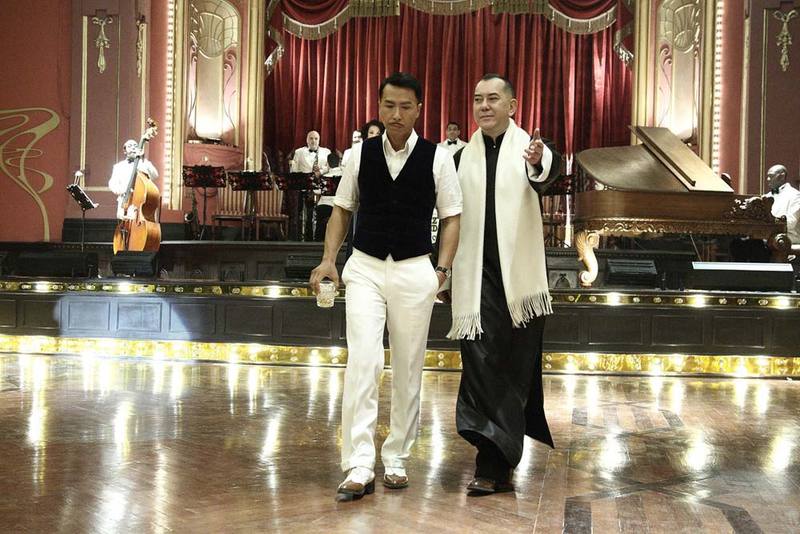
I think Lau does a good job (disclaimer: I’m a Lau fan, and while he CAN do wrong (ahem, The Avenging Fist), in my eyes he rarely does (yes, I’m claiming The Duel–I LOVE that movie). I particularly liked the way he evoked a cosmopolitan 1920s Shanghai: the British businessman, the African American jazz bandleader and orchestra, the Japanese soldiers, the Chinese triad members, workers and students. All of these people are believably in Shanghai (for real! go look it up). I think this also contributes to the way he handles the characterization of the Japanese. Are they evil? Well, Japan was an imperial power and they did occupy many locations, so you kinda have to go there with that. What I find interesting is that Lau does not use stereotypes to make his point. Remember the Japanese from Fist of Fury?
In Lau’s film, the Japanese are bad guys, but their badness is not based on stereotypical representations about the Japanese. Here the characters are a little more fleshed out, more complex. Yes, you have the Japanese commander completely committed to ensuring the victory of the Japanese, and his minions, but the traitor isn’t Woo, a sniveling, groveling go-between who wears glasses. Quite the opposite: Shu Qi (thank you for not letting her dance too much, Andrew) reflects a level of inner turmoil as she infiltrates the club.
And while we’re on the subject of stereotyping, Lau also corrects the omission of the Western presence in Shanghai and their attitudes towards the Chinese. Absent from Fist of Fury were the British, who had a hand in colonial affairs in Shanghai and complicated the political situation in Shanghai in ways that affected both the Japanese and the Chinese. The use of Huang Bo’s relationship to the British guy illustrates just how complicated power relations could be.
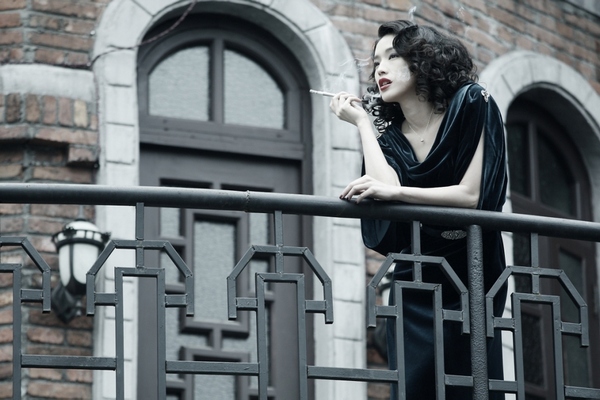
Moreover, whoever is responsible for the costuming (Dora Ng, costume design) and sets (Eric Lam, art direction) needs an award. If Lau’s intention was to evoke a lush, glamorous Shanghai, then he was successful. I mean, look at this:
So yes, I am loving just the LOOK of this film, even though I know ultimately, we are supposed to be here for the action. Um, did you not see the cast? Two words: Donnie. Yen. YES! I believe that Donnie does justice to the multi-decade character of Chen Zhen. No longer just looking to punch someone in the face, we see a veteran Chen Zhen, who has seen good friends die in the war, and has become involved in the politics of this country as part of the resistance movement. And yet, as always, you do well not to make him mad. His anger here is far more controlled and more targeted. If Donnie did sucky action direction, it would be news, but you know the choreography is on point. Was it a little TOO slicetastic? Yeah, to a certain extent, but not too much to distract me.
And finally, one of the big critiques of Fist of Fury (at least for me) was the wimpy woman character (yes that is singular). Here this chick is in the Jing Wu martial arts school, and her kung fu is ok, but at the end of the day she comes off a little whiny and fairly passive. I guess we were lucky to get her in the film at all. However, Lau, in both principal characters and smaller roles, provides women who are in the thick of things (Shu Qi) and who are politically active (the student who protests Japanese control). Even the quite attractive women who are found close to men who have power go down swinging (check out that assassination attempt).
I dimly remember somebody telling me that I may not like this movie. So silly. I think Lau does a good job of advancing the storyline of Chen Zhen in ways that are compelling for a 21st century audience. Is it a little nationalistic? Maybe, but would it be Chen Zhen if it wasn’t?
Oh yeah, and Donnie channels Kato in the central role he should have had in The Green Hornet.
It’s not often that I say this, but you have to forgive me. I have been avoiding Won Bin like I owe him money. You know how everyone else goes on about a person, and just to be contrary, you stay far away? Yeah, that was me and Won Bin. Please forgive me. That’s the first thing.
The second thing is, I have been seeing Won Bin before, and just didn’t know it. He was looking at me the whole time. Oh, he didn’t look like he does in The Man From Nowhere, no, that would have been too easy. Won Bin is in one of my favorite Korean movies, Guns and Talks.
He is also in Mother. Maybe I was focusing too much on the mother, which, if you’ve seen the film, isn’t hard to do.
If you’ve seen either one of those, you KNOW that he’s not performing in quite the same way as he does in The Man From Nowhere. So I was very surprised to see him in this film directed by Kim Jeong Beom. Yes, it’s a story of revenge, which the Koreans do so well. And it is well shot. The action scenes are very stylish as well, very well done. What I appreciated about this film is that it just put you in the middle of the story, not really connecting the dots until well into the film. This is refreshing, because there are few things worse than knowing what is going to happen.
What I found interesting about the film, though, was Won Bin’s character (and this has nothing to do with those shots of him with no shirt on–let’s focus on his acting ability! 😉 Increasingly, I’m finding male protagonists, in so-called action dramas, being allowed to be more emotional. Cha Tae Sik isn’t a mindless killing machine. He doesn’t just snap one day. The film does a very delicate job of setting him up as an emotional man, albeit one with special ops training. And the set up isn’t as obvious as it could be. The tender object of his emotion is a little street urchin who lies and steals. But she grows on you, and on Tae Sik. He also feels responsible for her, even before the horrific events that send them spiraling into the brutal world of illegal trafficking in organs and drugs. Her presence is even more tension-filled if you’ve watched Asian films before. Kids are not off-limits; they are not safe. So when crazed guy gets a hold of her, you can’t be sure that things are going to turn out ok.
I also found the interesting weaving of themes of immigration into this film. It does matter that people are Chinese or Korean in this film, and provides another interesting layer for me. The dynamics place the Chinese as the marginalized people, on the fringes, where no one seems to notice that things are awry. They become the perfect victims in the illegal trade.
I liked this movie. I know it may not be fashionable to say so, but it was a good “first” introduction to Won Bin. 🙂
Originally published on July 30, 2011 on KPK: Kpop Kollective by CeeFu
Hey shorty…It’s me (Kpop)
I gotta tell you something
It’s about us
I’ve been seeing other people
Millions of other people, around the world
I really think this is gonna work out baby
I’m not sorry
–KPK’s Reimagining of Eric’s intro to Shinhwa’s Crazy
“You cannot understand Kpop unless you are Korean.”
Recently, I heard this statement, in more than one place, uttered by more than one person. Not only is this perception narrow-minded and old-fashioned, it does not reflect the international reality of Kpop.
Let me start by saying one thing: this is not personal. This is not about Koreans. This is about this STATEMENT and IDEA about Korean popular culture. The love is overflowing here at KPK for Koreans, all things Korean and fans of all things Korean. So it’s only out of love that I say this: when people say that you have to be Korean to understand Kpop, my darlings, you are wrong. In the spirit of full disclosure, I should say that I am not Korean (I know, shocking!).
I have heard that you have to be Korean in order to understand Kpop from people who should know better: Korean academics. So part of this post has some big words and stuff, but don’t worry: I’m going to break it down!
When Korean academics says you have to be Korean to understand Kpop, it does not mean that you need to know the Korean language to understand Korean lyrics in Korean popular music. It means that there is something basically Korean about Kpop that you cannot understand because you are not Korean. They are saying that it (Kpop) is a Korean thing, and you wouldn’t understand. This is troubling coming from academics because it is essentialist. What is essentialism? According to the Sage Dictionary of Cultural Studies, essentialism:
Refers to the argument that there are fixed truths to be found about identity categories so that there exists an essence of, for example, women, Australians, the working class and Asians. Here words refer to fixed essences and thus identities are regarded as being stable entities. (61)
What this basically means is that when people say that all Asians are this way, or all women are that way, they are thinking that there is something basic about women or Asians that every woman or Asian has that makes them a woman or Asian. You can only be Asian or a woman if you have these traits, and only these traits. But what if the traits are something that all members of the group do not have? Are they still part of the group? If you don’t have dark hair, does not exclude you from being Asian? (we know Asians have many different hair colors). If you don’t have children, does this exclude you from being a woman? (we know lots of women who don’t have children). You see how this could become problematic, because essentialism basically lumps everyone together in ways that do not match the reality we see.
Ok, so why is essentialism bad? Christopher Warley answers this question this way:
Essentialism is bad because it is socially oppressive. It blindly stresses one side of a binary opposition (high not low; inside not outside; left not right); it naturalizes and universalizes the interests of a particular group (capitalists, men, The West, whatever) in order to dominate another group (workers, women, The East, whatever).
Ok, so let’s apply this to Kpop. When people say that you have to be Korean to understand Kpop, they are an example of “inside not outside.” Koreans, because of their “Koreanness”, understand Kpop. If you are not Korean, you do not have this “Koreanness”, so sucks to be you. But remember that people are different, cultures are diverse, so how can there be this universal “Koreanness”? So what about Koreans who don’t know Kpop, or don’t like Kpop, or (gasp) don’t understand Kpop? That undermines the whole “all Koreans have this “Koreanness”/you have to be Korean to understand Kpop” argument. Do you have to be Chinese to understand kung fu? Black to understand hip hop? Irish to understand Riverdance? You see how silly this gets, right?
So we know that there are millions of fans of Kpop around the world, who don’t speak Korean, who are not Korean, who understand Kpop. Because I think EVERYONE understands THIS:
You do not have to be Korean or know Korean to understand what Junsu is putting down in this video. Everyone understands the body roll.
Even more ironic is that so much of what makes up Hallyu Kpop comes from other cultures, especially American culture, ESPECIALLY African American culture. For example, let’s look at TVXQ’s Keep Your Head Down (yeah, that’s right, ANOTHER TVXQ video, just sit down and watch):
And this, a marching band sequence from the 2002 movie Drumline (sorry about the sound, but this was the best video I could find):
See anything similar? Hear anything similar? I’m not one of those people who are saying that Kpop is imitating African American culture. What I am saying is that a good deal of Hallyu Kpop is a mixture of Korean and African American popular culture. I NOT mad at that. So it would follow that in order to understand Kpop, you really need to understand Korean and African American culture. From what I’ve read from some of my Korean academic counterparts, this is not always the case. I’m not saying that they couldn’t form arguments based on some knowledge of African American culture. I’m saying that they tend not to.
Need more evidence? Who is Yunho’s favorite singer? Michael Jackson. Who does Onew count as one of his favorite singers? Stevie Wonder. Who does Eunhyuk, Shindong and Donghae imitate in the Super Show? Beyonce.
And what about Big Mama?
Yes people, that’s some straight up GOSPEL they are putting down for you. My point is, that really to understand Kpop, it seems to me that you need to understand the things that go into Kpop.
I really thought that in this day and age, we all understood that no one owns cultures, that cultures travel, intermingle, make friends. Once your culture decides to go global, you can’t control that. It’s going to do what it do. And, people who are not OF that culture can STUDY that culture. I really thought that what matters is what you KNOW when it comes to talking about a subject, not who you are. But in the two times I’ve heard the statement, there was no mention made of what others may know, just the assumption that if you are not Korean, you can’t know anything worth knowing. At least call non-Koreans out on whether or not they know all the members of Super Junior, know that Jay Park used to be in 2PM, know that Cheongdung of MBLAQ and Dara of 2NE1 are related, know the debut date of SS501. I don’t care about who you are, I care about what. you. know. And if you can take the time to learn about Kpop, then why can’t you speak about Kpop?
I am not Korean. I know as long as I live I will not know everything there is to know about Kpop. I will never be able to tell you what Koreans think about Kpop like someone who has spent a large chunk of time in the culture or studying the culture (my research tends to focus on what international audiences think about Kpop). But what should matter is that whatever I say about Kpop has an argument that makes sense and that is well-supported by evidence. I know I know a little something something, and when I speak about my little something something, I’m fairly confident that I know what I’m talking about. We can discuss it until the cows come home; reasonable people can reasonably disagree. But you just cannot dismiss out of hand people who aren’t Korean, who know their Kpop and like it. Last time I checked, Kpop was equal opportunity.
And this is not to say that ALL Koreans hold this opinion. I know there are lots of Koreans who throw their arms wide open for anyone who is down for Kpop.
So, if you think that only Koreans can “understand” Kpop, then YOU don’t understand Kpop.
Sources:
Chris Barker, The Sage Dictionary of Cultural Studies.Thousand Oaks: Sage Publications, 2004.
Christopher Warley, Patience: Still A Virtue, Arcade
I admit, there is a lot of talk about wuxia on this site: wuxia dramas, wuxia films, wuxia literature. I guess I never explained the appeal of wuxia for me. Well, here goes.
It is about more than the swords (although the swords are nice!). First of all, let’s see what we’re talking about. Here is how the Almighty Wikipedia defines wuxia:
Wuxia (simplified Chinese: 武侠; traditional Chinese: 武俠; pinyin: wǔxiá[ùɕjǎ]) is a broad genre of Chinese fiction concerning the adventures of martial artists. Although wuxia is traditionally a form of literature, its popularity has caused it to spread to different art forms like Chinese opera, manhua (Chinese comics), films, television series, and video games. Wuxia is a component of popular culture for many Chinese-speaking communities worldwide.
The word “wuxia” is a compound word composed from the words wu (武), which means “martial”, “military”, or “armed” and xia (俠), meaning “honorable”, “chivalrous”, or “hero”. A martial artist (or pugilist) who follows the code of Xia is often referred to as a xiake(俠客, lit: “follower of xia”, “hiệp khách”) or youxia (游俠, “wandering xia”, “du hiệp”). In some translated works of wuxia, the pugilist is sometimes termed as a “swordsman” although he may not necessarily wield a sword.
So when you say Chinese and swords, most people think of Crouching Tiger, Hidden Dragon.
Now, I’m not mad at Ang Lee or Zhang Yimou. I’m always up for seeing them do their thing on the big screen. But I found there is a big difference between wuxia on the big screen and wuxia on the small screen, and I think that’s where a lot of my interest falls. The television series, by their nature, allows for the development of a convoluted plot, especially with series that are based on wuxia fiction. And a result, the action is less important than the development of characters and narrative. Now, if you’ve seen those wuxia series from the 1980s, you could say that the wuxia series has too much time on its hands. 30, 40, 50 episodes require a certain amount of commitment. And there is a lot of wistful monologues where characters wax poetic about what they should or shouldn’t do. But I still love them.
My first wuxia series was Return of the Condor Heroes (1983) . While it stars a young Andy Lau, what really captured my attention was not the couple that flouts the rules, but Huang Rong. I was astounded that her claim to fame was her cleverness. To me, she stole the show. I was intrigued that she was allowed to have so many talents AND never lose her femininity. And she’s not a bad swordsperson in her own right. The only person rivalling her in the series was her FATHER!!! Dude only appears a handful of times, but his surliness is just delicious. Whatever you might think of Huang Yaoshi, he does what you want EVERY father who happens to be a martial arts master to do: teach. his. daughter. martial arts. If you are going to send her out into the world, at least makes sure she can defend herself! I was so focused on these two, I practically forgot about that other love story.
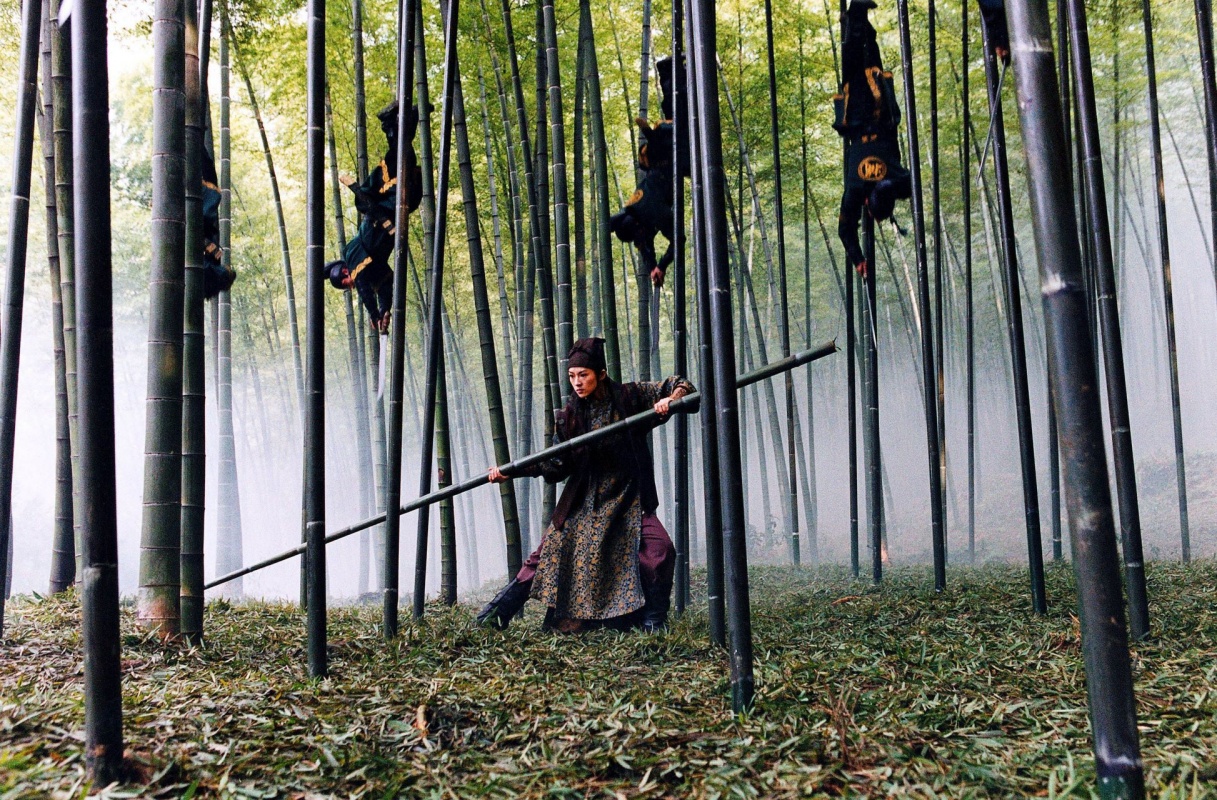
This got me thinking about masculinity and femininity in wuxia. A lot of what people focus on, especially if we take the Wikipedia tact, is that the hero is a MAN. I love the fact that there are so many women running around wuxia. And they aren’t falling down; helpless, hapless women either. They run the gamut on both sides of good and evil. They carry swords with their well-manicured hands and well-coiffed hairstyles. They are WOMEN with swords, not women pretending to be men (which is different from disguising oneself as a man for a purpose). But they are not always carrying swords, yet they figure significantly into the plots and not just as the love interest. And there are different kinds of women too! I’m trying explore what I call a female heroic tradition. Does it exist? If so, what does it look like? Is heroism itself a concept only applied to men? What defines heroism for ladies? Sure, they can be the philosophical light, but ladies can effect the beatdown too! And even without a sword, they can cause trouble as members of royalty. I’m interested because a lot of other women I know are interested. I think it is limiting to think that women can’t be heroic and bring something different to heroism.
Laughing In The Wind
I’m also interested in the men, or as like to call them, SWP: Swordsmen With Problems. These are a crazy lot: alcoholics, womanizers, depressed souls who suffer from low self-esteem, rejected by the women they love, can’t communicate with the women they love, can’t get rid of women who love them, unable to assume the obligations laid at their feet, guys who have unresolved father issues. Oh, but they are talented martial artists. So it’s an interesting combination. But not all men in wuxia wield a sword. Everyone knows that the scholars, monks, tricksters, and guys who can bring a good plan to the table are indispensable. So heroism, once again, takes on a different flavor. I’m also interested in the relationships between men, the lengths and limits of brotherhood and something I like to call male emotionality. These dudes cry. All. The. Time. And it doesn’t take away from their masculinity. What’s up with that?
The Handsome Siblings
Put them together, and you get my third interest: men and women. I’ve seen some really equitable relationships between men and women in wuxia dramas. I’ve seen both men and women deviate from their “expected’ societal roles. Of course, I’ve seen some relationships that are a hot mess, but hey, they keep in interesting. Put this against the backdrop of some Chinese history, and it is very interesting to me.
Ok, and then there are the swords, the battles, the clothes. (I couldn’t resist).
Young Warriors of the Yang Clan
So that’s why there is so much wuxia on the site. I’m working on a book that explores this, and will occaisionally use the blog to work through my ideas.
Ok, not really the first YesAsia order, but I thought it would make an interesting post to see what I’m getting and why. Also, this presents a nice change from me complaining about how Netflix has completely ruined our relationship by not having my Asian stuff!
First, let’s talk about what I’m NOT getting: the 94-episode Three Kingdoms released in 2010. Thanks, China, for not loving me. Why no subtitles in English? WHY?! Really, why make it region free (not like I care) but not have English subtitles? And I can’t do the various OTHER internet ways of accessing this (read: quasi-legal). Standards are too high when it comes to wuxia series. Can’t do parts.
So, let’s move on to what I am getting:
Reign of Assassins: You can’t be surprised by this. Michelle Yeoh and Jung Woo Sung. Co-directed by John Woo. I’ve been waiting for this, not just for the action but for the domestic story. It could be an interesting twist on the “I don’t wanna fight any more” plot, because it’s a woman saying it. Usually, we see swordsmen become beleaguered by the life of a hero. They retire to some cave, or become a monk on a mountain somewhere. Which is fine, but when it is a female lead, inevitably part of her domestic life is going to involve becoming romantically involved with a guy. Where else would the tension come from when her gang comes looking for her trying to drag her back into the life? The stakes are different for ladies, and I’m interested in how they handle this.
Shaolin: Once again, this is a given, ever since I saw the trailer for it. AND it’s not JUST because it has Andy Lau, Nicholas Tse and some guy named Jackie Chan in it. Corey Yuen does the martial arts choreography and it’s written by Benny Chan. Yeah, I know we’ve seen the destruction of the Shaolin temple many times, but I’m never opposed to revisiting it, especially if someone can bring something new. Plus, it looks like there may be some engagement with the modernization of China. At least that’s what I think of when I see cars and guns versus monks.
The Lost Bladesman: Me, absolutely giddy with delight at the prospect of seeing Donnie Yen play Guan Yu. You had me at Guan Yu. You know he’s your favorite of the Three Brothers. I want Liu Bei to be a better man than he is, and Chang Fei is just cray cray. Now, there is the potential for disappointment here, especially since it will invite comparisons to Red Cliff. You know my aim here is not to tell you what’s “good” and what’s not. I’m just telling you what I like. And I like Donnie Yen. A LOT. Plus, Guan Yu seems to have more potential for exploration as a character. I do want to see him do more than wield the blade and do that move with the beard. I’ve heard some less than stellar things about the actual plot, but hey, I’m getting it ANYWAY!
True Legend: Yes, not just because of Vincent Zhao but because of Zhao PLUS Yuen Wo Ping! Ok, I do have a thing for Zhao and it has everything to do with the emotional roller-coaster he took me on as Chu Zhaonan in the wuxia series Seven Swordsmen. STILL not over that ending! I think that he could be a viable go-to guy for action and wuxia films, but no one seems to go to him. Putting him with Yuen Wo Ping seems like it will be a treat. Yeah, I’ve heard some less than enthusiastic things about it, but hey. I’m getting it ANYWAY! I’m really looking for another treatment of the Beggar So legend than Steven Chow’s stuff.
Ok, so that seems to be a good deal of wuxia-related stuff. But that’s not all I’m getting!
Turning Point: This is has been in my saved cart for a while, and I wondered why I put it in there in the first place. Then I remembered: Michael Tse, of Young and Dangerous fame. You know how attached to Young and Dangerous I am, and I really like this guy. Plus I heard good things about the television show, EU, on which the film is based.. And it has Anthony Wong AND Francis Ng, each with crazy haircuts, which means the potential for their portrayal of off-the-chain characters is high.
Stool Pigeon: I’m always looking for a good crime drama, and given that this is directed by Dante Lam, who also directed Beast Stalker, I’m willing to give it a try. I always love to see Nick Cheung do serious roles, because the first time I saw him was as the wise-cracking security official in Andrew Lau’s The Duel. Who knew he’d go from that to things like this? Plus it looks like Nicholas Tse isn’t as pretty as he usually is in films. I’ll deal with it.
And to round it out, Don’t Go Breaking My Heart: Who doesn’t love Louis Koo? And I particularly like him when he’s being silly and romantic. Pair him up with Daniel Wu in a Johnnie To vehicle, and this could be great.
So that’s it. That’s what I’m getting. Once my shipment arrives, I will regale you with my opinions, because I know you are so looking forward to that.
I know you have heard about the “4D personality”, but what about the “3G idol”?
That’s what I call certain idols who manage to be gentlemen, gangsters and the guys next door without making you scratch your head. Some people say that all idols are the same, but the ability of certain male idols to present a variety of images makes them stand out and shows the many different ways one can be a man…….click on the link below to read more:






 Let me start by saying one thing: this is not personal. This is not about Koreans. This is about this STATEMENT and IDEA about Korean popular culture. The love is overflowing here at KPK for Koreans, all things Korean and fans of all things Korean. So it’s only out of love that I say this: when people say that you have to be Korean to understand Kpop, my darlings, you are wrong. In the spirit of full disclosure, I should say that I am not Korean (I know, shocking!).


 High Yellow - Asian Popular Culture