What Does Gangnam Style Mean For (The) US?

Source: http://koreanupdates.com/2012/08/22/psy-gangnam-style-music-video-1-on-itunes-us-chart/
Album Cover, Psy’s Best Sixth (2012)

The viral status of Psy‘s Gangnam Style has reached epic proportions. While some see it as an unprecedented K-pop crossover, others point to its social critique of conspicuous wealth in the South Korean district.  However, the tendency for American mainstream culture to accept stereotypical and reductive images of Asians also plays a part in Psy’s popularity. 

It’s hard to deny that the song has made an impact in media.  Psy’s video appeared at No. 25 on Billboard’s Social 50 chart, which “ranks the most popular artists on YouTube, Vevo, Facebook, Twitter and MySpace, using a formula that blends weekly additions of friends/fans/followers along with weekly artist page views and weekly song plays.”  Such popularity also made Psy a fixture in American media, earning a mention on CNN as well as write-ups in major publications such as The Atlantic (more on that later).

In addition to appearing at Dodger Stadium, Psy appeared on VH1’s Big Morning Buzz Live show to teach the dance to the hosts. In addition, the popularity of the song put him in conversation with American music celebrities.   Yang Hyun Suk (the YG of YG Entertainment) sees Psy’s success as an opportunity:  “Regarding the love call from the international pop sensation Justin Bieber, the founder of YG responded, ‘We cannot reveal all the details yet, but an amazing collaboration project is in progress so please look forward to it.’

While some marvel at this popular cultural moment, others seek deeper meaning for Psy’s song in its social critique. Sukjong Hong writes:  “PSY does something in his video that few other artists, Korean or otherwise, do: He parodies the wealthiest, most powerful neighborhood in South Korea. . . . Ultimately, by declaring “Oppa is Gangnam Style,” he turns the lens on Gangnam, getting specific about power and privilege in a country where a single district has long dominated in almost every arena.”  Max Fisher credits Psy as unique in K-pop:   “Park Jaesang isn’t just unusual because of his age, appearance, and style; he writes his own songs and choreographs his own videos, which is unheard of in K-Pop. But it’s more than that. Maybe not coincidentally, he attended both Boston University and the Berklee College of Music, graduating from the latter. His exposure to American music’s penchant for social commentary, and the time spent abroad that may have given him a new perspective on his home country, could inform his apparently somewhat critical take on South Korean society.”

I find the Psy phenomenon in the America interesting, not because of what it says about Korea, but what it says about the United States.  Psy’s video did not enter a vacuum; it entered an American popular cultural consciousness that has a history with Korean popular culture in particular, and Asian representations in general.  One fan observes this history in a Tumblr entry,  “Asian Stars and The USA: A History.”  After listing BoA, Wonder Girls, Jin Akanishi, and Girls’ Generation, Asian artists who have been recognized for their talents and attained success in Asian countries but failed to enter the mainstream in the United States, the entry concludes with this observation:

Psy: lol omg guys watch me dance like a horsey.

USA: YES! EXCELLENT!

Psy: Wait what?

Psy’s video owes some of its popularity in the United States to the way the mainstream likes to portray Asian and Asian Americans in popular culture.  One of those ways is in comedic roles, where laughter comes at the expense of Asians and Asian Americans.  Chris Biddle writes about the tendency he sees in films like The Hangover and television shows like The Office:

Now I’m no kill joy, and admittedly am a fan of both the The Hangover and The Office, but while watching these scenes I couldn’t help but think about the fact that the Western audience seems like they just don’t take Asians seriously.  While hearing a French or Latino person speak English might suggest a kind of exoticism, an Asian person speaking English is downright goofy.  While on the outside this racial stereotype might not seem as malicious as some of the ones that Hollywood and broadcast television are guilty of, it nonetheless signifies a serious lack of respect for our Eastern counterparts.

What is missing from much commentary on Psy’s video is the existing American cultural context that embraces stereotypes of Asians while rejecting more realistic portrayals. When people ask why Psy’s video is so popular, this is one of the major issues that goes unanswered. I think more people are laughing at Psy than laughing with him.

The narrative that has emerged around Psy’s success in the United States also distorts the story of K-pop for audiences in the United States. Fisher misspeaks when he characterizes Psy as atypical of artists in K-pop, pointing to this as a reason for his success.  Psy has contemporaries who do the same thing.  At 34, PSY joins other older K-pop artists and groups with successful careers, some of whom debuted around the same time, including Kangta, Park Hyo Shin, Rain, Shinhwa, and Lee Hyori.  K-pop artists ranging from G-Dragon to TVXQ write their own material. Tablo of Epik High graduated from Stanford University.

K-pop has been engaging in socially-relevant issues from the beginning. While Seo Jung Min-gaph, a pop music critic, questions his ultimate impact, Seo Taiji, arguably the grandfather of K-pop, unquestionably engaged social issues in his songs:   “Seo was not only a dancer and musician, but was also an artist who delivered his messages directly to Korean society with his music.”  The narrative seems to be that Psy succeeds because FINALLY K-pop has produced something culturally significant that the United States can recognize. In actuality, Psy is not that different.  He’s not the only one by a long shot.

When thinking about what Gangnam Style means, we have to remember that it just doesn’t ride into an America that has not encountered Korean popular culture. The way we’ve been reading it says something about us in the U.S. as well.

Image: allkpop

Sources:

‘Gangnam Style’ Viral Video Sends Psy Onto Billboard’s Social 50 Chart,” Billboard

Psy Teaches His ‘Gangnam Style’ Horse Dance on VH1’s ‘Big Morning Buzz Live,’ allkpop

Yang Hyun Suk Discusses His Thoughts on Psy’s Global Success With “Gangnam Style,” allkpop 

Sukjong Hong, Beyond the Horse Dance: Viral Vid ‘Gangnam Style’ Critiques Korea’s Extreme Inequality,” Open City Mag

Max Fisher, Gangnam Style, Dissected: The Subversive Message Within South Korea’s Music Video Sensation,” The Atlantic

Cho Chung-un, K-pop Still Feels Impact of Seo Taiji & Boys,” The Korea Herald

Chris Biddle, The Asian Stereotype, Other Side of China

Video:

Psy Gangnam Style News US TV Appearance, YouTube

Creative Commons License
This work is licensed under a Creative Commons Attribution-NonCommercial-ShareAlike 3.0 Unported License.

Time For An Update: A Response to Kim Ji-Myung’s ‘Serious Turn for Hallyu 3.0’

Shinhwa, Cosmopolitan May 2012 – Source: http://asia247.wordpress.com/2012/04/24/shinhwa-cosmopolitan-may-2012/


As a person who regularly writes about Hallyu, I’m always excited when others write about it as well. We need as many voices as we can get. So it is in the spirit of dialogue that I respond to Kim Ji-myung‘s piece on HanCinema, “Serious Turn for ‘Hallyu 3.0.” I’d like to see those who write about Hallyu move beyond superficial critiques to more complex analyses.

I think the discourse around Hallyu would be made more meaningful if we treated it as a serious movement and engaged how it is practiced its participants.  Kim’s piece replicates some of the more common critiques about Hallyu in general, and Kpop in particular, critiques that I’ve written about here.

Kim assumes that Kpop only has relevance for the young.  She attributes the spread of Kpop to “a few young Korean pop groups.”  She finds it “surprising and also fun to see so many European and American youngsters dance and sing in unison with Korean tunes (in Korean!) on the streets and in parks.”

However, Seo Taiji and the Boys, often cited as the musical forerunner of Hallyu, debuted in 1992, 20 years ago.  The members of Shinhwa (pictured above), the oldest active male Kpop group are all in their 30s, and have just completed a successful comeback with their 14th album. Yes, THAT is Kpop “old school.”

Kpop in its second decade. Its progenitors did not die out with the dinosaurs. Before Jae Chong was a producer for Aziatix, the group who won the 2011 MNET Asian Music Award (MAMA) for Best New Group, he was a member of Solid, one of the first Korean R&B groups that emerged in the early 90s.  Just as there are younger groups, there are also older groups and older people in Kpop who play just as large a role. Kim and others need to see Hallyu as more than just a youth movement.

Kim also assumes that international  audiences of Hallyu do not care about the Korean culture.  She writes:  “Young fans of K-pop may be enjoying themselves without even knowing or caring much about the country of origin of the music.”  Here where it would be useful to actually talk to someone outside of Korea who listens to Kpop.  I’ve also written about this here.  Or, perhaps, look at the fan activity on the Internet.  Kpop fans like learning the snippets of Korean they get in Kpop songs. Why else would lyric sites list the romanization of Korean lyrics? How else can you sing along in the car?

And when you extend your consideration to Kdrama and Korean film, it’s hard to appreciate these cultural forms without caring about the country of origin.  In order to understand a sageuk (historical Kdrama) like Queen Seondeok or Jumong, you need to know about the geopolitics of the time.  A film like Shiri requires an understanding of the tensions between North Korea and South Korea.  2009: Lost Memories revolves around the colonial history between Korean and Japan.

Kim abhors the term Hallyu because “it connotes unilateral cultural dissemination” and ” does not carry the depth, subtlety and complexity involved in communicating and understanding cultures among people.”  However, her piece replicates that lack of complexity by not recognizing the inherent hybridity of Hallyu.  She is right when she says it is not unilateral, but she fails to elaborate.  Hallyu itself is a hybrid of Korean and other global cultures, even before it gets redeployed out on the global stage.  Shouldn’t we recognize these elements when we talk about it?

Articles like Kim’s continue to reduce Hallyu to a passing phase and a blip on the cultural radar:

A survey shows six out of 10 foreigners believe the popularity of Korean culture will cool down in the next few years. Sixty percent of 3,600 people in nine countries, including China, Japan, Thailand, the United States and France, were doubtful that hallyu will see lasting international success. Some 20 percent said they are becoming ‘tired of standardized content.’

Who are these “foreigners?” Do all “foreigners” see Hallyu in the same way?  Fans of Kpop in Malaysia may have different attitudes toward Kpop than fans in the Philippines.  And more importantly, are these survey participants people who actually engage in this cultural movement or random people off the street?

Here is my last point: it is virtually impossible to talk about Hallyu 3.0 without understanding how we got from Hally 1.0.  Her piece suggests that we either ignore Hallyu’s spread up until now, or embrace the more mature, “serious” version of the movement:  “If  ‘hallyu 1.0’ was unintentionally initiated by TV producers and a few singers, version 2.0 in the era of social media has been skillfully presented by a more sophisticated entertainment industry of Korea. Now we talk about hallyu 3.0, which may last in a wide spectrum of areas.”

You cannot talk about the history of a thing without talking about the thing itself. This means that even if Hallyu 1.0 was only initiated by TV producers and singers, you have to engage the televisions shows they produced and the songs they sang (I actually think more was involved here).  You know the old adage: those who ignore history…

So let’s all continue the dialogue about Hallyu, but let’s also move that dialogue along so that we aren’t talking about the same old thing all the time.  Reboot!

Source:

Kim Ki-myung.  “Serious Turn for ‘Hallyu 3.0.” HanCinema.

What I’m Listening To: “씨스루 (See Through),” Primary (feat. Gaeko and Zion T)

Source: http://kmins119.tistory.com/725

Ever so often, I like to share what’s on heavy rotation on my iPod. It isn’t always the newest thing, or the most popular thing, but for some reason this is the stuff that I’m grooving to.  I make no distinction between idol and non-idol Kpop, popular and obscure, mainstream and indie. It’s just what I like, and some info about it. Maybe you might like it too.

What I’m Listening To

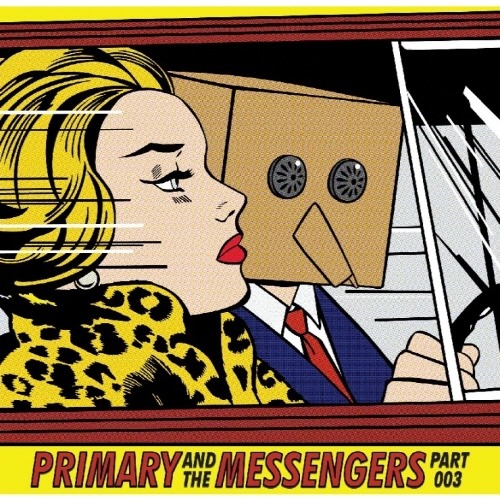
This time around, it’s 씨스루 (See Through)  by Primary, featuring Gaeko and Zion T, from Primary and the Messengers Part 3. I was at the end of my monthly allotment on Soribada, and decided to take a chance on Primary. I was especially excited when I saw that Gaeko from Dynamic Duo was featured on the track.

Who Does It

So, who is Primary and where has he been hiding? According to Leesa86, “Primary is a talented producer who has the ability to collaborate with many talented and unique artists to create fresh sounds of music, drawing new talents out of the artists that have never been seen before.” Paloma gushes, “the production in all of [the songs on the album] is flawless, and the instrumentation fantastic.”

I wish I could show you who Primary is, but my intrepid research skills have yielded little beyond the box on his head.  Despite this, and other groovy tunes, Primary remains much of an enigma.

Why I Like It

While Paloma calls the song funky, the bass-line strikes me as more smooth and groovy.  Verses strewn with lounge-like vocals are broken up by a variety of breaks. Mid-tempo raps punctuate the song in ways that do not disrupt the flow of the single.  It’s one of those songs that I instantly liked after hearing the 30-second preview.

Sources:

Leesa86, “Rapper Primary releases “Stance” featuring Gaeko, Choiza, & Simon D,” allkpop

Palomo, Primary’s Got a Message, seoulbeats

Kpop Summer Jams!

http://www.dkpopnews.net/2011/06/video-kara-performed-go-go-summer-on.html
KARA, Promotional Activities for Go Go Summer in Japan

Guess what? It’s summer! You know what that means? It’s time for THAT song, the song you’ll play over and over again because it’s like having sunshine on your iPod. It’s your summer jam!

But what is a summer jam? Urban Dictionary defines a summer jam as “a song that represents the spirit of summer, and all of the heat and activities that happen during the summer. A song that makes you sit up and say, ‘Man-that is my JAM!'”  It doesn’t even have to be released during the summer to have that summer vibe. So, here are a few of my favorite summer jams!

JJ Project, Bounce

I am sure if people knew what made a song instantaneously likeable, they would bottle it. This song dares you not to like it. Released on May 19, 2012, Bounce reintroduced us to ridiculously supercute JB and Jr., who most recently starred in the Kdrama Dream High 2.

The song, like the video, is upbeat and fun. I may or may not have blasted it while driving my car completely within the speed limit down the highway. It has a good mix of pop, hip hop and rock that just says “good times” and summer. Apparently, I’m not the only one who thinks so. To date, it has garnered over 3 million views on YouTube.

MBLAQ, I Don’t Know

When I think of MBLAQ, I think of their sultry ballads like Cry.  Ashley recognizes its use of “emotional distraught dancing in the rain.”   Or, I think of ninja choreography for songs like Run, which some netizens, according to Emily Wu, see as “dangerous”: “Even though netizens found the performance to be amazing, which saw the boys clad in black and had a dance break of Lee Joon dancing with two katanas, they still thought the ninja concept was a bit overboard.” But neither of these prepares you for the ultra-peppy I Don’t Know.

From the Mona Lisa album, I Don’t Know has that summer vibe, not to mention the silly factor injected by the boys of MBLAQ, especially with the wacky styling choices, goofy stage presence and short exchange between Mir and Cheondung at the end.

SNSD, Utja (Be Happy)

It’s not just the guys who bring the summer. SNSD, known for their upbeat songs, do not disappoint with this release.  In some ways, this is not a surprise.  From the 2010 album Oh!, it reinforces their happy-happy image.

Not only is the song’s message positive, the use of the girls’ high voices and electronic background makes this a great dance song.

Wheesung, Love is Delicious

As I said, songs do not have to be released during the summer. They don’t even have to be relentlessly uptempo to be a summer jam.  A friend of mine made me a Kpop CD and this song was on it. Like many good summer jams, it instantly screams beach, rainbows and unicorns (ok, maybe not unicorns).

What I really like about the video for the song, from the 2010 release Eternal Essence of Music, is that it appeals to both guys and gals.  Not super sweet, the strategic use of strings along with a light beat makes the song very summer.

Of course there are tons more….but what are you some of your favorite Kpop summer jams?

Source:

“Summerjam,” Urban Dictionary.

Ashley, “Anatomy of an MV: MBLAQ’s ‘CRY,'” seoulbeats

Emily Wu, “MBLAQ Gets Criticized For The Ninja Choreography of ‘Run,'” Ningin

Can We Get Some Facts, Ma’am?: Erroneous Reporting on Kpop by Mainstream Media

Originally published on KPK: Kpop Kollective in May 20, 2012 by CeeFu

Kpop fans are known for being strident in their opinions, but there is one thing we should all be able to agree on, and those are facts.  If Kpop fans can do it, surely mainstream American media outlets should be able to get the facts right about Kpop. However, several recent stories show that some mainstream American media misrepresent Kpop, which can present a distorted view of Kpop in America to those who are less-informed.

To be clear, I am not talking about statements on which reasonable people may disagree.  In April 2012, Los Angeles Times ran a story on Kpop entering the pop consciousness of Americans.  We can have different opinions on whether the choreography of The Boys is “gently lascivious,” or whether the girl groups are “groups of women deploying butt-kicking superhero imagery,” or whether SNSD‘s Gee “drew the blueprint for a culture to come.”

I’m talking about fundamental errors that prevent individuals from making up their own minds about Kpop based on facts.

National Public Radio (NPR)

In December 2011, NPR ran a story on the worldwide fans of Kpop, but focused on SNSD.  Here’s where Claudine Ebeid gets into trouble:  “They [SNSD] sold out Madison Square Garden.”  You do not need to be a SONE to understand how that is misleading.  Here is an informational video about the SM Town show in Madison Square Garden to which Ebeid refers:

As you can see, this is not the SNSD Tour; it is the SM Town World Tour, where SM Entertainment showcases several of its artists in one large show. SNSD does not have “top billing.” All of the acts are promoted equally.  The actual show did not showcase SNSD. Rather, the groups took turns performing, and members of several groups even performed with each other, as you can see with this performance of Hip Hop Papillon featuring Shindong and Eunhyuk of Super Junior and Minho and Key from SHINee (SNSD is not in this number).

The early placement of this statement in Ebeid’s story makes it seem that SNSD demonstrated its popularity through the SM Town show. If you are knowledgeable about Kpop, you know that is not true: SNSD did not headline the show, and as a result, did not sell out Madison Square Garden.  If you are not, this misrepresentation of the SM Town show would skew your opinion of SNSD and its impact in the U.S.

Rolling Stone

On May 18, 2012, Rolling Stone ran a story speculating on Kpop groups are most likely to “break in America.”  We can have civil discussion about who is and isn’t on this list, but there is a fundamental error.  Jeff Benjamin describes Kpop this way: “K-Pop is a mixture of trendy Western music and high-energy Japanese pop (J-Pop).”  This is not Kpop. August Brown did a better job describing the multiple influences found in Kpop in the Los Angeles Times story:  “K-pop artists pull from techno, hip-hop, R&B and top-40.”  Kpop is a mixture of several musical genres, and Jpop isn’t even the most dominant one. How do we know?  Well, you could listen to some Jpop and Kpop, or you can compare the way people define Kpop.

Wikipedia:  K-pop (Korean: 가요, Gayo) (an abbreviation of Korean pop or Korean popular music) is a musical genre consisting of pop, dance, electropop, hip hop, rock, R&B, electronic music originating in South Korea.  In addition to music, K-pop has grown into a popular subculture among teenagers and young adults around the world, resulting in widespread interest in the fashion and style of Korean idol groups and singers.

Before you get up in arms about the Wikipedia entry, take a look at the citations for this definition. They include academics and authors of actual books:

Jung, Sun (2011). Korean masculinities and transcultural consumption: Yonsama, Rain, Oldboy, K-Pop idols. Hong Kong University Press.

Hartong, Jan Laurens (2006). Musical terms worldwide: a companion for the musical explorer. Semar Publishers.

Kim, Myung Oak; Jaffe, Sam (2010). The new Korea: an inside look at South Korea’s economic rise. AMACOM Div American Mgmt Assn

Holden, Todd Joseph Miles; Scrase, Timothy J. (2006). Medi@sia: global media/tion in and out of context. Taylor & Francis

What’s really problematic about Benjamin’s uninformed reference to Jpop and Ebied’s error regarding the SM Town show is that both writers fail  to present basic information about Kpop correctly. This can affect their credibility, which is why the first thing in the Society of Professional Journalists Code of Ethics is: Seek Truth and Report It. Now, I know we are not talking about politics or the law, but oddly enough, SPJ doesn’t make a distinction. It doesn’t say “seek truth and report it” on national affairs, but “make it up” when you are talking about culture. Consistency is key.  If writers take it upon themselves to write on a cultural phenomenon, then it is their responsibility to get the basic information correct.

Sources:

August Brown, K-pop enters American pop consciousness, Los Angeles Times

Claudine Ebeid, K-Pop Blows Up: Korean Music Finds Fans Worldwide, NPR

SM Entertainment, SM Town Live in New York_Information, YouTube

iKimization, [SMTown New York] SHINee and Super Junior (Minho, Key, Shindong, Eunhyuk), YouTube

Jeff Benjamin, The 10 K-Pop Groups Most Likely to Break in America, Rolling Stone

Kpop, Wikipedia

SPJ Code of Ethics, Society of Professional Journalists

What I’m Listening To: “Chulchek (출첵),” Dynamic Duo (feat. Na-Ul)

Source: http://koreanwavetimes.blogspot.com/2011/11/korean-hip-hop-group-dynamic-duo.html

Ever so often, I like to share what’s on heavy rotation on my iPod. It isn’t always the newest thing, or the most popular thing, but for some reason this is the stuff that I’m grooving to.  I make no distinction between idol and non-idol Kpop, popular and obscure, mainstream and indie. It’s just what I like, and some info about it. Maybe you might like it too.

It’s probably clear by now that I’m an omni-Kpop fan: I’ll listen to practically anything, and I’m always looking to expand my horizons. I already had some Dynamic Duo, but not nearly as much as I thought I should have, so I just downloaded a bunch-0-stuff from Soribada (’cause you know, I like to keep it LEGAL).

What I’m Listening To

Chulchek, Dynamic Duo (feat. Na-Ul)

Who Does It

This go around, it’s Chulchek, by Dynamic Duo, featuring Na-Ul of Brown Eyed Soul.  This track comes from their 2007 release, Enlightened.  Dynamic Duo is made up of two guys, Choiza and Gaeko.  After their success with their second album, Double Dynamite – Operating Manual, they formed the record label Amoeba Culture.  They are also part of a Korean hip-hop crew, The Movement, that includes the likes of Epik High, Dok2 and Tiger JK.

The members of Dynamic Duo find inspiration from American hip-hop and soul music.  In a recent interview, one member recounted:

I remember that I tried really hard to get the nominated albums of American Music Awards such as, THE NOTORIOUS BIG’s BIG POPPA, 2PAC’s DEAR MAMA, and WARREN G’s REGULATE, back in my elementary school. I recorded the Awards ceremony and watched it hundred times. I think 90s Hip-hop inspired us a lot. . . . we don’t think we have to mention about Stevie Wonder’s music, but his passion that makes him continually working as an artist even after he achieved everything is very inspiring. Although we cannot be such a great artist as he is but we can be the artist who are continually working hard. We would say Al Green and Marvin Gaye’s music is the root of our music. Codes, scale, singing style and the feelings of melody are all influenced by their music.

Why I Like It

I LOVE this song…it was on heavy rotation from the minute I downloaded it. I like it for a couple of reasons. First, it has that old-skool vibe to it, and I LOVE old-skool. The baseline reminds me of some 1970s funk, that makes it very groovy.  The other reason why I like it should be clear:  Na-Ul!!! I love Brown Eyed Soul, and the combination of his vocal is a nice contrast to the stronger rap of Choiza and Gaeko.

This song is infectious from the get-go, and reminds me of a time when hip-hop was about the party. It’s a fun song, and I love blasting it in the summertime while I drive.

Sources

Kanara, Korean Hip-hop on the Rise: Interview with Dynamic Duo, Audrey Magazine

Talking About Asians Behaving Badly: Fan Reaction to the Block B-Jenny Hyun-MBC Blackface Controversies

Originally published on KPK: Kpop Kollective on March 31, 2012 by CeeFu

In the last few months, the Kpop world has been subject to a rash of episodes of Asians Behaving Badly:  the Block B-Thailand controversy, the Jenny Hyun incident, and an episode of blackface on MBC’Quiz to Rule the World.  In each case, netizens voiced their dismay in national and cultural terms and took it to a global level.

Kpop fans are no strangers to extreme rhetoric. Anyone who braves a Kpop forum knows exactly what I’m talking about. Any kind of disagreement has the potential to erupt into a full-on war of the words. So it’s not surprising to see the huge responses to these recent controversies related to Kpop. But these stand out in that they place the controversies, started by individuals or representations, to an international version of “who’s dissin’ who?”

Block B

A routine interview sparked widespread Internet controversy when Zico of Block B made light of the receent devestating flooding in Thailand:  “The interviewer brought up the crisis, to which Zico replied, ‘I know that many people have it hard due to the flood. With this monetary aid, we hope that you will feel better. The only thing we have is money. To this, another member chimed in, asking how much money Zico had, to which the leader answered, ‘About 7000 won? which is roughly $6 USD” (lawlietta).

This article sparked over 7,000 responses on allkpop.   While the comments ranged from unwavering support to harsh criticism, several commenters elevated Zico’s comments to the level of a national conflict.   Alexander Ming Xuan wrote:  “They are idols of Korea. And off they go, to another country, Thailand. Since they are idols of Korea, which would definitely means that they are a part of Korea’s visual representation. As which, they are tarnishing not only their reputation but also Korea’s reputation. It’s not about them anymore.”  WhatItIs stated:  “They were there representing Korea and the Korean people and they made a bad impression.”

Other commenters challenged the idea that one group’s actions represented an entire country.   Janny Van Der Woodsen wrote:  “Please do not say ‘PEOPLE.’ It’s not like you have interviewed every single people in Korea let alone the world.”  Ayrianne Anderson wrote:  “I’m offended that they are taking it to this level considering that these are ‘boys.’ I hate to state the obvious but they are young men and they will act occasionally with the foolishness of their age. And should be sternly talked too but the drag it out as if it’s an actual national issue is crazy.”

In response to the firestorm their comments unleashed, Block B issued several apologies, including this one:

While some fans saw the apology as sincere, others were unmoved.

Jenny Hyun

On February 16th, Jenny Hyun sent a series of tweets, initially in response to Floyd Mayweather‘s comments about Jeremy Lin.  Yoojin wrote:  “Hyun responded that Floyd was a ‘subhuman, ungrateful APE,’ and then started spreading vitriol about the black community in general. She insinuated that Whitney Houston‘s recent passing wasn’t such a loss because of ‘all that baggage’ she came with, and referred to African-Americans as ‘disgusting, violent, arrogant, and stupid.’ Then, in an even more frightening twist, she repeatedly called for the eradication of the entire black race.”   IATFB describes her rant as “bigoted verbal diarrhea.”

In the over 400 comments on soompi‘s story on the incident, netizens expressed almost universal dismay at Hyun’s actions.  Once again, comments reflected a national or cultural point of view.  sarahj wrote:  “This is a disgrace to the Asian community.” MaGee wrote:  “You saying that a lot of people in America feel that way, is really just you saying that YOU feel that way. I care less that you’re trying, for whatever reason, to damage America’s name. What really irks me is that anyone from the country I was raised in, where we are taught not only about freedom and equality for all men, but also to learn from our history of ignorance and predjudice, is trying to justify this hate.” tanio12 added:  “i’m black and i’m really hurt but this matter, but don’t disrespect koreans and their culture because you’re mad! hate only brings hate.”

Hyun briefly released an apology on her site, but Yoojin questioned the sincerity of her apology:  “She prefaced it with an explanation that people were saying they knew where she lived, and followed it up with a statement that she did not regret what she said.”

Blackface and MBC’s Quiz to Change the World

On January 21, MBC aired an episode of Quiz to Change the World that featured blackface.  choiwj writes:  “During the episode, comedians Lee Kyung Shil and Kim Ji Sun parodied Michol by wearing similar costumes and both covered in black makeup. Unfortunately, oversea fans did not find the parody to be entertaining and furiously commented saying that it is a ‘racial discrimination.'”

In the over 2,000 comments on the allkpop story, several placed the controversy in a national context.  Shiharu reasoned:  “I understand why this is considered racist, but Westerners intentionally or unintentionally poking fun at people of Asian descent also happens a lot  (and this wasn’t poking fun at Africans at all; the character just reminds one of an African person).”

norimix posted a series of full-length articles culled from various sources, all of which note the amount of discrimination Asian Americans experience in the United States.  This prompted Kahi to respond:  “You mentioned in your previous post ‘Do you think … that African-Americans don’t perpetrate racism?’ You got to be kidding me! Anyone can be racist. Not just Americans! I can post thousands of articles stating how poorly foreigners and mix children in Asia gets treated. You need to relax and open your eyes. Seems like you’re trying to prove Asian Americans have it worse in American!”

MBC issued an apology that read, in part:  “This is something that occurred because we did not think carefully at the time about the fact that many international viewers also have gained a high interest in the show with the spread of the Hallyu wave. In the future, we will think through the selection of the material, no matter how small it is, so that we will not cause any discomfort to our viewers” (choiwj).

These three incidents generated massive netizen reaction where fans placed these incidents within a national or cultural context.  The comments ranged from criticizing to condoning the actions as representative of the country of origin of the “perpetrators.”  While some people complain about the relentlessly positive representation of Kpop by Korean media, national and cultural concerns remain largely in the background in Kpop.  These incidents show that they are often barely below the surface.  Kpop fans live in countries and will often express their opinions in a way that reflects that.

What is interesting, though, is the sheer diversity of opinion. For every person who fiercely chastises Block B for failing to represent Korea well, there was another commenter urging restraint and calling out others on their generalizations.  Commenters were quick to point out that Jenny Hyun did not represent anyone but herself, even as they argued about the role her reported mental illness played in her actions.  While some netizens tried to downplay the racial implications of blackface in MBC’s show, others turned the conversation into one about how other races participate in negative racial portrayals.

The early part of 2012 saw more controversy around racial bad behavior than average. While such incidents are ugly to watch, they also show us that the fanbase for Kpop is varied, and often carries perspectives informed by nation and culture.

Sources

lawlietta, Block B Stirs Controversy with Thai Interview, Draws Response from 2PM.  allkpop.  February 19, 2012.

xxxKrissKrossxxx, Block B “Suicide Petition” is Unfounded?  soompi.  February 25, 2012.

eunhyuk100, Block B Releases a Video Apology About Thailand Incident.  YouTube. February 23, 2012.

Yoojin, K-pop Songwriter’s Racist Tweets Spark Outrage.  soompi. February 19, 2012.

IATFB, Jenny Hyun, Songwriter for SNSD & Choclocat, Is a Racist Psychopath.  Asian Junkie.  February 18, 2012.

choiwj, MBC Issues an Apology After Recent Blackface Controversy.  allkpop.  February 28, 2012.

Dancing in the Street: Choreography in Kpop

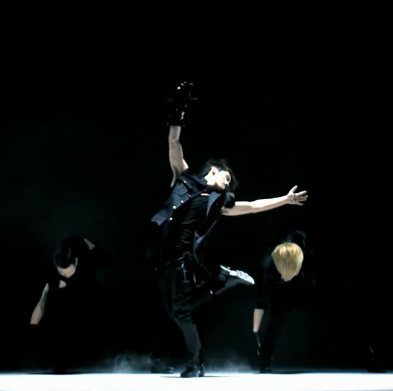
TVXQ, Wae (Keep Your Head Down)(screen capture); Source: http://www.youtube.com/watch?v=djJb5iSL0Do

Dance is a huge part of mainstream Kpop, and while many recognize the dances popularized by the groups and artists, few know the people behind them: the choreographers. Not only do choreographers impact Kpop through their routines, they also have an impact on fans as well.

Continue reading “Dancing in the Street: Choreography in Kpop”

What I’m Listening To: Soulmate, Shinhwa

Source: http://mtvk.com/2012/02/27/details-about-shinhwas-comeback/

Ever so often, I like to share what’s on heavy rotation on my iPod. It isn’t always the newest thing, or the most popular thing, but for some reason this is the stuff that I’m grooving to.  I make no distinction between idol and non-idol Kpop, popular and obscure, mainstream and indie. It’s just what I like, and some info about it. Maybe you might like it too. With Minwoo’s release from military service, the mighty Shinhwa is now complete and poised on the brink of a legendary comeback in March.  It seemed only fitting to share one of my favorite Shinhwa songs.

What I’m Listening To

Who Does It

Shinhwa holds the distinction of being the oldest Kpop male group of the Hallyu era that has maintained its original lineup.  I think many people wrote them off as part of that first generation of Hallyu groups (i.e. H.O.T., SES, Fin.K.L.).  I might have agreed with you. Have you gone back to see “Resolver,” (1998) their first video?  Remember those shiny suits? That swinging pendulum? You know you thought that was hot. Ok, in some ways, I still think it’s hot.  However,  Shinhwa has stood the test of time, through ups and downs, even through having five of the six members undertake military service.

Shinhwa is made up of three rappers (Eric, Andy, Jun Jin) and three singers (Minwoo, Dongwan, Hye Sung).  Since debuting, they have produced their own music and starred in Kdramas.  One of the other things that distinguishes Shinhwa from other groups of their era is their legendary exit from SM Entertainment.  Rather than sign a contract without some group members, Shinhwa walked out, and later sued SME for the right to use their name (all Tina Turner-like) and one. They’ve tried just about every concept in the book and lived to tell the tale.

Their last Korean studio album was released in 2008, and at one of their last concerts, they promised their fans, called Changjos, that they would return. Some may have been skeptical, as military service has broken up many a male group.  However, even before the release of Andy and Jun Jin, rumors started flying about a reunion. In late 2011, members of Shinhwa began confirming plans for a comeback.  In May 2011, Eric and Minwoo formed Shinhwa Company, and by October 2011, Hye Sung confirmed a Shinhwa comeback during his Japanese concert.

Why I Like It

“Soulmate” is a single from Shinhwa’s 2002 album, Wedding, and in many ways, exemplifies the best of the group. Shinhwa features three rappers and three singers, and one might think that the singers would overshadow the rappers, or the rappers would steal the spotlight from the singers.  One of the things I like about Shinhwa is that they do a good job of balancing these talents, and “Soulmate” is a nice example of that.

The song begins fairly mellow with individual singers.  It features simple instrumentation throughout.  The tempo picks up, with harmonization by singers, followed by a brief,  rapid-fire rap, and then a return to the up-tempo pace.  This completely works for me.

Several customer reviews on YesAsia suggest that the album takes multiple listenings to really appreciate it. I concur. When I first listened to it, I completely disregarded “Soulmate,” but thanks to the sneaky iTunes shuffle feature, it popped up one day, and I was hooked.

Sources:

Shin Hye Sung Confirms Comeback Date for Shinhwa, allkpop.com

Eric and Lee Minwoo form “Shinhwa Company” for Shinhwa’s 2012 Comeback, koreaboo.com

Customer Reviews for Shinhwa’s WeddingYesAsia

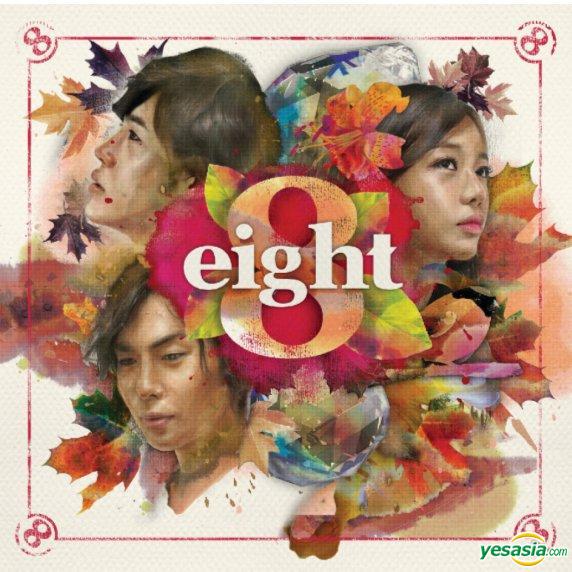
What I’m Listening To: U Make Me Feel Brand New, 8eight

Source: http://koreanmusicblog.blogspot.com/2011/06/8eight-mini-album-8eight-2011.html

Ever so often, I like to share what’s on heavy rotation on my iPod. It isn’t always the newest thing, or the most popular thing, but for some reason this is the stuff that I’m grooving to. I make no distinction between idol and non-idol Kpop, popular and obscure, mainstream and indie. It’s just what I like, and some info about it. Maybe you might like it too.

What I’m Listening To

“U Make Me Feel Brand New,” 8eight

Source: http://8eightcafe.wordpress.com/2011/06/18/8eight-the-2nd-mini-album/

You can listen to a snippet of the song here.

Who Does It

“U Make Me Feel Brand New,” by 8eight, is from their 8eight ep.  8eight is one of a handful of mixed-gender Kpop groups.  The name of the group is taken in part from the symbol for infinity, ∞, which is an “eight” turned on its side.

Composed of Lee Hyun (leader), Baek Chan,  and Joo Hee (the lone female), they began their career in 2007.  Although they do more upbeat, dance music, they are known for  their soulful vocals. They have released several albums, including The First (2007), Infinity (2008) and Golden Age (2009).  “U Make Me Feel Brand New” comes off their latest ep, released June, 2011.

Why I Like It

This is a really mellow, soulful song.  I happened upon it while listening to my iTunes in shuffle mode. It begins very simply with two instruments and some percussion, leading to the introduction of a very simple walking bass line. One of the male vocals comes in, and his voice sounds like a lazy Sunday afternoon.  His vocals are complemented very well by the instrumentation.  When the other voices do come in, they form a very nice blending. Rather than having a lead singer lead the vocal and the other singers trail behind, the song showcases all the voices. No one voice dominates and the voices don’t compete. It’s a nice song.

The group’s profile on soompi.com says 8eight has been compared to Black Eyed Peas, but I think this song shows they are more soulful than that. Their smooth sound  puts me more in the mind of some Neo Soul groups from the early 2000, kinda like if you put D’Angelo, Maxwell and Jill Scott in a group.

Wikipedia defines Neo Soul as “being heavily based in soul music” and “distinguished by a less conventional sound than its contemporary R&B counterpart, with incorporated elements ranging from jazz, funk, and hip hop to pop, fusion, and African music. It has been noted by music writers for its classicist influences, conscious-driven lyrics, and strong female presence.” However, many artists discount the label Neo Soul. Mark Edward Nero writes: “[Many artists] dislike the term Neo-Soul and have disassociated themselves from it, calling it nothing more than a shallow marketing tool. Many of these artists refer to themselves simply as Soul musicians.”

Sources:

8eight’s Profile, soompi

Neo Soul, Wikipedia

Mark Edward Nero, Neo-Soul: What is Neo-Soul?, About.com

What I’m Listening To: Mujugeon Haepiending (Stick Wit U)/Just Happy Ending (Stick Wit U), SNSD

Source: http://www.thekoreanstar.com/snsd-oh-album/

Ever so often, I like to share what’s on heavy rotation on my iPod. It isn’t always the newest thing, or the most popular thing, but for some reason this is the stuff that I’m grooving to.

What I’m Listening To

Mujugeon Haepiending (Stick Wit U)/Just Happy Ending (Stick Wit U), SNSD

How I Came to Listen to It

This was another instance of letting my iTunes shuffle taking me where it will.

Why I Like It

As a child of the ’80s, the sheer super-happy upbeat nature appeals to me. I can see why the SONEs like SNSD, especially when the pool the power of the Nine for stuff like this. People may complain that it is too saccharinely sweet, but I think it’s really a good example of what a pop song should do: hooks you from the first time you hear it, doesn’t drag on longer than necessary and doesn’t take itself  too seriously. It is the musical equivalent of cotton candy!

What I’m Listening To: “No Way,” 015B

Source: http://kpopdiscography.blogspot.com/2007/09/015b-discography.html

Ever so often, I like to share what’s on heavy rotation on my iPod. It isn’t always the newest thing, or the most popular thing, but for some reason this is the stuff that I’m grooving to.

What I’m Listening To

“No Way,” by 015B from the Lucky 7 album

Source: http://www.verycd.com/topics/73067/

You can listen to it here.

How I Came to Listen to It

I was listening to hellokpop radio, and it came on. I thought it was groovy, so I noted the name of the group and the song and downloaded it LEGALLY (hint hint folks).

Why I Like It

So, once you get past the cutesy intro, the song has a groovy vibe that is emphasized in this case by the instrumentation. Thanks to Ask a Korean!, I learned even more about my favorite new group (even though no one except me and a DJ at hellokpop radio seem to favor “No Way), like it’s a group made up of musicians with no regular lead vocal (go figure!). Jun.K is singing on this track.  Ask A Korean! also says 015B is important because: “It distinguished itself by adopting genres that were lesser known in Korea at the time. It did not seek popularity, or at least the kind of popularity that involves numerous television appearances to which teenage girls scream. 015B, notably, did not have a main vocal — for most of its songs, the band casted other singers to sing them.” They are nifty!

Source:  50 Most Influential K-Pop Artists, 29, 015B, Ask A Korean!

Let’s Talk About. . . Shinhwa!

Originally published on KPK: Kpop Kollective on January 25, 2012 by CeeFu

How do you feel about a Shinhwa comeback? What do you think it means for Kpop? Find out what CeeFu thinks, and post your comments here or on YouTube!

On Pitting Kpop Idols Against Non-Idols

Source: http://www.theloop.com.au/Versus/portfolio/Director/Sydney

When people talk about Kpop, granted, it’s usually about the idols.  But some people equate Kpop  with idol groups, and then conclude that they lack talent, and as a result, do not make “real” music like non-idols do.  However,  both idol and non-idol artists are a part of Kpop, and they have more in common than you may think.

One’s identity as an idol group can be a point of contention.   M.I.B. insists in an allkpop article:   “We’re not an idol group, and we want to prove this simply with our skill and expertise. We want to show you that we know how to have a good time on stage.” Aware of the negative perception some have of idol groups, Junsu of JYJ maintains in a Han Cinema article:  “”We are guaranteed to try many different things because we are an idol group. Some are trying to escape the image of an idol group because people tend to have a prejudice that idol groups have a lack of talent in music, but we want to show a whole new image of idol groups by showing that idols can have excellent music ability.” Both groups respond to perceptions about idol groups.

But what is the difference between an idol artist and a non-idol artist?  Idol groups, including BigBang, TVXQ!, 2NE1, MBLAQ, BEAST, Super Junior and SHINee, share certain charateristics that cause others to label them as idol groups.  They all are graduates of  a training system used by many Korean agencies, but pioneered by the former chair of SM Entertainment, Lee Soo Man.  Han Cinema refers to what Lee calls “the methods that we use when selecting and nurturing aspiring singers into real gems,” culture technology:    “CT includes not only the broad system itself but also the techniques we use to make music, choreography, music videos, live performances and even the stars’ makeup.”  As a result of this training, idol groups not only record albums and make music videos, but they also engage in a wide array of other activities, including:

MC-ing,

Eunhyuk and Leeteuk MC-ing SBS Awards

photoshoots,

TVXQ! at ElleGirl Photo Shoot

appearances on Korean televisions shows,

Shinhwa on Happy Together

appearances in their own reality shows,

Infinite on Sesame Player

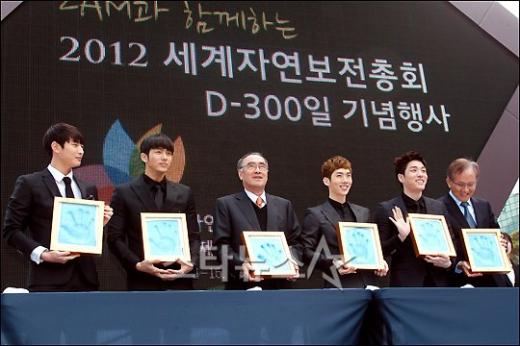
stints as ambassadors,

2AM as Ambassadors for 2012 World Conservation Congress
Source: http://www.wkpop.com/2011/11/2am-initiated-as-ambassadors-for-2012.html

and spokespersons for a variety of products.

Kim Hyun Joong for The Face Shop
Source: http://koreangossipgirl.com/kim-hyun-joong-ss501-official-comeback-schedule-june-1-june-15-2011/

Because these activities give them greater exposure, idols are the face that many people see when they encounter Kpop.  But the very training that allows them to engage in these various pursuits is the very thing some people point to as evidence of their inferiority, their “fakeness.”    In a seoulbeats roundtable, Young-Ji suggests that they have limited careers:  “All the idol group members from the 2000s are currently nobodies — either that, or they’re trying to make something out of themselves — take a look at all the members of H.O.T., Sechs Kies, S.E.S., Fin.K.L; with the exception of only a few members and perhaps Shinhwa, it’s difficult for idols to redefine themselves.”  Nabeela, of the same roundtable, suggests the limited careers are related to a perceived lack of talent:   “Young’ins will always try to become idols due their lust for that glamor. On the other hand, serious musicians and artists know how fickle idol glamor can be, and I think they make an honest effort to differentiate.” Both imply that Kpop idols work hard to be temporary, fake artists, unlike “serious musicians.”

However, these are sweeping generalizations that are challenged by looking closer at idols.   Former idols continue to work using their talents honed by the training process.  For example,  three of the four former  members of Fin.K.L. are actively working.  Lee Hyori did a photo shoot for Ceci as recently as November of last year. Ok Joo Hyun starred in the successful Kdrama The Musical just last year, and will star with Junsu (of JYJ and formerly of TVXQ!) in the German musical Elisabeth. Sung Yu Ri frequently stars in successful Kdramas, including Hong Gil Dong (2008), Swallow the Sun (2009) and Romance Town (2011).  Kangta, Tony An, Moon Hee Joon and Jang Woo Hyuk of H.O.T. still make appearances and are still active musically through collaobrations with newer artists.  Kangta has assumed some administrative duties at SM Entertainment, thereby remaining active on the business side of Kpop.

Well, if idols are just talentless hacks, their non-idol counterparts are the talented underdogs of Kpop, or so the logic goes.   They are seen as more serious and more talented.  They are “real” artists who are not idols.  Jeon Jin Woo compares idols to airplanes and non-idols to chickens:

Entertainment companies select would-be singers based on their visual appearances; hence, someone who sings really well has a low possibility of becoming an idol singer if his/her looks are not good. This is why many talented, prospective and new singers go through difficult times. These people are often unable to live as flying birds (successful singers) but are only continuing their heavy flap of wings as chickens. . . .  Idols are not singers. The definition of a singer is a person or a musician who uses his/her voice to create and express music. According to the definition above, idol ‘singers’ cannot be singers. Idols put more effort on their appearances and dance skills. Furthermore, many of them do not have the ability to create their own music. What is more, singers should be able to convey a song’s melody, lyrics, and its embedded emotions to the audience.

But is there a great difference between idols and non-idols, especially when it comes to talent? There is far less distance between the two than one might think.  First, idols can be found singing some decidedly non-idol songs that show their vocal range.  Here is Onew of SHINee getting his disco on in his rendition of the Bee GeesHow Deep Is Your Love:

Onew has a penchant for taking the vocal path less traveled, as demonstrated by his performance of Puccini’s Nesseun Dorma:

Not only do idols sing things you woudn’t expect them to sing, they sing them well.  They have singing talent, and this is something that they share with non-idols.

Take 4Men, R&B group known for their vocal stylings, as an example. (seoulbeats considers them to be an idol group, but I do not. We can talk about why later).

4Men, Knocking

But 4Men know idol songs and dances.   Witness members of 4Men do their best impression of SNSD’s Oh!

That’s not the kind of choreography you get just by passing by the television while the video is on.  You have to study that. 4Men also covered Big Bang’s Love Song, a song by another idol group:

Non-idols sing idol songs, and vice versa.  Here is SHINee’s Jonghyun singing Wheesung‘s Insomnia:

While Jonghyun is known for being a member of the group SHINee, Wheesung is not known for being an idol.  He appears on Kpooop‘s list of Non-Idol Songs Worth Listening To.  Here is his original:

Wheesung, Insomnia

These examples suggests that idols and non-idols are part of a one large, diverse music scene.   Non-idols are quite aware of idols, and even know their songs and dances. Idols know their non-idol counterparts and appreciate their work. While they may go about their pop lives in different ways, they are both part of the Kpop scene. One is not better than the other, just different.  Fans of Kpop can and do like them both. Idols and non-idols can live peacefully together on an iPod.

Sources:

“JYJ: We Are Still Idol Group,” Han Cinema

leesa86, “M.I.B.: We Are Not an Idol Group,” allkpop

Roundtable, “What Makes an Idol?”, seoulbeats

Jeon Jin Woo, “Sky Full of Airplanes and Chickens that Cannot Fly,” KHUL

SPONJiE, Lee Hyori Transforms into Marilyn Monroe,” soompi

‘Elisabeth’ Brings Death to Life on Stage Next Month,” Han Cinema

dorkykor3an, “Moon Hee Jun and Tony Perform ‘Candy’ for MBC Lunar New Year Special (2012),” allkpop

“Kpop Non-Idol Songs Worth Listening To (Part One),” kpooop

What I’m Listening To: The Moon’s Fall (달의 몰락), Ulala Session

Source: http://www.enewsworld.com/enews/contents.asp?idx=1588&idxType=News&trendKeyword=Ulala%20Session

Ever so often, I like to share what’s on heavy rotation on my iPod. It isn’t always the newest thing, or the most popular thing, but for some reason this is the stuff that I’m grooving to.

What I’m Listening To

The Moon’s Fall, Ulala Session

How I Came to Listen to It

I was just browsing around on Soribada one day in the Charts section, randomly clicking on excerpts of songs, when I clicked on Ulala Session’s single, With You, which was the last song they performed on MNet’s Super Star K3, the Korean version of American Idol.  

Why I Like It

I snagged With You, but I instantly fell in LOVE what they do with Kim Hyun Chul’s The Moon’s Fall, which is on the compilation album, Superstar K3 Season 3 Top 11 Part 1.  It is definitely funky and really showcases their voices well.

Not to mention the story behind Ulala Session. Older than the typical Kpop group, they also revealed during Super Star K3 that one of their members, Lim Yoon-taek, was battling stage 4 stomach cancer, but they soldiered through to win the competition.

I also have to give props to my favorite Korean American academic, Ni’qua, for helping me find Kim Hyun Chul and the English title to his song.  Yeah, those PhDs are good for something!

Source: “Battling Cancer, Ulala Session wins ‘Superstar'” Han Cinema