Psychedelic Gangster: A Super Junior Photo Essay

By now, you have survived the visual onslaught that were the Super Junior concept photos for Mr. Simple.  Mayhaps you have forgotten how the members of Super Junior looked pre-Psychadelic Gangster? Not sure how they may show up in your neighborhood?  If so, I invite you to mediate on the following photo essay as a helpful way to be prepared either way:

Leetuk

Girls Bring The Boys Out: SNSD Comes To The U.S


The SM Town concert at Madison Square Garden served not only to bring some of the agency’s most popular acts to the East coast of the United States.  It also introduced SNSD to the American mainstream.  Yet, I wonder if that introduction was specifically aimed toward males at the expense of the existing large female fanbase. . . . .

Read more at here at hellokpop.com (originally published November 11, 2011)

ENG 355: Virtual Museum Exhibitions and Catalogues

A Night in Harlem

Group 1: Delia Lloyd, Chelsea Yarborough, Christopher Corr, Kathryn

Egyptian Orientalism in the Harlem Renaissance

Group 2: Joshua Sotomayor, Derrick Burnett, Brittany Barbieri, Jaime Metellus

Respectable Vs. Crude: The Balancing Act of the Harlem Renaissance

Group 3: Kuylain Howard, Rob Shapiro, Alex Quinn, Lilly Deacon

Southern Roots

Group 4: Rachel Bowden, Kyle Wons, Hunter Ertel, Carolyn Shaeffer

Culture and Intellect in the Harlem Renaissance

Group 5: James Geiger, Natasha Langsdorf, Arron Jones-Williams, Neima Abdulahi

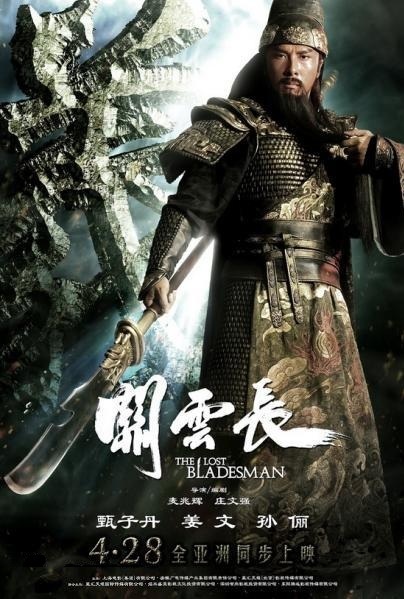
The Lost Bladesman (2011), Or, The Wolf With The Soul Of A Lamb

Source: http://www.samotako.com/viewtopic.php?f=144&t=45&start=360

Felix Chong and Alan Mak’s The Lost Bladesman (2011) takes a different tact on Romance of the Three Kingdoms by focusing on the episode where Guan Yu “spends some time” with Cao Cao.  I appreciate this more subtle approach to the epic tale, even as it has some parts that do not quite make sense to me.

Continue reading “The Lost Bladesman (2011), Or, The Wolf With The Soul Of A Lamb”

CONFERENCE ABSTRACT: Challenging Gender Roles in Korean Dramas @ Hawaii International Conference on Arts and Humanities

She Is Straight Gangster: Challenging Gender Roles in Korean Dramas

Dr. Crystal S. Anderson

Hawaii International Conference on Arts and Humanities

January 8-13, 2012

ABSTRACT

Korean television dramas (Kdramas), particularly those that are historically based, represent sprawling stories that blend history with culture.  Often consisting of high production values and unfolding over 50+ episodes, these Kdramas reconstruct historical narratives and legendary stories.  They also infuse a contemporary sensibility by drawing on nontraditional notions of gender, heroism, cunning and valor.  While such Kdramas are broadcast to Korean audiences, non-Korean, English-speaking audiences from around the world also view these dramas via Internet sites such as Drama Fever and Crunchyroll.com.  These global audiences construct alternative femininities related to the female characters that challenge traditional notions of gender.  Using qualitative methods and discourse analysis, I argue that global audiences construct female characters in ways that challenge traditional notions of gender. In the 2009 critically-acclaimed and popular Kdrama, Queen Seondeok, Korean women are represented as aggressive major power brokers in national politics, rather than passive bystanders, even as they occupy more traditional historical roles for women.  They also exert power over men who are characterized as more powerful both politically and martially, using cunning rather than their feminine wiles. Finally, women also engage each other in ways that showcase their intellectual talents. Such constructions by global audiences allow for more diverse notions of gender in popular culture.

Look Who’s In The Korea Herald? ME!

Yes, I argue the pro side of the question, “Can Kpop Break the U.S.?”  Read the entire editorial here.


Paper Swordsmen: Jin Yong and the Modern Chinese Martial Arts Novel by John Christopher Hamm

I have been wanting to read this book for ages! This book is most excellent! There are so few scholarly sources in English about novels published by Chinese writers featuring wuxia heroes.  Hamm focuses on one of the most prolific authors, Jin Yong (also known as Louis Cha).  I’m drawn to it because Jin Yong’s novels are the basis for many Chinese wuxia television series, including Eagle Shooting Heroes, Return of the Condor Heroes, Book and Sword: Gratitude and Revenge, Laughing in the Wing (Smiling Proud Wanderer; also the basis for Tsui Hark’s Swordsman film series), Deer and the Cauldron, and Sword Stained with Royal Blood.

For my purposes, he does a lot of exposition of the plots of these novels, as many of them have not been translated into English.  This really helps me out because it gives me an idea of where many of the wuxia series engage in creative retelling.  Anyone who has committed to watching one knows that it might closely follow the novel, or it might make some…..changes.  I’m less concerned about authenticity and more interested in how those changes alter the meaning of the series.

Hamm also does crucial work on locating these novels within a Chinese historical context. I’ve always thought it mattered that you had a heroic story about the Song despite their occupation by the Jin in Eagle Shooting Heroes.  Hamm makes this make sense!

I have to say my favorite quote is actually a quote he takes from Wang Shuo’s essay on Jin Yong:  “The only reason Wang Shuo can imagine for this stuff’s popularity is the possibility that it serves as a kind of ‘head massage’ for the overstimulated victims of modern life. Jin Yong’s fiction belongs, in sum, together with the ‘Four Heavenly Kings’ of Canto-pop music, Jacky Chan’s action films, and Qiong Yao-inspired television soap operas, as the ‘four great vulgarities’ (si da su) of our time.” (251).  I love this, because he hits three of my greatest interests in Asian popular culture! Of course I don’t agree; I find the debate about whether or not these novels are literature not very interesting or productive.

Love this book!

Shock and Aww, What Are You Doing?!: The Use And Abuse Of The Concept Photo


With the recent slew of comebacks, Kpop fans have been exposed to some pretty surprising photos of late. I know agencies use such tactics to draw attention to their groups and artists.

Read more at hellokpop.com (Originally published on September 26, 2011)

People Not Products


Sometimes when people talk about idols, they talk about them as if they were only products manufactured to make money, like an iPad.  However, idols are people whose talents, abilities and popularity is based on more than a Korean agency’s manipulation.

Read more at hellokpop.com (Originally published on September 12, 2011)

Babies, Tweens and Grandmas: Unsung Fans of Kpop


Fangirls.

Some people say it like it’s a bad word. All too often, I find people saying condescending things about Kpop fans, assuming that they are all 12-year-old girls. They deserve respect, and so do the other fans of Kpop that people do not recognize.

Read more at hellokpop.com (Originally published on August 29, 2011)

Kpop Success In The U.S.: At What Cost?


Everybody wants to know: can Kpop succeed in the United States? Well, that depends on your definition of success. In order to enter the mainstream American music scene, Kpop would have to change so much that it would become unrecognizable to current fans.  But, if Kpop remained an underground phenomenon in the United States, it could be successful without compromising its identity.

Read more at hellokpop.com (Originally published on August 16, 2011)

Style Over Substance: Weighty Matters in Kpop


This week, Piggy Dolls released their newest MV Know Her, sparking many comments from netizens, who immediately noticed the significant weight loss of the trio. While Kpop groups are well-known for their radical changes in concept, the Piggy Doll’s switch-up bothers me because it represents a shift not just in image but in talent as well.

Read more at hellokpop.com (Originally published on August 1, 2011)

One Minute and Fifteen Seconds: JYJ’s Ayyy Girl

JYJ’s recent stop in the U.S. on their world tour has me thinking about them. Actually, it has me thinking about their only video from The Beginning, “Ayyy Girl.” And when I think of the video for “Ayyy Girl,” it’s hard for me not to think of one thing: one minute and fifteen seconds.

Read more at kpopkollective.com. (Originally published on June 1, 2011)

Don’t Hate The Playa AND The Game: Recent Criticism of Kpop

So, this week I ran across a brief story by Esther Oh on the “failure” of Kpop.  While I’m always open to hearing what others have to say about Kpop, good or bad, I disagreed with several points that she made.  Ok, it’s not just I don’t agree with what she says. What she says is not the Kpop world I know.

First of all, her story had “tone.”  It just didn’t take a position on Kpop, it set out from the get-go hatin’ on Kpop. It’s clear she has no love for Kpop.  She says she “cringe[s]” when she hears about the Wonder Girls or Rain. Personally, I have a different reaction when I hear about Rain, but that’s just ME, and I’m not even the biggest Rain fan in the world.

Rain; Credit: Esquire

Read more at kpopkollective.com (Originally published on June 4, 2011)