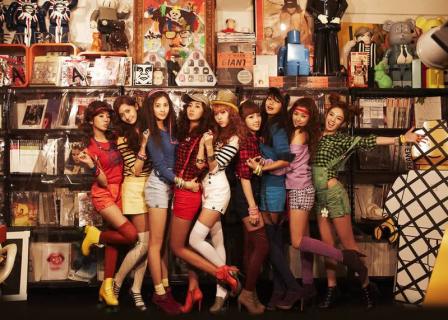
The iFans project rolls on with more cover dance! The second section of the exhibit, Dance Like Everybody’s Watching: K-pop Cover Dances, features Girls’ Generation‘s “Into the New World Remix.” Click HERE to view K-pop fans from around the world performing one of the most complicated dance routines by a girl group.
The Korean music scene has changed vastly in the past decade.
Crystal “CeeFu” Anderson‘s insight:
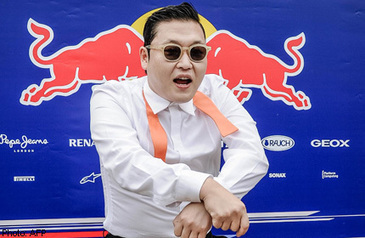
While this article attempts to address the varied uses of the term "Korean wave," it does not address the complex factors that go into the term. It fails to define the Korean Wave itself, its links to multiple modes of cultural production, such as K-drama and Korean film. The Korean wave is more than a mere marketing tool; it is a phenomenon that has economic, cultural and political implications. Using Psy to make an argument about the Korean wave and its longevity ignores the 20-ish old years of music, television and film that make up the Korean wave, and the fact that K-pop was enjoying global popularity before Psy’s appearance. There needs to be more context provided to make these kinds of assertions about the Korean wave.
In addition to the case studies, the iFans project documents other mode of fan activity. The first section of the new exhibit, Dance Like Everyone’s Watching: K-pop Cover Dance, is up! Click HERE to view K-pop fans performing some of the most difficult K-pop dance routines.
The 1960s girl group concept makes regular appearances in K-pop. While some think that this kind of image represents a lack of ethnic identity in a quest for mainstream acceptance, I suggest that the 1960s girl group image promoted by women of color represents an ethnic glamour aesthetic.
Ever so often, I like to share what’s on heavy rotation on my iPod. It isn’t always the newest thing, or the most popular thing, but for some reason this is the stuff that I’m grooving to. I make no distinction between idol and non-idol K-pop, popular and obscure, mainstream and indie. It’s just what I like, and some info about it. Maybe you might like it too.
What Is It
Who Does It
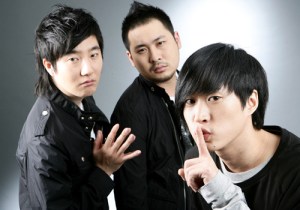
“At That Time (그 때)” is from Supreme Team‘s 2010 album, Supremier, and features Brian Joo, vocalist from the legendary Korean R&B group, Fly To the Sky. The song introduces Brian by referring to his 2009 album, Manifold.
Why I Like It
This song represents a little change of pace from Supreme Team’s highly respected hip-hop fare. The tempo and tone of the song sounds matches the lyrics: it sounds like a throwback to more pop-inspired R&B, which goes to show that we all share the “back and the day” vibe. This is the kind of song that all generations could jam to, mixing Brian’s singing on the chorus with Supreme Team’s rapping on the verses. The combination illustrates the kind of frequent collaborations that occur in K-pop.
Epik High garners respect as a Korean hip-hop group in part because of their innovative use of lyrics. Because many of their songs are in English, they provide an opportunity to appreciate the complexity of their rhymes and their skill manipulation of language.
While many critics focus on the social and political message of rap, Mtume ya Salaam reminds us that rap is an art, and when done well, “possesses at least one–and usually more than one–attribute such as sincerity, originality, honesty, or creativity” (303). We should not focus on critique to the exclusion of the artistry found in hip hop. Looking at the lyrics of a rap song is comparable to appreciating poetry. Both make use of “simile, metaphor, and alliteration as well as creative expression, originality, and conveyance of emotion” (305).
With that in mind, Epik High songs frequently use creative metaphors and innovative verbal phrases to describe the skill of rapping or critique the industry in which the group participates. Frequently, Epik High positions itself as cerebral rappers, targeting the minds as well as the feet of their audience. That stance marks them as unique in the K-hip hop world.
Follow the Flow (ft. Myk, D-tox)
“Follow the Flow” comes from the 2005 Epik High album, Swan Songs. The track reinforces the intellectual appeal of the track through references to the mental powers of the audience. Lyrics such as “I just did flipped your lid and gave your brain a kiss” demonstrate that the group targets the way people think and suggests they want to leave the audience pondering their words. Because of this kind of originality, they diverge from other groups: “We travel on into unknown don’t follow the roadsign/We just try to form the rhymes that read yo’ mind.”
Epik High frequently also includes plays on words in their lyrics. “Like an empty hospital/I’m out of patience” uses the word “patience” both in its literal meaning (lacking the capacity to remain calm when waiting) and its related meaning to patient (someone who needs medical treatment) within the context of a hospital. “I’m a prohibition MC – I speakeasy” uses the context from the 1920 and 1930s to underscore lyrical skill. In the United States, the prohibition era created speakeasys, or illegal clubs, so when the song references a “prohibition MC,” it taps into the rogue nature of the rhyme.
“Follow the Flow” also uses literary references to celebrate originality. The song draws from Irish literature to establish his skill as an MC:
Yes I am…the rap game’s voice
Every cat’s main choice, the rap James Joyce
It’s a piece of cake, gimmie a break,
I kill MCs, then speak at they Finnegan’s Wake
I’m much mo’ than a cheap CD
Any student forced to read the Irish writer James Joyce would understand the resonance of the reference. Joyce represents one of the most challenging writers in the English language. His novels, such as Ulysses, are complicated and dense, but also innovative, thus contributing to his reputation as a classic writer. The song uses this literary giant to underscore his own lyrical prowess in the song. The MC is rap’s James Joyce, which suggests that his raps are equally deep and complicated.
Free Music (ft. Myk)
While “Follow the Flow” celebrates the skill of the MC, “Free Music,” from the 2009 album Map the Soul, is a critique of an overall lack of originality in rap. In the first verse, MYK contrasts the mental work he puts into his rhymes (“I jog my mind around the writer’s block/Till it’s out of breath and asthmatic”) with the preoccupation with fame he notices in the industry:
I’ve had it with the paper chase, need I mention?
The rap game is all show and lyrical dissension
Pretension, obsession for physical possession
MYK faults the commercialism and quest for money as the primary motivator for some rappers. This has a negative impact on the creativity and artistry of their production. It is all show and no substance. Tablo’s verse focuses more on his skill:
Temporary relief so I’m makin’ it last
Takin’ it fast, lacin’ buds in raps, tracin’ raps with facts
Steppin’ up the game but not reppin’ for fame
Spittin’ truth up on the booth, then we settin’ it in flames
Here, Tablo focuses on his own skill. He is all business in the recording booth, seeking to be the best for his own sake, not to gain attention and make money. His rap is more substantial, filled with “facts” and “truth.”
In both of these tracks, Epik High seek to distinguish themselves thought their thought-provoking and creative lyrics.
One of the most common plots in sageuk (historical Kdrama) pits those with power against those without power. These tensions become even more complicated with friendships and romantic relationships. Nothing makes the elite more nervous than when the “riff raff” start to question “the natural order of things.” Historical Kdramas like The Duoand Hong Gil Dongbegin with the possibility of social change, but end up reinforcing the status quo. However, Tree with Deep Roots sustains the promise of social change to the end. Continue reading “The World Turned Upside Down: Social Change in Historical Kdrama”→
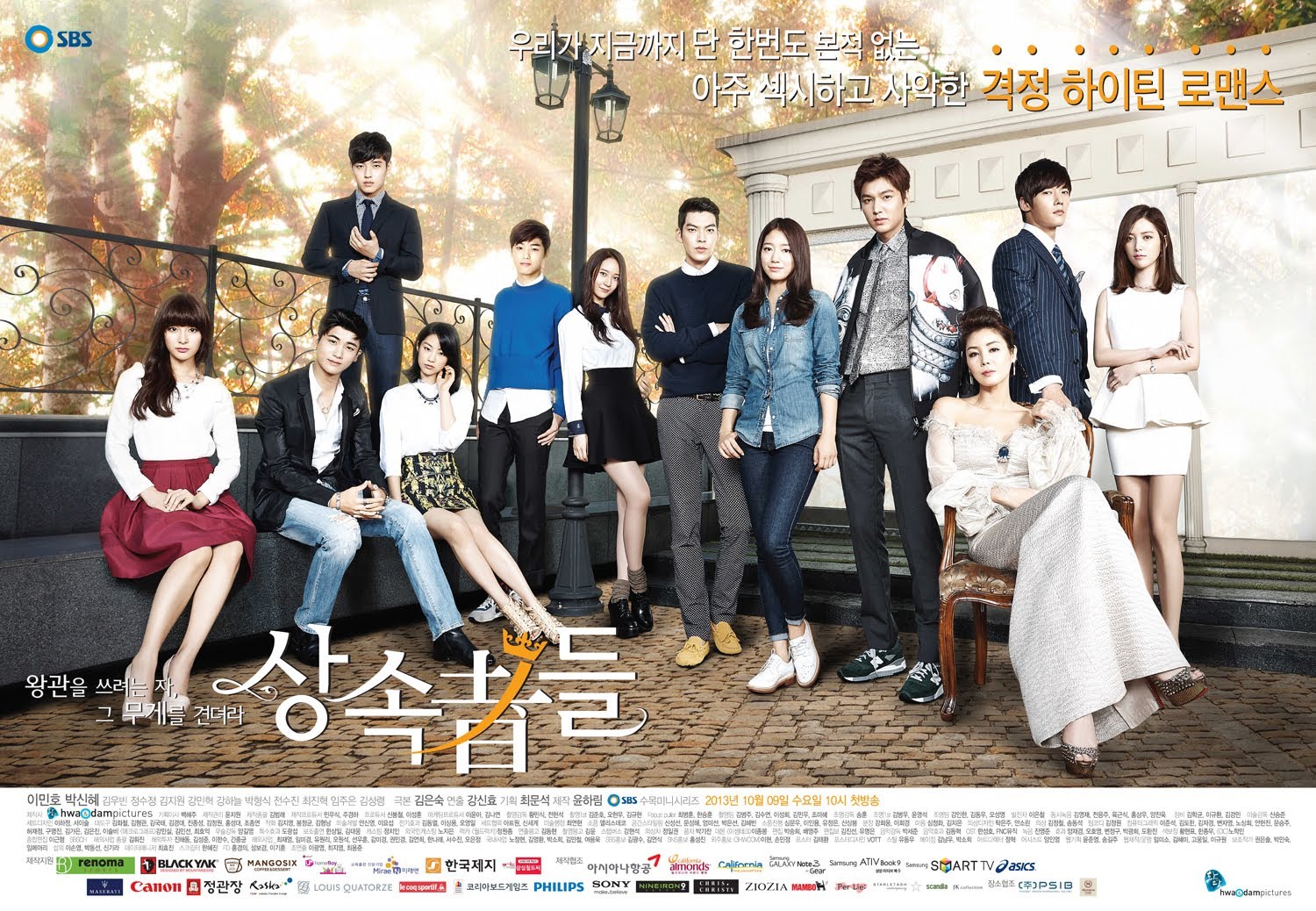
Heirs is a worthy successor to Boys Over Flowers as the ultimate “rich kid” Kdrama. It takes the theme of romance across class lines from Boys Over Flowers to whole new levels.
It’s (Still) a Chaebol World!
Heirs shares the context of the chaebol world with Boys Over Flowers. Both are stories about romance that crosses class lines within Korean society. It’s not just that Jun Pyo and Kim Tan‘s families are wealthy; they are wealthy Koreans. Korean business and family dynamics drives so much of these Kdramas. It’s the reason why Jun Pyo can only defy his mother so much, and why Kim Tan can only give his father so much sass.
It’s even more so the case in Heirs because it affects so many of the relationships. The tension between Kim Tan and Kim Won coms from the way their father introduced Kim Tan into their household. The loathing that Jung Ji Sook has for Han Ki Ae, Kim Tan’s mom, is directly related to their position within the chaebol family. Ji Sook knows that Ki Ae’s position is precarious because she is not an official member of the family. For most of the Kdrama, people don’t even know she is Kim Tan’s mom.
Like Boys Over Flowers, Heirs does a good job of flaunting the wealth of the chaebol family and showing class disparities. There’s no school bus for these kids! Kim Tan goes to school in a car driven by a chauffeur. He lives is a house so big that you could not see other people who also live in the house for days. Despite the size of the house, Eun Sang and her mom are reduced to living in a room that charitably could be called a closet. Their circumstances are even more dire because of Park Hee Nam‘s disability. Wardrobe also plays a large role. Kim Tan’s “fabulous” sweaters aside, we know the upper class are the upper class because of what they wear. Heirs is even more global with the “exotic locations.” While the guys in Boys Over Flowers play in Venetian Macau, Kim Tan stays in the Hollywood hills in huge house with a pool overlooking Los Angeles
Multi-Dimensional Snottiness
Heirs extends the upper-class snarkiness we find in Boys Over Flowers. While Boys Over Flowers focuses on the antics of Jan Di and F4 in a school setting, Heirs gives us a tour of class arrogance. Because the characters are aware of their class position all the time, we get to see its impact. The kids each have their own issues and insecurities. As a viewer, you despise their behavior but also see the pressures that cause that behavior. Rachel’s obsession with Kim Tan is probably related to how her mother treated her father (and herself as an object to be used in business negotiations). Young Do‘s bad treatment of others comes from the loss of his mother. Being the heir to a hotel conglomerate and having everything does nothing for that sense of loss. Ye Sol can be one of the mean girls, but worries (rightly so) about her reputation, as she is the daughter of a hostess. Lee Hyo Shin cannot convince his parents, even with a suicide attempt, to let him opt out of being a lawyer.
In Boys Over Flowers, we rarely venture beyond the world of Jan Di and F4. Kim Bum‘s errant father makes rare appearances, Ji Hoo is an effective orphan (despite his grandfather) and who knows what’s going on with Woo Bin‘s family. In Heirs, the adults are key to the class dysfunction experienced by their children. The relationships in Kim Tan’s house, the dynamic between Rachel and her mother and the dynamics between Secretary Yoon and Rachel’s mother, shows that the snotty apple doesn’t fall far from the tree. With more characters and more characters whose stories intersect, we get a deeper view of the upper class. It’s not one we want to join.
Brothers!
Boys Over Flowers, Woo Bin and Yi Jung
The relationships between guys is central to both Boys Over Flowers and Heirs. The tension between Jun Pyo and Ji Hoo drives the plot of Boys Over Flowers. They may compete with each other and get angry at each other, but in the end, they rely on their friendship. You also care about the dynamic between the other members of F4, like Yi Jung and Woo Bin, which deserved more attention. Remember who got Woo Bin to stop walking on the edge of that bridge!
Heirs complicates this male camaraderie. On one hand, the blood-related brothers, Kim Tan and Kim Won, have a cold relationship. Kim Tan constantly expresses his affection for his brother, while Kim Won gives him the cold shoulder. Kim Tan is the emotional brother who takes courage to defy their father, while Kim Won gives up on his happiness. As the Kdrama goes on, you want them to reconcile. You want Kim Won to give Kim Tan just a little bit of recognition, and he routinely just keeps you hanging.
Heirs, Kim Tan
Heirs, Kim Won
On the other hand, the hyungs, Kim Tan and Young Do, have a complex, love-hate relationship. They do real harm to each other, but they also help each other out when the chips are down. It’s really interesting the way that they do not reconcile either. Kim Tan notes in the final episode that they were not strangers, but they also were not man enough to reconcile.
Heirs, Kim Tan
Heirs, Young Do
The Relationship
At the center of both Boys Over Flowers and Heirs is the relationship between the “rich guy” and the “poor girl.” Jun Pyo has a long way to go to learn how to treat Jan Di properly, but he eventually gets there. However, for reasons that aren’t exactly clear, Jan Di becomes less likeable as part of that couple. She loses all of her spunkiness and becomes a shadow of her former self. She doesn’t participate in the relationship, and doesn’t grow as a character. This is in contrast to her side kick Ga Eul, who becomes more interesting because she is willing to pursue her dreams and take chances.
Heirs, Eun Sang
The relationship between Kim Tan and Eun Sang has a different dynamic. It’s Kim Tan who has to overcome his background and a grouchy and vindictive father to have a relationship with Eun Sang. When he leaves the United States, his mind is set. We don’t have to endure a process where he has to decide to like Eun Sang. For her part, Eun Sang has more important things to worry about than Kim Tan, and she is understandably wary of his attention. But I like how she navigates Kim Tan’s attention, Young Do’s “attention,” the mean girl dynamics at school and the dysfunctional Kim family antics at home. She doesn’t always win. She endures some nasty behavior. She sometimes takes too long to appreciate what Kim Tan is doing for her, but she does an impressive job of standing up to the mean kids at school. Her relationship with her mother is a great addition to her backstory. When both Kim Tan and Eun Sang end up on the apartment floor crying, you feel for both of them. You are rooting for both of them.
In many ways, Heirs is Boys Over Flowers 2.0, taking the themes of class-defying romance and building on them.
Super Junior‘s “Sorry Sorry” is, but “Sorry Sorry The Answer” is not. f(x)‘s “Nu Abo” is, but “Beautiful Goodbye” is not. TVXQ‘s “Mirotic” is, “Before U Go” is not, and who knows what’s going on with “Something.” Some want to equate popular K-pop music with dance music, but they may be surprised by the variety in the music produced by idols.
Because idols make up so much of popular K-pop, many equate their music with dance music. Park Si Soo refers to a National Assembly report that described 82% of the tracks on the Gaon Music Chart as “idol music.” According to Park, critics seem to equate “idol music” with dance music because K-pop is “dominated by hook-heavy dance music or ‘idol music.'”
Academics believe the popularity of “idol music” contributes to the homogenization of K-pop, causing all the music to sound the same. Solee I. Shin and Lanu Kim examined the top 20 songs published by Melon Music, an online music service in Korea, from 1988 to 2012 and found “a sizeable presence of dance and hip-hop music in the early to mid-1990s.”
Both journalists and academics limit the kinds of music associated with K-pop idols and equate it with dance music. Dance music is music designed to make people dance, and the beat is crucial. Mark J. Butler argues that “rhythm. . . is the raison d’être of electronic dance music” (4). But that does not mean that all dance music sounds the same: “There is an astonishing array of rhythmic diversity beyond the beat. . . . fans, musicians and critics [claim] that all of the myriad genres of dance music have the same meter (4/4) which they tend to link, through implicit or explicit comparisons, to perceived notions of simplicity” (5).
All dance music is not the same. Super Junior’s “Bonamana” is not the same as House Rulez‘s “Reset,” even though both may be considered dance songs because they share the “four on the floor” rhythm. “Bonamana” is the type of dance song that Super Junior is known for, but it contains standard elements of popular song, including lyrics, verses and a chorus. “Reset” is quintessential electronic dance music (EDM): “Most of [EDM’s] genres contain no consistent verbal components [or lyrics]” and are “created by synthesizers and drum machines rather than ‘real’ instruments” (11).
A comparison of songs by idols reveal differences. BigBang‘s “Fantastic Baby” sounds different from Infinite’s “Hands Up,” but both are dance songs. This is the case even with songs by the same artist. While Super Junior songs may reflect the trademark “Super Junior funky style,” “Bonamana” sounds different from “SPY.” “Bonamana”‘s rhythm stands out, while “SPY” features thick orchestration where horns are central.
In addition, music produced by idols goes beyond dance music: “There are many critics who are reluctant to define idol music as a genre, citing a lack distinctive musical identity. They insist idol music is like a “spaghetti bowl” in which various music genres including dance, hip-hop, rap and R&B are all mixed up in one category” (Park).
While charts tell us about popularity based on sales, listening to the music on albums reveals far more variety. A consideration of SM Entertainment (SME) artists show a variety of musical styles. With the largest roster of idols, SME is often cited as a primary producer of “idol music”: “‘SM style music’ was gradually defined as electronic-based, fast-beat, and strong with memorable lyrics with repeating ‘hooks'” (Shin and Kim).
It’s clear that SM has its share of idols producing dance music. As the first paragraph shows, artists such as Super Junior, TVXQ, f(x) as well as SHINee and EXO have their share of dance tracks. However, these groups release albums with songs that go beyond dance music.
Super Junior has had great success with dance tracks like “Sorry Sorry,” “Bonamana,” “Mr. Simple,” and “SPY.” However, the group’s albums feature other kinds of songs. “Good Friends (어느새 우린)” is not a dance track. It feels more like a throwback track to the 1970s with its use of horns and organs. “Memories” is a song with a slower tempo. “Sorry Sorry The Answer” is an old-school R&B ballad that focuses on vocals:
The same can be said of TVXQ. We all know TVXQ for their dance tracks, such as “Mirotic” and “Humanoids.” But the group also has a reputation for more pop-inspired fare like “Hug,” rock-influenced songs like “Tri-Angle” and “Athena,” and slower songs like “I Swear” and “Honey Funny Bunny.”
If we take a look at deeper cuts on SHINee’s albums, we see there are different kinds of songs that go beyond the dance fare like “Lucifer” and “Dream Girl.” SHINee fans always look forward to R&B-inspired songs such as “Excuse Me Miss” and “Symptoms.” But they often have surprises as well, like the acoustic track “Honesty.”
These songs are not only included on albums, they are also featured in set lists when groups tour, suggesting that they are just as important as promotional dance tracks. The set-list for Super Junior’s Super Show 4 includes “Good Friends” and Super Junior’s Super Show 5‘s setlist features an acoustic medley that includes “Memories.” TVXQ includes “Tri-angle” and “Honey Funny Bunny” in its setlist. “Honesty” appears on the setlist for SHINee’s performances at SM Town Week.
Music made by idols runs the gamut. In fact, it is the reason why fans like it. Instead of making assumptions, just listen to the music.
Image
“Electrifying Super Show.” Seoul Rhythms. 28 Feb. 2012. Web. 14 Jan 2014.
Video
“Super Junior(슈퍼주니어) _ SORRY, SORRY – ANSWER _ MusicVideo.” sment. YouTube. 10 Dec 2009. Web. 9 Jan 2014.
“SUPER JUNIOR 슈퍼주니어 _SPY_MUSIC VIDEO.” SMTOWN. YouTube. 12 Aug 2012. Web. 15 Jan 2014.
“07 늘 그 자리에 (Honesty) – SHINee (Sherlock).” AmberInJapan. YouTube. 18 Mar 2012. Web. 15 Jan 2014.
“하우스 룰즈 (House Rulez) – Reset (With 안지석).” 3cinquesette. YouTube. 3 Aug 2012. Web. 15 Jan 2014.
Sources
Butler, Mark J. Unlocking the Groove: Rythym, Meter, and Musical Design in Electronic Dance Music. Bloomington: Indiana University Press, 2006.
Shin, Solee I. and Lanu Kim. “Organizing K-pop: Emergence and Market Making of Large Korean Entertainment Houses, 1980-2010.” East Asia November, 2013. doi: 10.1007/s12140-013-9200-0.
The WordPress.com stats helper monkeys prepared a 2013 annual report for this blog.
Here’s an excerpt:
The concert hall at the Sydney Opera House holds 2,700 people. This blog was viewed about 20,000 times in 2013. If it were a concert at Sydney Opera House, it would take about 7 sold-out performances for that many people to see it.
K-pop girl groups tend to be described as sexy, fierce or cute. Some suggest that images of fierceness encourage girls to be empowered, while images of cuteness take away their agency. However, responses by fans of f(x), a K-pop female group, suggest that fans prefer unique and diverse images of women.
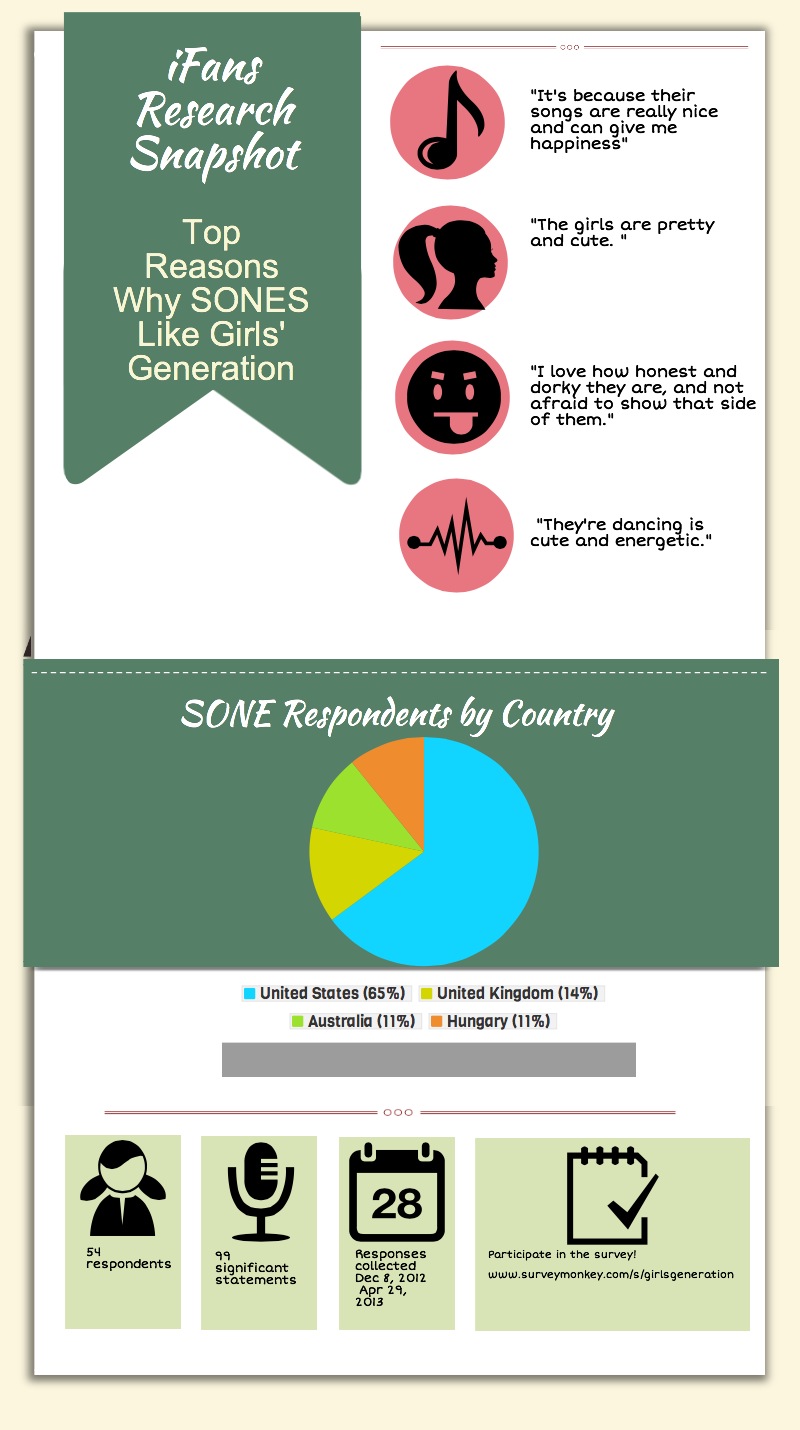
If you keep with research on K-pop, you may be aware of the iFans: Mapping Kpop’s International Fandom project. The surveys that make up the qualitative studies seek to understand how the fandoms differ from one another and their relationship to the groups they support. K-pop fans know that the fandoms are unique. Because they have detailed knowledge of the groups they support, they provide a unique perspective on the appeal of their respective groups. Too often, commentators make assumptions about K-pop fans, while the iFans studies goes to the source: the fans.
Anybody can ask some questions about your favorite K-pop group but scholarship involves a lot more. Enter the glamorous(?) world of K-pop fan research!










 High Yellow - Asian Popular Culture